
Full Breakdown
Israeli Election Exit Polls Reveal Deadlock and Historic Arab Gains
By Drooid · · How we work
In this breakdown
01
Core Event: Exit-Poll Projections Show No Clear Majority
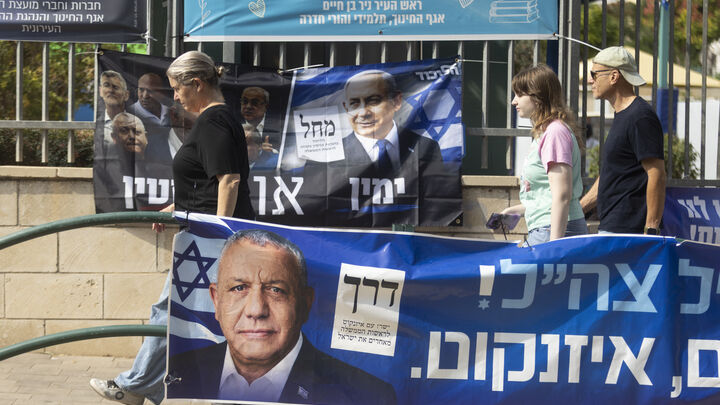
On the night of October 27, 2026, Israel’s three major broadcasters—Kan 11, Channel 12 and Channel 13—released exit-poll results indicating that neither Prime Minister Benjamin Netanyahu’s right-wing bloc nor the opposition bloc led by former army chief Gadi Eisenkot secured the 61 seats required for a governing majority in the 120-member Knesset. Netanyahu’s Likud was projected to win 24–25 seats, while Eisenkot’s Yashar party was expected to obtain 21–23 seats. The two Arab parties, the Joint List and Ra’am, were projected to capture a combined 17–18 seats, a substantial increase from the five seats each held in the outgoing parliament.
Watch
Related reporting
youtube
LIVE: Israel's election results
02
Background & Context
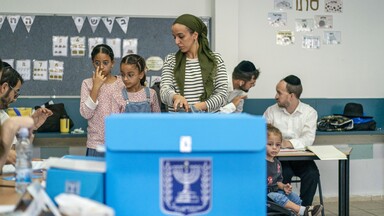
The election is the first since the October 7, 2023, Hamas attacks and the subsequent wars in Gaza, Lebanon and Iran. Historically, Arab parties have struggled to surpass the electoral threshold; their projected surge now positions them as potential kingmakers. The Central Elections Committee reported a turnout of 77.7 %—the highest since 1999—reflecting a marked rise in Arab-Israeli participation.
Visual evidence
Images from the story




03
Data & Statistics
- Netanyahu bloc: 50 seats (all three polls)
- Opposition bloc: 52–53 seats
- Likud: 24–25 seats
- Yashar: 21–23 seats
- Joint List: 10–11 seats
- Ra’am: 7 seats
- Combined Arab parties: 17–18 seats
- Turnout: 77.7 % overall; 80 % among Arab voters (Channel 12)
04
Official Statements & Responses
- Joint List chairman Prof. Yousef Jabareen called the election a “historic day,” asserting that the “blood-stained government must go.”
- Netanyahu’s office warned that high Arab turnout could lead to a “government of the Arab parties,” urging his supporters to vote urgently.
05
Criticism & Opposition
- Ra’am described recent police arrests as “baseless” and a political maneuver by National-Security Minister Itamar Ben-Gvir.
- Yair Golan of the Democrats responded to a knife-attack at a polling station, saying, “Incitement and violence will not intimidate us,” and blamed the incident on Netanyahu’s “poison machine.”
06
Verbatim Quotes
- “The preliminary poll results point to complete distrust in Netanyahu,” — Gadi Eisenkot
- “We will transform the seats we have won into a new reality in the country.” — Mansour Abbas, Ra’am chairman
07
Conflicting Reports & Gaps
Exit-poll projections differ on several key figures:
- Arab party totals range from 17 seats (Channel 13) to 18 seats (Channel 12).
- Likud’s seat count varies between 24 (Channel 12) and 25 (Channel 13 and Kan 11).
- The opposition bloc’s total is reported as 52 seats (Channel 12) versus 53 seats (Channel 13).
08
What’s Next
The Central Elections Committee will continue counting, with special “double-envelope” ballots—estimated at over 650,000—requiring separate verification. Preliminary official results are expected overnight, and the final tally is scheduled for November 4. President Isaac Herzog will then consult the elected factions to appoint a Knesset member tasked with forming a coalition, a process that could extend up to 28 days with a possible 14-day extension. If no viable coalition emerges, a repeat election may be called, leaving Israel in a prolonged period of political uncertainty.