
Full Breakdown
GM Targets 2028 Launch for “Eyes-Off” Highway Driving Feature
By Drooid · · How we work
In this breakdown
01
Core Development and Planned Rollout
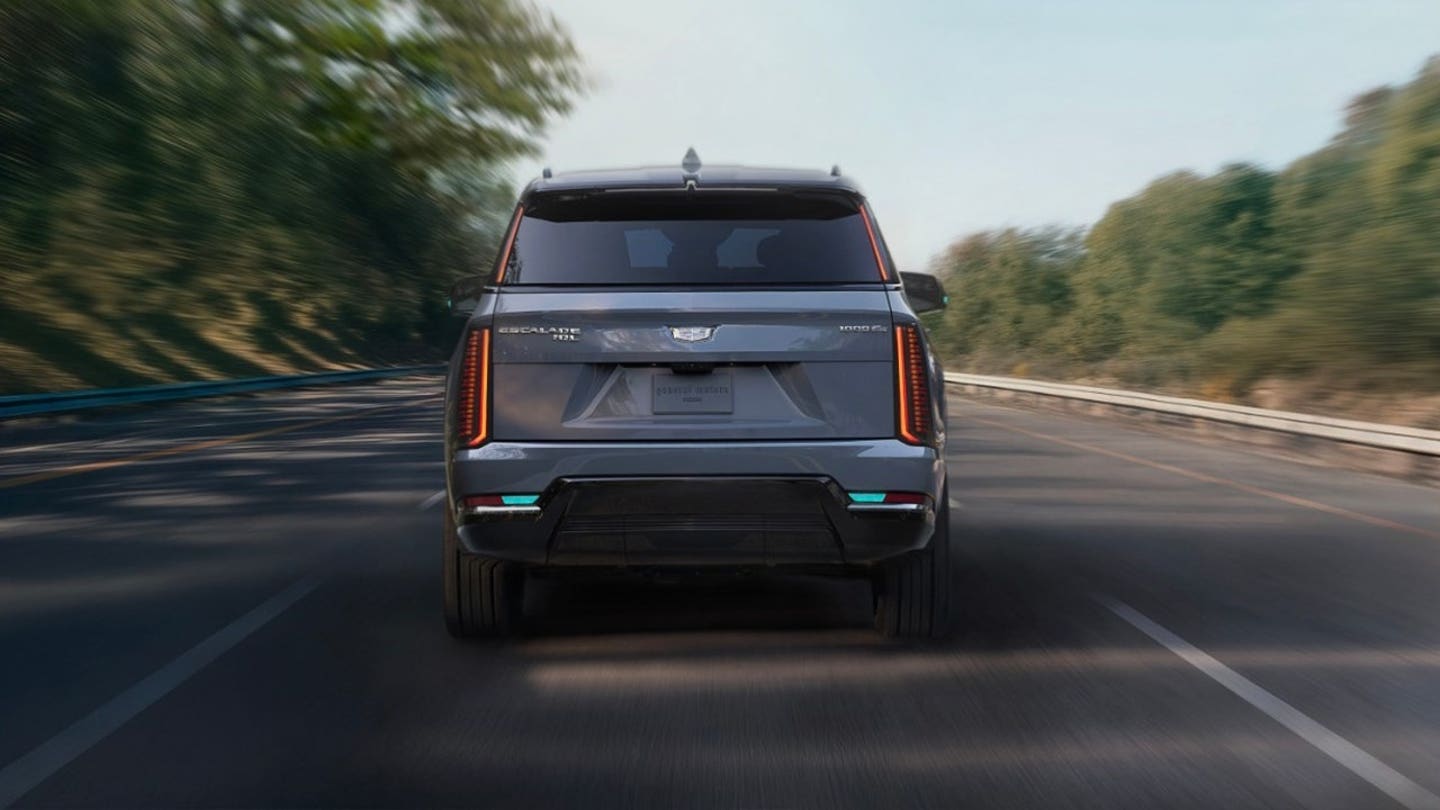
General Motors plans to introduce an “eyes-off” driving mode as early as 2028, beginning with the Cadillac Escalade IQ electric SUV. The system will rely on lidar, radar and cameras to monitor surroundings and will signal readiness with turquoise lights on the dashboard and exterior mirrors. Initially it will operate only on compatible highways, with GM saying future software updates could expand the feature to additional roads and to other full-size SUVs and light-duty pickups. Availability will also depend on further safety testing and state-by-state regulatory approval.
02
Testing Methods and Safety Research
At GM’s Global Technical Center in Warren, Michigan, hundreds of volunteers ride in real vehicles—such as the Cadillac Lyriq—while an immersive simulator reproduces varied road conditions, sudden traffic changes, construction zones and other hazards. Sensors record eye movements, heart rate and stress responses. GM claims the simulation tools can reproduce the equivalent of 100 years of driving in a single day, allowing engineers to study dangerous scenarios without exposing everyday drivers to risk. As part of the research, participants have been asked to play the mobile game Candy Crush to create a focused distraction; the interruption when the system demands attention is then measured.
Visual evidence
Images from the story
03
Cost and Subscription Model
Super Cruise, GM’s current hands-free system, includes three years of service and then costs $39.99 per month. The company has not disclosed pricing for the future eyes-off capability, but analysts note that subscription fees could become a recurring expense for owners of premium SUVs.
04
Official Statements & Responses
GM officials say the eyes-off feature will launch only after the technology proves it can safely manage unexpected conditions and handle a failed driver takeover. The automaker emphasizes that the rollout timeline remains contingent on development progress, safety validation and regulatory clearance.