
Full Breakdown
France’s Nationwide Protests Escalate Amid Cost-of-Living Crisis
By Drooid · · How we work
In this breakdown
01
Core Event: Saturday Demonstrations Turn Violent in Paris
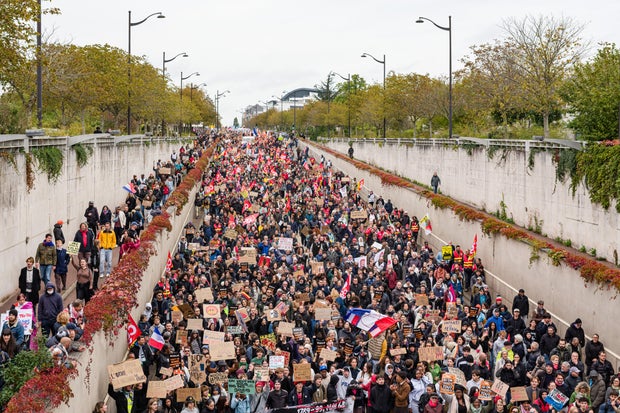
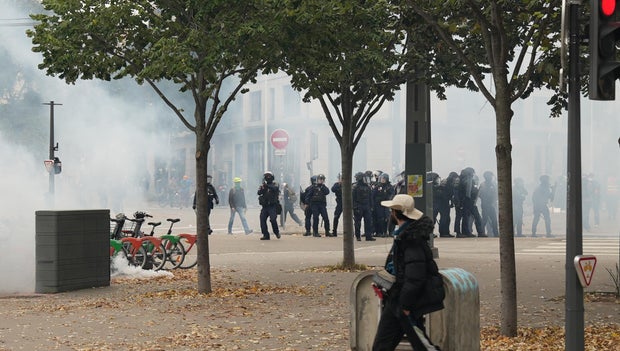
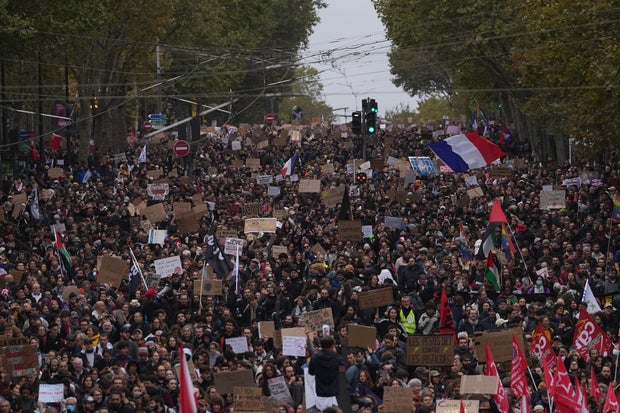
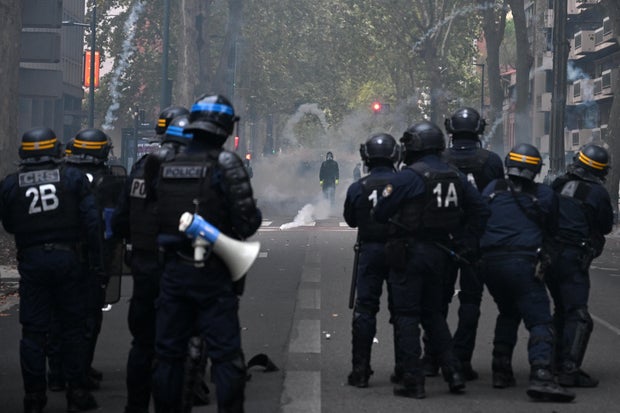
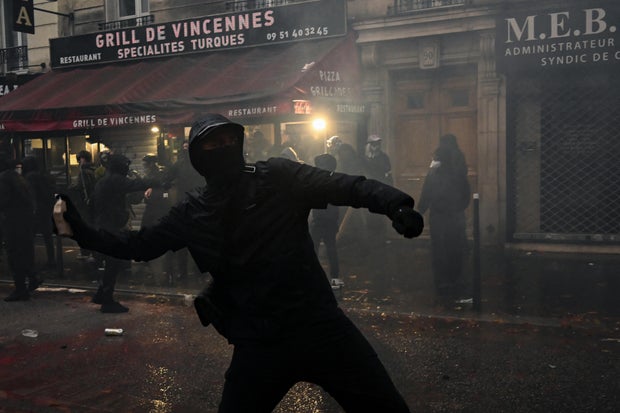
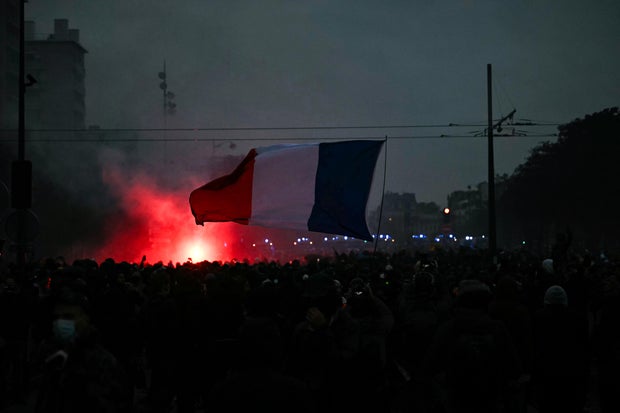
On a rainy Saturday, more than 100,000 demonstrators gathered on Paris’s southeastern fringe to protest school funding cuts and rising living costs. The march stayed peaceful until it reached the Porte de Vincennes, where masked participants hurled bottles, rocks and fireworks at police. Officers responded with tear-gas canisters, sound grenades and water-cannon jets. The clashes lasted about an hour and resulted in 64 arrests, including six minors, mainly on weapons-offense or property-damage charges.
Watch
Related reporting
youtube
LIVE: Israel's election results
02
Background & Context
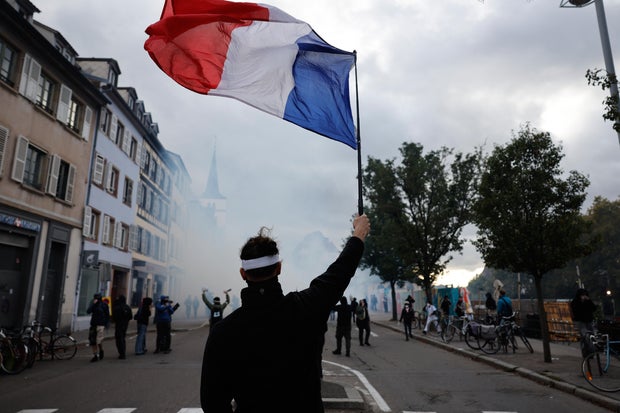
The unrest began in late September when high-school students in the Créteil suburb protested staff shortages and dilapidated facilities. Their demands merged with broader grievances over inflation-driven cost-of-living pressures. Labor unions, the “yellow-vest” (gilets jaunes) movement, environmental groups and pro-Palestinian activists joined, turning a student protest into a nationwide anti-government demonstration.
Visual evidence
Images from the story

03
Data & Statistics
- Turnout: Interior Ministry estimate — 410,000 nationwide; CGT union claim — 800,000. In Paris, police counted 110,000, CGT claimed 250,000.
- Arrests: Interior Minister Laurent Nuñez reported 1,314 arrests across France on October 25 2026; Paris prosecutor’s office recorded 64 arrests that day.
- Police Deployment: Up to 70,000 officers, supported by helicopters, armored vehicles and water-cannon units, were positioned nationwide.
- Property Damage: Approximately 3,000 shops damaged or looted during the previous weekend’s unrest.
- Injuries: Two protesters injured in Paris; a 20-year-old in Toulouse lost fingers; a serious injury noted in Clermont-Ferrand.
- Weapons Confiscated: Metal balls, lead pellets, fireworks, slingshots, steel balls, improvised weapons, a katana and air-soft guns.
04
Official Statements & Responses
Interior Minister Laurent Nuñez emphasized a “zero-tolerance” stance, declaring, “We will not tolerate any violence or any disturbance of public order.” President Emmanuel Macron called the protests a “legitimate expression of public concern” over energy costs linked to the Middle-East conflict and pledged to protect cultural sites and commercial districts. Paris police prefect Patrice Faure urged shop owners to hire private security, later noting that safeguarding businesses remains a governmental responsibility.
05
Criticism & Opposition
Trade unions condemned police-enforced route changes and bans on rallies in cities such as Lyon, Nice and Montpellier, describing them as violations of constitutionally protected freedom of expression.
06
Conflicting Reports & Gaps
- Attendance: Ministry’s 410,000 estimate versus CGT’s 800,000 claim; Paris figures also diverge (110,000 vs 250,000).
- Arrest Totals: Nuñez’s 1,314 arrests differ from earlier reports of “nearly 1,000” and from the Paris prosecutor’s 64 arrests.
- Injury Details: Confirmation exists for two injuries in Paris; reports of a “seriously injured” individual in Clermont-Ferrand and a finger loss in Toulouse lack follow-up verification.
07
Verbatim Quotes
- “All of a sudden, it exploded,” — Gabrielle Fahmy
- “We will not tolerate any violence or any disturbance of public order.” — Laurent Nuñez, interior minister
- “The money is now concentrated in the hands of very few people,” — Victoria Ambrosini, art critic and teacher at Saint-Denis University
- “He is going to understand that this is going to repeat itself every week,” — Luc Mélenchon