
Full Breakdown
Israeli Election Seen as Referendum on Netanyahu’s Grip on Power
By Drooid · · How we work
In this breakdown
01
Core Event
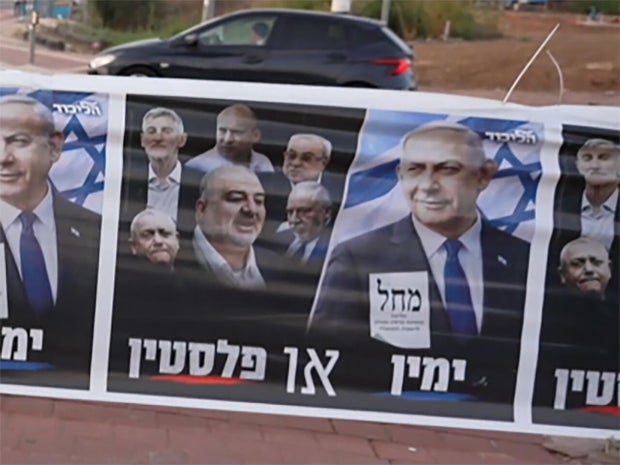
Israel’s parliamentary election on Tuesday features 39 parties, but the contest is framed as a test of Prime Minister Benjamin Netanyahu—the incumbent Likud leader whose tenure has been marked by security wars, judicial reforms and a corruption trial. Voters will decide whether the nation stays under his leadership or shifts toward a coalition led by former chief of staff Gadi Eisenkot.
Watch
Related reporting
cbsnews
Video: Israeli election to test Benjamin Netanyahu's ability to hold power
02
Background & Context
- The Oct 7 2023 terror attacks reshaped Israeli politics and intensified security concerns.
- Since 2023 Israel has fought a conflict with Hezbollah, launching a bombing campaign and occupying parts of southern Lebanon; thousands have died and many are displaced.
- The northern city of Kiryat Shmona—a traditional Likud stronghold—was evacuated after rocket fire and remains only partially repopulated.
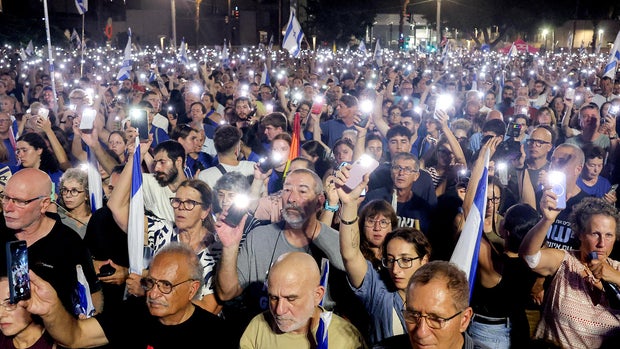
- Netanyahu’s government faces ongoing judicial reforms protests, including a demonstration of tens of thousands in Tel Aviv on Oct 25 2026.
Visual evidence
Images from the story



03
Key Figures & Groups
- Benjamin Netanyahu — Prime Minister, Likud leader, frames the election as existential for Israel.
- Gadi Eisenkot — Former military chief of staff, opposition candidate promising a coalition without religious extremists and a state inquiry into the Oct 7 attacks.
- Likud supporters in Kiryat Shmona — Predominantly Mizrahi Jews; recent polls show waning enthusiasm.
- Agam Labs — Polling unit at Hebrew University tracking voter sentiment in the north.
04
Data & Statistics
- Support for Netanyahu in the north fell from roughly 29 % before the 2022 election to about 17 % in a recent Agam Labs poll.
- In 2021-2022, ? 50 % of Kiryat Shmona voters chose Likud, compared with ? 25 % nationwide.
- 39 parties are contesting the election, though the race is dominated by the Netanyahu-Eisenkot rivalry.
05
Official Statements & Responses
- Netanyahu’s campaign describes the vote as an “existential” decision for Israel’s security and democratic future.
- Analyst Dahlia Scheindlin notes Eisenkot’s appeal lies in a more moderate coalition, but cautions Netanyahu’s coalition-building skill could keep him in power.
- Nimrod Nir, director of Agam Labs, says frustrated Likud voters may shift to hard-line parties such as Otzma Yehudit and the Religious Zionist Party.
06
On-the-Ground Reports
- Long-time supporter Maimon Amsalem affirmed loyalty to Netanyahu while urging him to address local needs.
- Nissan Zeevi, a third-generation northern resident, highlighted the ongoing three-year war with Hezbollah and growing frustration with the prime minister.
07
Conflicting Reports & Gaps
- No source provides a concrete policy platform from either candidate on the Hezbollah conflict; both have offered only vague “strong defense” promises.
08
Verbatim Quotes
- “Kiryat Shmona, the way the city is socioeconomically and religion-wise, it is made for the right and specifically Likud,” — Sami Malul, 72, retired Likud councilor
- “We really love Bibi, and we can't choose anyone else, but he should see the needs of his people,” — Maimon Amsalem
- “Residents in the north have been in a war for three years that hasn't ended,” — Nissan Zeevi
09
What’s Next
The election outcome will determine whether Netanyahu remains prime minister or Eisenkot assembles a coalition that excludes the most hard-line factions. Coalition talks are expected to begin immediately after the vote, and analysts warn Netanyahu could still return to the premiership within a year through strategic alliances.