
Full Breakdown
Pentagon’s FORTRESS Initiative Aims for 90-Day Base Autonomy Amid Growing Hybrid-War Threats
By Drooid · · How we work
In this breakdown
01
Core Event: 90-Day Self-Sufficiency Requirement for Major U.S. Bases
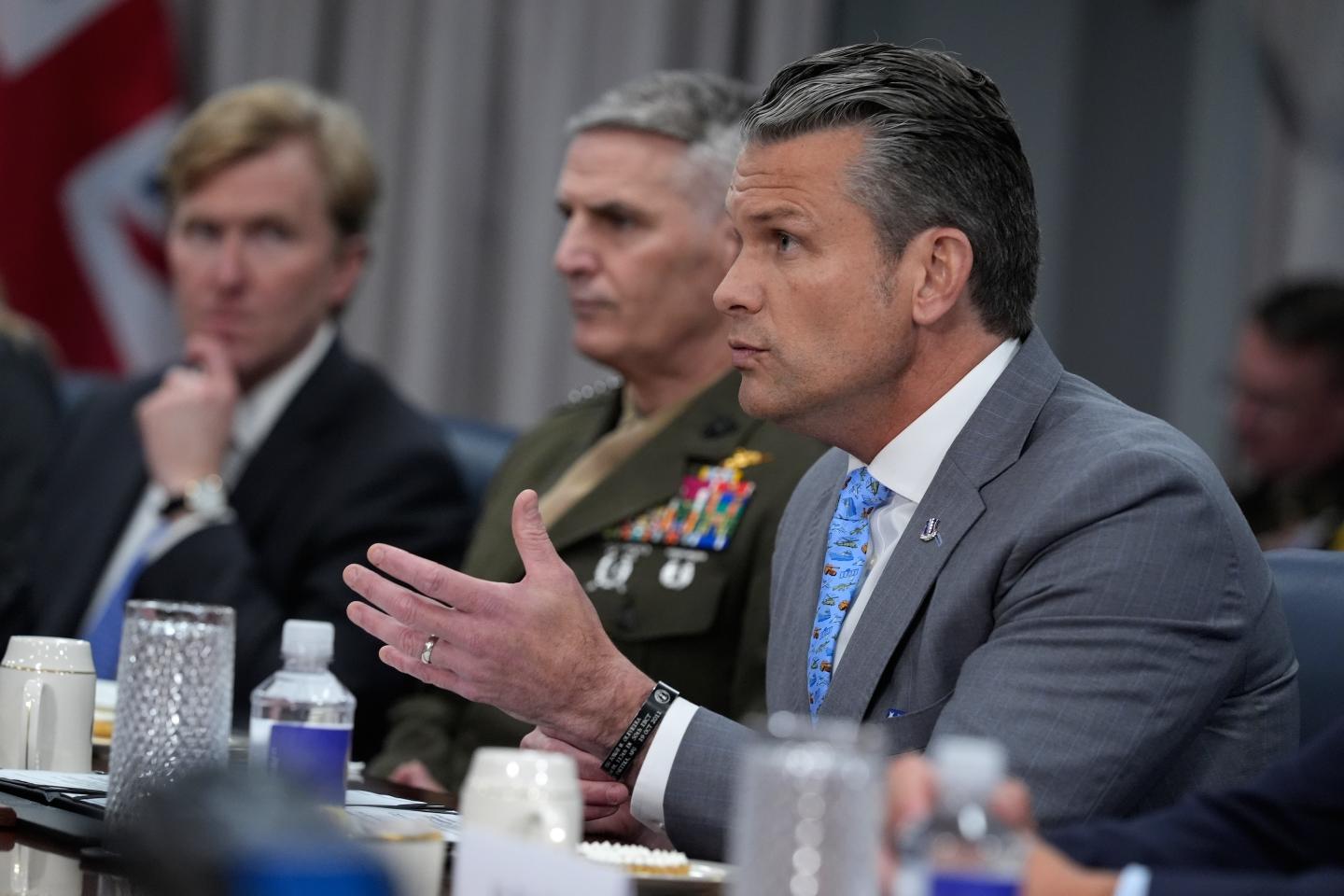
The Department of Defense is drafting a requirement that every major installation in the continental United States be able to sustain essential operations for at least 90 days without reliance on civilian utilities or external supply chains. The effort, named FORTRESS (Federal Operations for Resilience, Troop Resources, Energy, Supply, and Survivability), was announced by Defense Secretary Pete Hegseth in a recent “State of the Force” address.
Implementation plans call for portable nuclear micro-reactors, utility-scale battery storage, and micro-grids that can disconnect bases from the public power network. The initiative also mandates on-site reserves of water, fuel, munitions, critical minerals, electronics, spare parts and medical supplies, and requires at least two qualified production pathways for each critical item. Through the Civil Reserve Manufacturing Network, pre-identified commercial factories would be prepared to shift to defense production in a crisis.
02
Background & Context: Rising Concerns Over Infrastructure Vulnerability
A February 2024 joint advisory from the Cybersecurity and Infrastructure Security Agency, the National Security Agency and the FBI warned that Chinese state-sponsored hackers known as Volt Typhoon had infiltrated U.S. communications, energy, transportation and water networks, potentially positioning themselves to disrupt essential services in a future conflict.
Across the Atlantic, Britain launched its Be Ready campaign, urging households to keep three liters of water per person per day, non-perishable food, flashlights, power banks, a battery-powered or wind-up radio, first-aid supplies and cash for up to three days. Defence Secretary Wes Streeting warned that adversaries could field a war-economy capable of striking by 2030, giving NATO allies roughly 1,000 days to prepare.
Visual evidence
Images from the story

03
Data & Statistics: Scope and Estimated Costs
- Roughly 500 continental bases are being assessed for baseline energy and logistical needs.
- The Army has awarded up to $2.2 billion for nuclear micro-reactor projects at five installations, including Fort Bragg and Fort Hood.
04
Official Statements & Responses
Pentagon chief spokesperson Sean Parnell emphasized that reliance on municipal utilities “creates an intolerable risk” for national defense and described power as a combat asset. U.S. officials also highlighted the need to harden communications, navigation and satellite links against GPS jamming and cyber intrusion.
British officials cited the National Cyber Security Centre chief executive Richard Horne, who reported that about 75 % of 200 cyber incidents affecting critical infrastructure between June 2025 and May 2026 were linked to state actors, naming Russia, China and Iran.
05
Conflicting Reports & Gaps
- No definitive implementation timeline has been published; senior defense officials indicated full compliance could take decades.
- Cost projections vary widely, with some analysts suggesting “tens of billions” while others allow for “hundreds of billions.”
- The Pentagon and the UK’s Be Ready campaign are not coordinated, and neither government has indicated that a new war is imminent.
06
Verbatim Quotes
- “Power is combat now. Without electricity, you lose communications, water, logistics, assembly lines and just basic military command structures,” — Sean Parnell
- “The next conflict will likely be fought on several fronts. When that happens, global supply chains will collapse,” — Sean Parnell
- “To prevent the worst, we have to prepare for it,” — Wes Streeting
- “FORTRESS is strategic deterrence in action, ensuring our defenses are hardened, proactive, and ready,” — Sean Parnell