
Full Breakdown
US-Canada Trade Talks Intensify Ahead of Midterm Elections
By Drooid · · How we work
In this breakdown
01
Core Event
Negotiations between the United States and Canada have accelerated over the past week as both governments explore relief from Section 232 tariffs that impose up to 50 percent duties on Canadian steel and 25 percent duties on Canadian automobiles. The talks occur just days before the U.S. midterm elections, where the tariff-driven rise in consumer prices has become a prominent voter concern.
Watch
Related reporting
ex
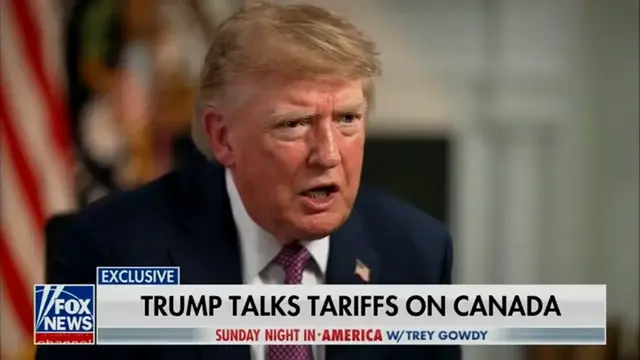
Donald Trump defends Canada trade war: 'They're not a state'
02
Background & Context
In August, advanced trade talks collapsed, prompting the Trump administration to levy 50 percent tariffs on hundreds of Canadian import categories, affecting roughly $20 billion in annual trade. Canada responded with reciprocal measures, including retaliatory duties on about 700 U.S. products. The dispute has strained a relationship that traditionally features deep economic interdependence, especially in border states such as Michigan, Maine, and Alaska.
Visual evidence
Images from the story
03
Timeline
- August 2023 – Advanced talks break down; U.S. imposes 50 % tariffs on Canadian goods; Canada retaliates with duties on U.S. products.
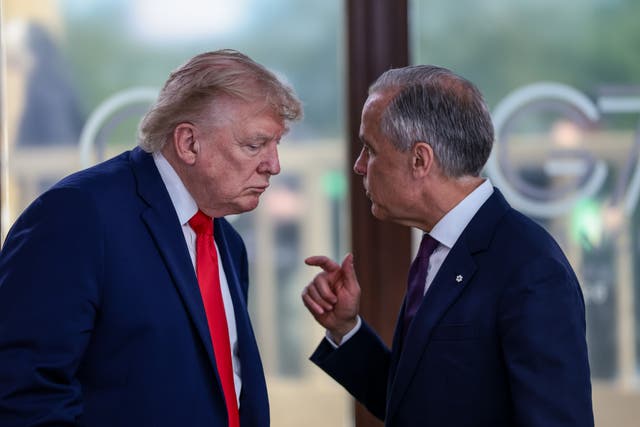
- Monday (date unspecified) – Canadian Prime Minister Mark Carney announces a “slight intensification” in bilateral talks.
- November 3 (scheduled) – Sources indicate a possible agreement on steel and auto tariffs could be reached before the U.S. midterm elections.
- January 1 2027 (occurred) – President Donald Trump previously said he would raise tariffs on Canadian steel and autos to 50 percent on this date, a statement that preceded the current round of negotiations.
04
Data & Statistics
- Section 232 duties: up to 50 % on Canadian steel, 25 % on Canadian automobiles.
- Canadian retaliatory tariffs: up to 50 % on roughly 700 U.S. products, covering about $20 billion in annual imports.
- Trade talks involve high-level officials from both sides, including the U.S. Commerce Secretary Howard Lutnick and Canada’s Trade Minister Dominic LeBlanc.
05
Official Statements & Responses
- Howard Lutnick (U.S. Commerce Secretary) – Has maintained regular contact with Canadian officials to negotiate duty relief.
- Dominic LeBlanc (Minister responsible for Canada-U.S. trade) – Stated that Canada remains in “constructive dialogue” with Washington.
- Mélanie Joly (Canadian Trade Minister) – Explained that Canada’s retaliatory tariffs were deliberately targeted at U.S. states that support President Trump, aiming to maximize political impact.
06
Criticism & Opposition
- Mike Rogers, Republican candidate for the U.S. Senate in Michigan, has run ads urging an end to the tariff war, arguing that “Canada is not our enemy.”
- Sen. Susan Collins (Republican, Maine) pressed the administration to ease tariffs on Canadian agricultural and forestry products, citing the burden on farmers and local businesses.
07
Conflicting Reports & Gaps
U.S. sources convey optimism that the Trump administration seeks further concessions from Canada, while Canadian officials emphasize that any progress reflects Washington moving toward Ottawa’s demands. Neither side has provided concrete terms, and the timeline for a finalized agreement remains uncertain.
08
Verbatim Quotes
- “They’re willing to give us anything at this moment,” — The Trump, president
09
What’s Next
Negotiators aim to finalize a narrowed agreement on steel and auto duties before the November 3 elections, though the precise scope and timing of any deal remain unconfirmed. Both governments have signaled readiness to continue “constructive dialogue” in the weeks ahead.