
Full Breakdown
Slovenia’s Triglav Glacier Disappears Amid Record Heat
By Drooid · · How we work
In this breakdown
01
Core Event
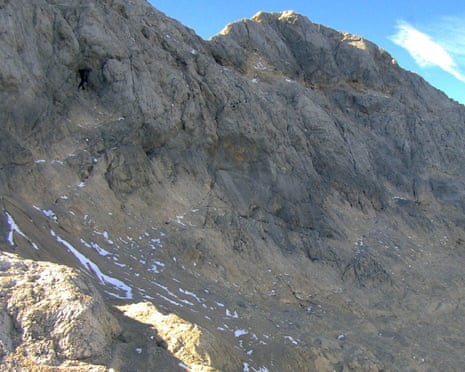
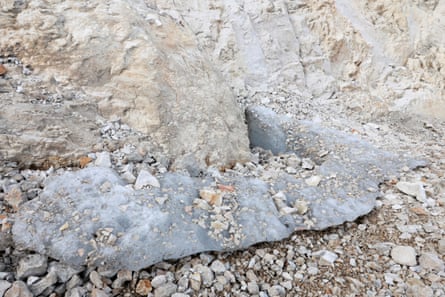
The last remaining ice on Slovenia’s Triglav glacier has melted away, leaving only isolated rock pockets on the country’s highest peak. After losing 93 % of its surface between the early 1980s and 2003, the glacier persisted in small fragments for two more decades before vanishing completely during the recent scorching summer that set temperature records across Western Europe.
02
Background & Context
Historical records show the glacier covered roughly 40 hectares in the mid-1800s, shrinking to 14 hectares by 1946 when the first formal measurements were taken. The Anton Melik Geographical Institute, which began systematic monitoring in 2001, documented a continual retreat that accelerated in the last century. The broader Alpine region has experienced similar losses; Swiss glaciologists reported a near-20 % reduction in national ice volume over the past five years, with a 5.5 % drop in 2026 alone.
Visual evidence
Images from the story
03
Data & Statistics
- Ice loss of 93 % from 1983-2003.
- Remaining ice reduced to less than a hectare by the early 2000s.
- Final ice patch measured only a few metres by the end of the most recent summer.
- Western Europe’s hottest summer on record this year caused an estimated 50,000 heat-related deaths and widespread agricultural and energy disruptions.
04
Impact and Significance
Matija Zorn, director of the Anton Melik Geographical Institute, emphasized that Triglav holds a central place in Slovenian national identity, and the glacier’s disappearance eliminates a key climate-change indicator and data source. The melt has also exposed new subterranean ice shafts in nearby caves, while a neighboring glacier on Skuta mountain remains partially shaded and may persist for a few more years. Glaciologist and mountain guide Miha Pavšek warned that the loss underscores a broader shift in nature that the public has yet to fully acknowledge, noting that glaciers once perceived as eternal are now vanishing before eyes.
05
Expert Commentary
Both Zorn and Pavšek expressed personal and scientific disappointment, describing the rapid melting as “incredible” and lamenting the cultural and environmental void left by the glacier’s absence. Their observations highlight the tangible consequences of intensified heatwaves driven by carbon-based pollution across the Alpine landscape.