
Full Breakdown
First U.S. Telerobotic Prostate Surgery Connects Two Hospitals 35 Miles Apart
By Drooid · · How we work
In this breakdown
01
Groundbreaking Telerobotic Prostatectomy
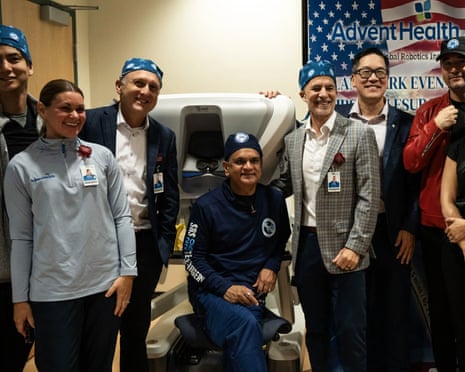
A surgeon at AdventHealth Celebration in suburban Orlando performed a robotic prostatectomy on a 66-year-old patient, identified only as Mark, while the patient was treated at an AdventHealth facility in Minneola, Florida, about 35 miles away. The operation, conducted on a Sunday, was carried out under an Food and Drug Administration (FDA)-approved investigational device exemption and was part of a clinical study evaluating a telerobotic surgical system. On-site surgeon Marcio Moschovas assisted the patient during the procedure.
02
Background & Context
Telesurgery enables a surgeon to manipulate robotic instruments remotely, but its safety, reliability and cybersecurity remain under study. Prior to this U.S. case, the research team completed ten investigational telesurgeries linking Orlando with Luanda, Angola, and a high-profile operation in London removed a prostate in Gibraltar using a four-armed robot. The current procedure marks the first documented telerobotic surgery between two U.S. hospitals.
Visual evidence
Images from the story
03
Data & Statistics
- Patient age: 66 years
- Distance between operating and patient sites: ~35 miles
- Prior investigational telesurgeries (Orlando–Luanda): 10
- Clinical study conducted under an FDA investigational device exemption (not full FDA clearance)
04
Official Statements & Responses
Dr Vipul Patel, founder and medical director of the Global Robotics Institute at AdventHealth Celebration, said the study aims to assess whether telesurgery can lessen geographic barriers to specialized care. AdventHealth cautioned that the single procedure does not establish the technology’s general clinical performance and emphasized the need for an on-site team to intervene if equipment or connection failures occur. The organization also noted that robotic prostatectomy carries established risks such as bleeding, infection, incontinence and erectile dysfunction, with the additional telesurgery-specific concerns of potential technical failures and cybersecurity threats.
05
Why It Matters
If subsequent studies confirm safety and reliability, telerobotic surgery could expand access to expert procedures for patients living far from specialized centers. However, the current cautionary stance underscores that broader clinical adoption will depend on rigorous evaluation of both medical outcomes and the robustness of remote-operating infrastructure.