
Full Breakdown
China’s Shenlong Spaceplane Launches Fourth Orbital Mission
By Drooid · · How we work
In this breakdown
01
Shenlong’s Fourth Orbital Flight
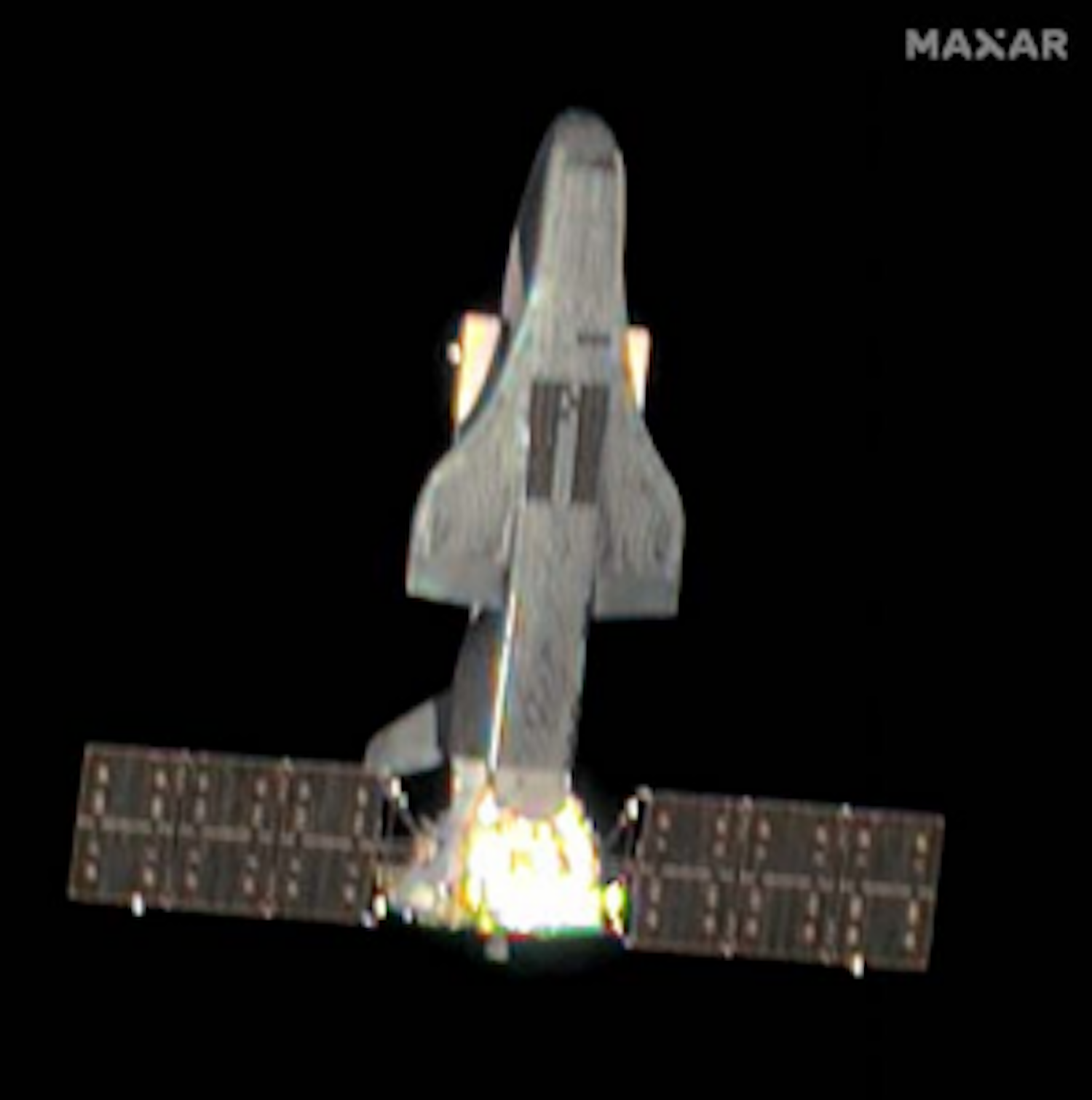
On February 7, 2026, the Defense Intelligence Agency (DIA) reported that China’s secretive reusable spaceplane, identified as Shenlong, began its fourth known orbital excursion after liftoff from the Jiuquan Satellite Launch Center. The DIA’s “Challenges to Security in Space” report includes a 2024 Maxar Technologies photograph that shows the vehicle from below, highlighting its rear-facing solar panel arrays.
02
Background and Prior Missions
China first disclosed Shenlong in 2007, but concrete details have remained limited. The DIA notes a two-day test flight in 2020, followed by a 276-day mission in 2022. A third flight, lasting 268 days, launched in December 2023. The current 2026 mission marks the vehicle’s fourth known orbital test, continuing a pattern of progressively longer deployments.
Visual evidence
Images from the story
03
Technical Characteristics
According to the DIA, Shenlong measures over 29 feet in length with a nearly 15-foot wingspan. The craft reaches an orbital velocity of 17,426 mph and is designed for vertical takeoff and horizontal landing. Its distinctive rear-deployed solar panels differentiate it from other spaceplanes that place arrays on top surfaces.
04
Official Assessment and Strategic Context
The DIA’s unclassified assessment frames Shenlong alongside the United States Space Force’s X-37B, a Boeing-built reusable robot plane that has accumulated 431 days in low-Earth orbit across eight classified missions. The DIA situates the vehicle within a broader analysis of space-based threats posed by China, Russia, Iran, and North Korea.
05
Implications for Space Security
Analysts cited in the DIA’s report argue that Shenlong’s continued testing expands China’s reusable-launch capability, potentially altering the balance of technology and operational endurance in low-Earth orbit. The vehicle’s long-duration flights and novel solar-panel configuration raise questions about future satellite servicing, debris generation, and the feasibility of autonomous on-orbit operations, all of which are highlighted as emerging challenges for the United States and its allies.