
Full Breakdown
Supreme Court Scrutinizes India’s Drug-Pricing System
By Drooid · · How we work
In this breakdown
01
Core Event: Court Questions Government Over Medicine Markups
On October 27 2026, Justices Vikram Nath and Sandeep Mehta interrogated the Union government about the large gap between the maximum retail price (MRP) of essential medicines and the price at which retailers purchase them. The bench asked why “economic policy” should outweigh citizens’ lives and demanded justification for trade-margin caps that had been applied only after the Court’s intervention.
02
Background & Context
Petitions filed by advocate Kishan Chand Jain and paediatric surgeon Sanjay Kulshrestha under the Drugs (Prices Control) Order, 2013 seek stricter enforcement of price controls across the pharmaceutical supply chain. The National Pharmaceutical Pricing Authority (NPPA) recently capped trade margins on 137 non-scheduled anti-cancer medicines at 30 % of their MRP, to take effect on November 9. The Court has noted that many essential drugs remain outside the scheduled list, escaping price-ceiling provisions.
Visual evidence
Images from the story
03
Timeline
- October 22 2026 – The Hindu reported NPPA had recovered only INR1,582.4 crore of INR10,029.8 crore demanded, leaving INR8,447.4 crore outstanding (as of March 31 2026).
- October 27 2026 – Hearing on medicine overpricing; bench highlighted a 300-400 % MRP-to-retailer gap and cited a cancer injection bought for INR11,000 but billed at INR1.30 lakh to a patient.
- November 9 2026 – Revised anti-cancer drug prices become effective.
- November 17 2026 – Matter listed for further hearing.
04
Data & Statistics
- Pending recoveries: INR8,447.4 crore (NPPA) versus INR8,700 crore reported elsewhere.
- Expected annual savings from the 30 % margin cap: ? INR2,500 crore.
- Trade-margin ceiling for scheduled drugs is 16 % of MRP; non-scheduled medicines currently lack such a ceiling.
05
Official Statements & Responses
Additional Solicitor General Aishwarya Bhati warned that “complete government control” could harm market dynamics, advocating a “calibrated approach” that balances affordable access with innovation. She noted that India’s medicine prices are among the world’s lowest.
Senior advocate Mukul Rohatgi, representing private hospitals, argued that hospitals incur substantial costs and that reducing drug margins to 10-20 % would jeopardise financial viability, forcing higher charges for other services.
The bench dismissed the defence that hospitals must rely on drug mark-ups, stating that patients “cannot be subjected to ‘dacoity’” and that the government’s “calibration is too wayward.”
06
On-the-Ground Reports
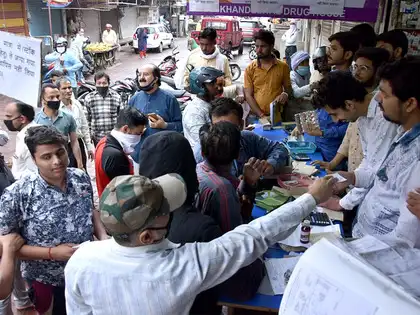
A medical dealer testified that his wife’s cancer treatment required an injection he could purchase for INR11,000, yet the hospital refused the dealer-sourced drug and billed INR1.30 lakh. His statement underscores patients’ lack of bargaining power and profit-driven pricing practices.
07
Conflicting Reports & Gaps
- Pending recoveries differ between sources: INR8,447.4 crore vs INR8,700 crore.
- Projected savings vary: a fixed INR2,500 crore annual reduction versus a reported 20-70 % price reduction in other filings.
- The NPPA’s effectiveness is disputed; the Court called it “totally defunct,” while the government points to ongoing “calibrated” interventions.
08
Verbatim Quotes
- Justice Mehta: “There are pending recoveries from the manufacturers by the government. There was a news item on this recently... The patients and their families have to sell ornaments, houses to get the treatment, which, if the proper control was there... would be one-fourth the cost,”
- Mr. Rohatgi: “Of the amount I bill, I receive only a portion from insurance or the government. I have to subsidise those bills... If this is brought down to 10% or 20%, hospitals will collapse. If I don’t get the difference, it will lead to an increase in [charges for] other facilities,”
- Aishwarya Bhati: “Ordinarily, where there is substantial competition, there is no need to regulate prices. It is not that the govt has left the market unregulated but the complete control of the market is not feasible,”
09
What’s Next
The bench has reserved its order and given parties two weeks to file written submissions. A further hearing is set for November 17 2026, where the Court may consider extending the 16 % ceiling to all essential medicines.