
Full Breakdown
Jordan’s Cross-Border Airstrikes in Southern Syria: Retaliation, Civilian Toll, and Diplomatic Fallout
By Drooid · · How we work
In this breakdown
01
Core Event
On the night of October 27 2026, the Jordanian Armed Forces launched airstrikes against sites in the Daraa and As-Suwayda governorates of southern Syria. Jordan said the operation targeted “dens of terrorist organisations” linked to the October 23 church attack in Karak and claimed it killed more than 20 Islamic State militants and destroyed a weapons depot. Syrian authorities reported that the strikes killed seven civilians—including three children, a woman and an elderly man—and injured several others.
02
Background & Context
The October 23 attack on a Greek Orthodox church in Karak, claimed by ISIL, killed nine worshippers and wounded dozens. Jordan’s Interior Minister Mazin al-Farrayeh announced the arrest of two brothers and their brother-in-law suspected of involvement. Jordan’s military said field intelligence linked the perpetrators to “terrorist groups” operating in southern Syria. Since 2023, Jordan has periodically carried out cross-border strikes, citing drug-smuggling and arms-trafficking concerns.
Visual evidence
Images from the story


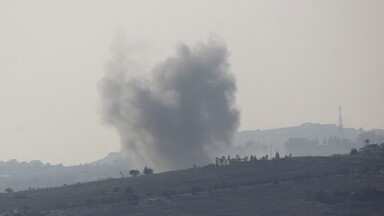
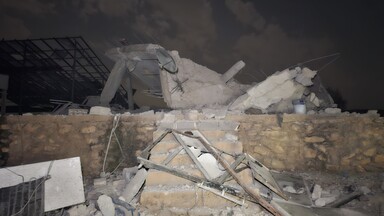
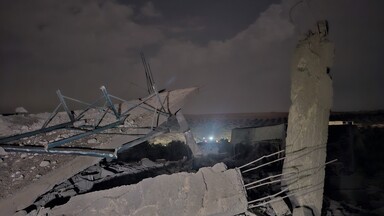


03
Timeline
- October 23 2026 – ISIL claims responsibility for the Karak church shooting.
- October 27 2026 – Jordan conducts airstrikes in Daraa and As-Suwayda; White Helmets respond.
- October 27 2026 – Syria’s Foreign Ministry condemns the strikes as an “unacceptable violation” and announces an investigation.
- October 28 2026 – Jordan and Syria agree to form a joint security committee and reopen the Nassib border crossing.
04
Data & Statistics
- Jordan’s claim: > 20 IS militants killed; a major weapons depot destroyed.
- Syrian civil-defence report: 7 civilians killed (3 children, 1 woman, 1 elderly man, 2 other men) and 3 injured.
- Karak church attack: 9 dead, ? 34 injured.
05
Why It Matters / Impact
The strikes underscore the fragile security dynamic along the Jordan-Syria border, where both states accuse each other of insufficient coordination against trans-border militancy and smuggling. Civilian deaths risk eroding the “brotherly” ties re-established after the 2024 regime change in Syria and could fuel anti-Jordan sentiment in border communities. The joint security committee offers a diplomatic mechanism to manage future operations and mitigate civilian harm.
06
Official Statements & Responses
- Jordanian Armed Forces described the operation as “retaliatory” and asserted it was conducted “in coordination with Damascus.”
- Syrian Ministry of Emergency and Disaster Management confirmed the civilian death toll and pledged assistance to victims’ families.
07
Criticism & Opposition
Human Rights Watch warned that “cross-border airstrikes that kill civilians demand scrutiny regardless of the threat posed by drug smuggling from southern Syria.”
08
On-the-Ground Reports
Local resident Salah Mahwash said he heard aircraft “around 10 p.m.” and saw the wreckage of a family’s tent in al-Taff, Lajat.
09
Conflicting Reports & Gaps
- Coordination claim: Jordan maintains the strikes were coordinated with Damascus; Syria denies prior notification.
- Casualty figures: Jordan reports > 20 IS militants killed; Syrian sources report 7 civilian deaths. No independent verification of militant casualties has been provided.
- Target identification: Jordan did not name specific groups or locations; Syrian authorities have not confirmed the presence of armed militants at the strike sites.
10
Verbatim Quotes
- “The operation resulted in the killing and wounding of many elements of the terrorist organizations and the destruction of a number of their vehicles,” — Jordan’s Armed Forces
- “Cross-border airstrikes that kill civilians demand scrutiny regardless of the threat posed by drug smuggling from southern Syria,” — Human Rights Watch
11
What’s Next
Jordan and Syria will convene the joint security committee to investigate the October 27 airstrikes, develop field-intelligence coordination mechanisms, and address border-security protocols. The Nassib crossing is slated to resume normal operations pending diplomatic consultations.