
Full Breakdown
Iran Threatens Legal Action Against Sinokor Vessels in the Strait of Hormuz
By Drooid · · How we work
In this breakdown
01
Background and Context
Iran’s Persian Gulf Strait Authority (PGSA), established earlier this year to manage passage requests through the Strait of Hormuz, has intensified its control of the waterway since U.S. and Israeli air strikes on Iran on February 28. Tehran has used transit restrictions to pressure Washington and to disrupt oil flows from Gulf producers to Asian markets. In response, the United States has imposed a naval blockade on ships linked to Iran in the strait.
02
Core Development: PGSA Announces Legal Action
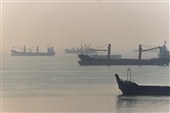
On October 27, the PGSA posted on X that all vessels belonging to South Korean shipping company Sinokor would face “legal action” beginning November 1. The authority said Sinokor vessels had committed the highest number of crossing violations in the strait over the past three months and that “appropriate enforcement measures” had already been taken against at least seven of them.
Visual evidence
Images from the story


03
Official Statements & Responses
- PGSA (Oct 27) – announced the forthcoming legal action and cited the violation record.
- Korea Shipowners’ Association (Oct 28) – asserted that the vessels in question were not owned by Sinokor but were sub-chartered to an overseas oil company and carried no South Korean crew, a fact it confirmed with a Sinokor official.
- Sinokor – did not immediately comment on the PGSA announcement.
- U.S. Government – continues to enforce a naval blockade against ships linked to Iran in the strait, a policy introduced after Iranian attacks on commercial shipping.
04
Data & Statistics
- Crude volumes: Bloomberg analysis shows Sinokor-owned tankers moved roughly 105.6 million barrels of crude through the Strait in September, representing about 37 % of the 286.3 million barrels that transited the waterway that month.
- VLCC share: Lloyd’s List reported Sinokor accounted for 47 % of very large crude carrier (VLCC) transits in September, rising above 50 % during the first ten days of the current month.
- Non-compliance list: The PGSA’s list of vessels violating its transit rules grew to 122 vessels as of October 20, after earlier lists of 45 vessels in August and 77 in September.
- Damaged ships: Seven Sinokor tankers have already been hit by missile or drone attacks, according to multiple maritime reports.
05
On-the-Ground Reports
- The United Kingdom Maritime Trade Operations (UKMTO) reported on October 26 a vessel fire 63 nautical miles southeast of Al-Faw, Iraq; crew status, damage assessment, and environmental impact were unknown at the time of the report “Crew status, damage assessment, and environmental impact are unknown at time of report,” — UKMTO.
06
Conflicting Reports & Gaps
- The PGSA has not detailed what form the “legal action” will take, leaving uncertainty over whether fines, detention, or seizure are intended.
- The Korea Shipowners’ Association disputes Iran’s classification of the vessels as Sinokor assets, emphasizing sub-chartering arrangements and foreign crews, while the PGSA treats them as violations by Sinokor-owned ships.
07
What’s Next
The scheduled enforcement measures are set to become effective on November 1, when cargo owners, stakeholders, and insurers are warned that all Sinokor vessels may face sanctions or other enforcement actions.