
Full Breakdown
Sea-Level Rise Reshapes the Venice Lagoon
By Drooid · · How we work
In this breakdown
01
Sea-Level Rise Reshapes the Venice Lagoon
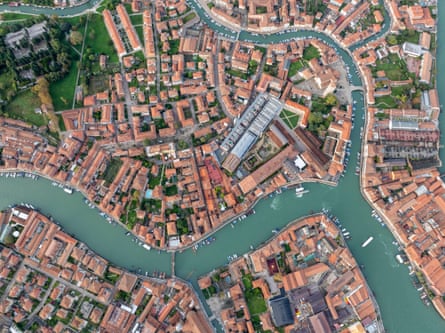
A new study published in *Quaternary Science Reviews* demonstrates that the lagoon surrounding Venice was once dry land extending more than 30 miles inland. Over the past 10,000 years, sea level in the northern Adriatic rose in fits and starts, at times reaching up to 25 mm per year. The researchers identified three distinct phases of rapid rise, followed by a millennium-long period of relative stability that began roughly 6,000 years ago. This stable interval allowed the formation of settlements and the advent of farming in the area now occupied by the lagoon.
02
Research Approach and Findings
Scientists led by Samuele Ongaro of the University of Southampton combined seismic profiling with sedimentary core analysis from coastal basins in northern Italy, Slovenia, and northern Croatia. The integrated data enabled a detailed reconstruction of past sea-level fluctuations and the mapping of ancient shorelines. The model shows that locations such as present-day Trieste were once hills overlooking extensive swamps and lagoons, while the terrain beneath Venice’s waters supported terrestrial ecosystems before being submerged.
Visual evidence
Images from the story

03
Implications for Past Human Adaptation
The study indicates that Mesolithic hunter-gatherer groups living in the region were forced to modify their hunting and fishing strategies as rising waters altered the landscape. The rapid sea-level increases would have required frequent relocation and adaptation, providing a clear example of how early human societies responded to environmental change. Understanding these past adjustments offers valuable context for evaluating modern coastal vulnerability under ongoing climate change.
04
Researchers
Samuele Ongaro — University of Southampton, lead author of the sea-level reconstruction study.
Collaborating team — Geoscientists and sedimentologists from institutions across northern Italy, Slovenia, and northern Croatia who contributed seismic and core data to the model.