
Full Breakdown
Israel’s 2026 Election: Likud Wins Largest Share but Coalition Remains Uncertain
By Drooid · · How we work
In this breakdown
01
Election Outcome: Likud Leads but No Clear Majority
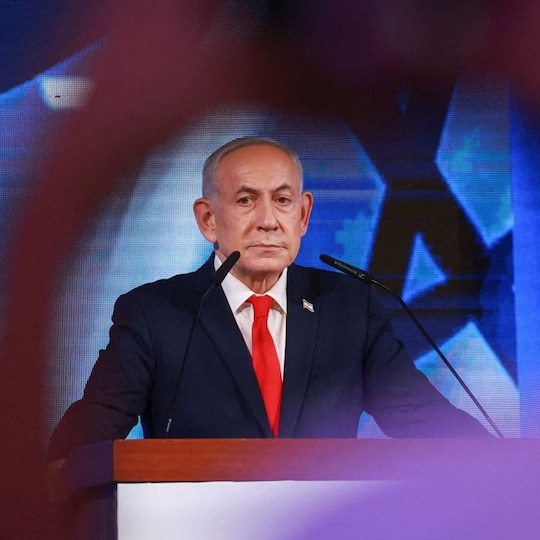
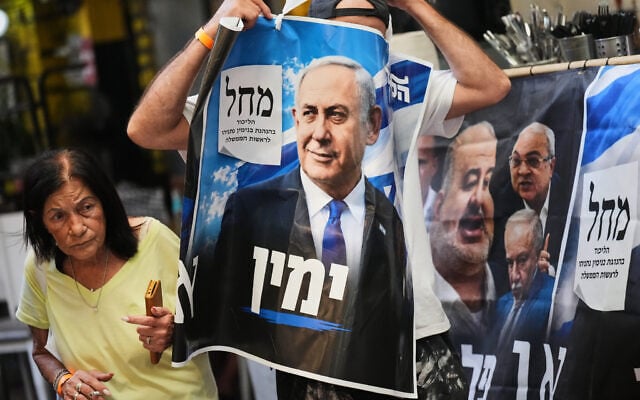
Television exit polls released after voting closed on Tuesday show Prime Minister Benjamin Netanyahu’s Likud emerging as the largest party in the 120-member Knesset. Projections for Likud range from 24 to 27 seats. The centrist Yashar party led by former IDF chief Gadi Eisenkot is projected to win between 20 and 22 seats. Neither bloc reaches the 61 seats required to form a government, and the Arab parties are projected to secure a combined 16-18 seats, giving them potential leverage despite not belonging to either major bloc.
Watch
Related reporting
youtube
LIVE: Israel's election results
02
Coalition Arithmetic and Arab Party Gains
The exit-poll arithmetic creates several possible majority configurations, but each collides with pre-election pledges. Eisenkot has set four conditions for coalition partners that the Arab parties are unlikely to meet, while the Arab parties themselves have campaigned to prevent another right-wing government. Their projected seats could close the numerical gap for the anti-Netanyahu bloc, yet many opposition parties have publicly ruled out sitting with Arab parties.
An alternative scenario would bring the two ultra-Orthodox parties (projected together for about 12 seats) into a coalition, raising policy tensions over conscription reforms. A third option—combining Likud, Yashar, Naftali Bennett’s B’Yachad, and Avigdor Liberman’s Yisrael Beiteinu—would total 67 seats, but it would require Eisenkot’s opponents to abandon their pledge not to serve under Netanyahu and to resolve leadership disputes.
Visual evidence
Images from the story
03
Official Statements & Responses
The committee added that voters arriving by the scheduled 10 p.m. closing time would still be able to cast their ballots.
The Central Elections Committee (CEC) acting director general Dean Livne noted that voters in line at 10 p.m. would be guaranteed the right to vote and that no special circumstances justified a blanket extension.
Senior Likud operatives have prepared contingency plans to challenge results in Arab-majority polling stations, including allegations of fraud and the possibility of labeling the election “stolen” should Netanyahu lose.
04
Criticism & Opposition
Civil-rights watchdogs, including the Movement for Quality Government in Israel, warned that Likud and the far-right Religious Zionism party intend to send roughly 2,000 party activists to Arab polling stations despite having no formal authority there. Legal experts emphasized that regulations strictly limit who may be present inside polling stations, and the CEC’s director general has said there is no evidence of widespread fraud.
05
Conflicting Reports & Gaps
Exit-poll projections differ across outlets:
- Channels 11, 12 and 13 estimate Likud at 24-25 seats and Yashar at 21-22 seats.
- i24news reports Likud at 27 seats and Yashar at 20 seats, with the anti-Netanyahu bloc at 55 seats versus 49 for the Netanyahu bloc.
- Channel 14 shows a larger swing, giving the Netanyahu bloc 60 seats and the opposition bloc 43 seats, and assigning 17 seats to Arab parties.
Arab-party seat totals also vary, ranging from 16 to 18 seats across polls. These discrepancies underscore the provisional nature of the data and the need for official tallies before coalition negotiations solidify.
06
Verbatim Quotes
- “As the time for the closing of the polling stations approaches, there is growing concern that citizens who have not yet voted will refrain from leaving their homes and going to the polling stations, out of the belief that, given the long lines and the remaining time, they will not be able to vote anyway,” — Ilan Bombach, attorney