
Full Breakdown
Egypt’s Parliament Grants President Sisi Authority to Deploy Troops to Saudi Arabia
By Drooid · · How we work
In this breakdown
01
Core Event: Parliamentary Authorization
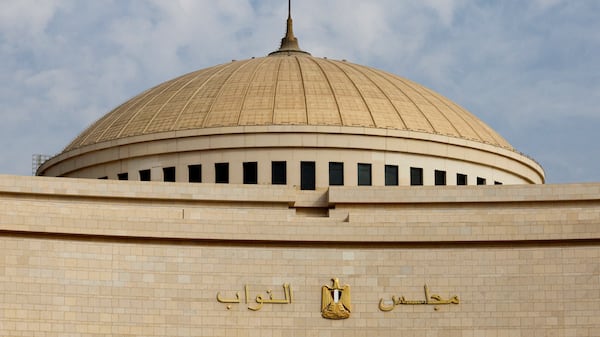
On a Monday session, the Egyptian House of Representatives voted by roll-call to grant President Abdel Fattah El Sisi the constitutional authority to send Egyptian forces to defend Saudi Arabia. Under Article 152, a two-thirds majority of the 596-member chamber—398 votes—is required for any combat mission abroad. The vote met that threshold, although the exact tally was not released. The decision clears the final legal hurdle for a deployment that would occur only at the request of Riyadh.
02
Background & Context
The move follows a Houthi missile strike on Riyadh’s airport on October 10, which killed 12 people, including Egyptian flight attendant Azza Ramzy. The attack heightened regional security concerns and prompted President Sisi to ask parliament for a mandate on October 17 during a graduation ceremony at the Egyptian Military Academy, describing Saudi security as “inconceivable” to be harmed. The following day, the National Defence Council adopted a resolution, cited as the basis for the parliamentary vote. Saudi Arabia is a major financial partner of Egypt, and Houthi attacks on Red Sea shipping have already reduced revenue from the Suez Canal, a key source of foreign currency for Egypt.
Visual evidence
Images from the story


03
Official Statements & Responses
Parliament’s statement framed the authorization as a measure to protect Saudi “territory, sovereignty and holy sites” against external aggression, emphasizing coordination with Riyadh. President Sisi, as supreme commander of the armed forces, reiterated that Egyptian troops would act only if formally requested by Saudi authorities. The Al-Adl (Justice) Party, Al-Wafd Party, and the Salafist Al-Nour Party publicly endorsed the mandate, with Al-Nour’s first deputy chairman Galal Morra linking Egyptian national security to its Arab surroundings.
04
Criticism & Opposition
The Egyptian Social Democratic Party, holding about a dozen seats, abstained, citing the economic cost of a deployment and the risk of regional escalation. Party MP Maha Abdel Nasser described the mandate as “open-ended and vague” and called for a diplomatic solution. The Wafd’s parliamentary bloc leader Mohamed Abdel Aleem Dawoud and independent MP Diaa El Din Dawoud also reserved their positions, signaling unease despite overall party support.
05
Data & Statistics
- House of Representatives: 596 members; 398 votes needed for a two-thirds majority.
- Four pro-government parties control roughly 403 of the 568 elected seats.
- Roll-call voting allowed each MP’s stance to be recorded, but the precise vote count was not disclosed.
- No formal Saudi request for assistance has been announced as of the parliamentary decision.