
Full Breakdown
Boeing Shares Plunge as 737 MAX Production Ramp Delays Push Free-Cash-Flow Targets to 2029
By Drooid · · How we work
In this breakdown
01
Core Event
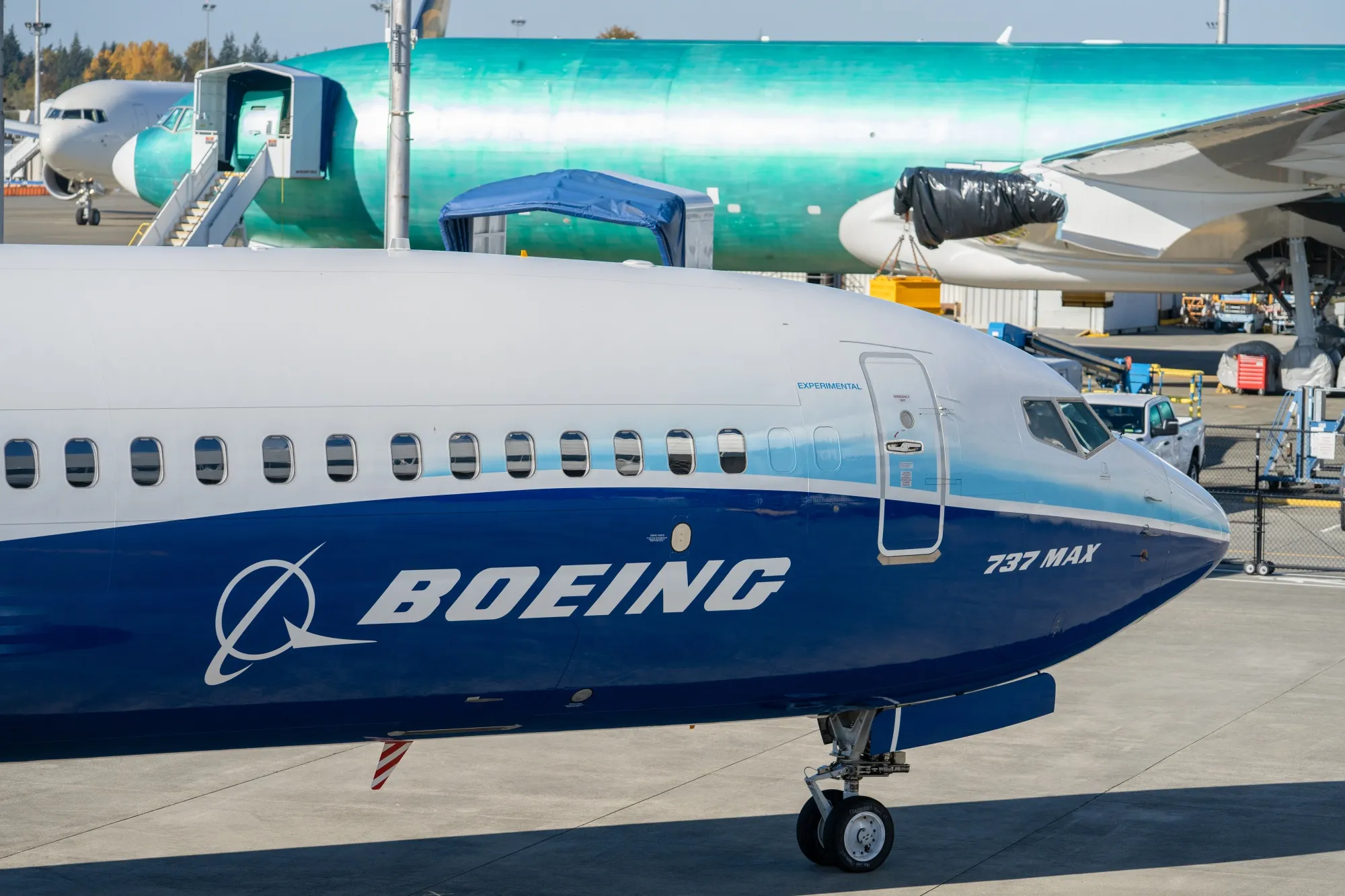
Boeing’s stock fell roughly 10 % on Tuesday after the company warned that the ramp-up of 737 MAX output will not reach the planned 47 jets per month until early 2027 and that the 52-jet-per-month milestone will be delayed to the second half of 2027. The guidance also shifted the timeline for achieving $10 billion in annual free cash flow (FCF) from 2028 to 2029, prompting a sharp market reaction.
02
Background & Context
Since CEO Kelly Ortberg took the helm in August 2024, Boeing has been working to restore confidence after safety-related crises that halted production and strained its balance sheet. Earlier guidance had projected a 47-jet-per-month rate by summer 2026 and a $10 billion FCF target by 2028. The latest earnings call revealed that wing-assembly bottlenecks and additional capital expenditures for a new Navy fighter contract are slowing the cadence.
Visual evidence
Images from the story

03
Data & Statistics
- Revenue: $24.19 billion, up 4 % year-over-year, beating the $23.84 billion consensus.
- Adjusted loss per share: $0.34 vs. the $0.21 expected loss.
- Free cash flow: $464 million for the quarter, above Bloomberg’s $325.1 million estimate.
- Backlog: Record $745 billion, including over 6,300 commercial aircraft.
- Production rates: 737 MAX output at roughly 41 jets per month; target of 47 jets/month expected early 2027; 52 jets/month postponed to late 2027.
- Cash-flow outlook: $2 billion in 2026, $3 billion in 2027, $6 billion in 2028, and $10 billion in 2029.
04
Official Statements & Responses
Ortberg noted that the recent certification of the 737 MAX 7 and MAX 10, along with a new defense contract for the Navy’s F/A-XX fighter, demonstrate momentum but do not offset the need for a careful ramp. CFO Jay Malave added that both commercial and government segments delivered double-digit margins in the quarter, underscoring profitability outside the 737 MAX bottleneck.
05
Conflicting Reports & Gaps
Free-cash-flow projections for 2027 and 2028 differ across sources. Bloomberg’s consensus expected $5.6 billion in 2027 and $9.6 billion in 2028, while Boeing’s own guidance cites $3 billion and $6 billion respectively. No source provided a definitive explanation beyond the noted production and capital-expenditure delays.
06
Verbatim Quotes
07
What’s Next
- 2027 777-9 certification: Boeing expects FAA approval by mid-2027, with deliveries the following year.
- Production milestones: The company aims to achieve the 47-jet-per-month rate in early 2027 and the 52-jet-per-month rate in the second half of 2027.
- Analyst updates: Wall Street is expected to revise its cash-flow models after the earnings call, potentially lowering 2027-2028 targets further.
The delayed 737 MAX ramp and revised cash-flow timeline highlight the tension between Boeing’s strong order book and its ability to convert those orders into cash and profit in the near term.