
Full Breakdown
Jamia Millia Islamia Campus Unrest Escalates Amid Student-Union Demands
By Drooid · · How we work
In this breakdown
01
Core Event – Vandalism on Oct 27
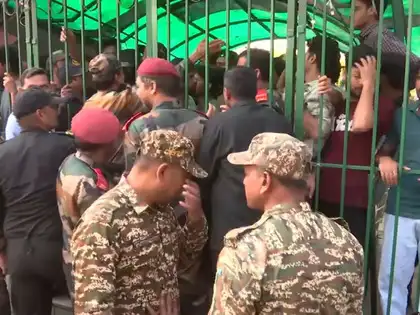
On Oct 27, protesting students and local residents damaged Jamia Millia Islamia’s (JMI) infrastructure, demolishing Gate 4C, pelting stones and destroying CCTV cameras and the control room. University officials said iron rods, hammers and other tools were used, and that women faculty, wardens and provosts were threatened when they tried to reason with female protesters.
02
Background & Context
JMI’s student union has not held elections since 2006, leaving students without an official channel to raise grievances. The agitation began on Oct 12 with a hunger strike demanding the restoration of the Jamia Millia Islamia Students’ Union (JMISU). Demands have since included a timeline for approving the union’s constitution, the resumption of on-campus classes, and the resignation of the chief proctor.
Visual evidence
Images from the story
03
Timeline
Swipe across the table to see all columns.
| Date | Event |
|---|---|
| Oct 12 | Hunger strike begins. |
| Oct 18 | Seven-member high-level committee of senior professors formed to mediate. |
| Oct 21 | Five-member committee to draft the union constitution created. |
| Oct 24 | Classes shifted to online mode. |
| Oct 26 | Administration promises elections within 15 days of constitution approval; students reject it as vague. |
| Oct 27 | Vandalism, including collapse of Gate 4C and damage to CCTV. |
| Oct 28 (scheduled) | Rahul Gandhi expected to visit campus. |
| Nov 8 (scheduled) | Online classes to continue until the Diwali holiday. |
04
Official Statements & Responses
- The university’s proctorial team warned that the damage could compromise safety and cause substantial financial loss.
- Education Minister Pralhad Joshi condemned the violence as “completely unacceptable,” announced a seven-member high-level committee to examine student demands, and said those involved in the night-time vandalism were “certainly not students.”
- Delhi Police said it had not received any formal complaint from the university and had not entered the campus.
05
Criticism & Opposition
- NSUI leader Ebin Basil, on an indefinite hunger strike, accused the administration of blocking food, water and medical assistance.
- Former NSUI president Mohammad Athnan claimed the administration was trying to defame the protest by attributing a “Free Kashmir” graffiti to external groups.
- Research scholar Basant Kumar questioned why the government, while claiming to combat “naxalism and terrorism,” would prevent a university from holding democratic student-union elections.
06
On-the-Ground Reports
An unidentified protesting student said Gate 4C was sealed, prompting hostel residents to break the gate to regain campus access. Law student Asif Khan demanded the appointment of a chief election officer and a time-bound schedule for polls, stating the protest would continue until a union is formed.
07
Conflicting Reports & Gaps
- The university alleges women faculty were threatened, while Delhi Police maintains it has not received a formal complaint.
- Police cite detentions of over 40 protesters, yet the university highlights only two specific student detentions.
- No definitive date has been provided for the approval of the union constitution, leaving the promised “within 15 days” election timeline ambiguous.
08
What’s Next
- The university will continue online instruction until Nov 8, after which the situation will be reassessed.
- The high-level committee formed on Oct 18 is expected to submit recommendations on the union’s constitution and disciplinary actions.
- Rahul Gandhi’s scheduled visit on Oct 28 may intensify political scrutiny of the dispute.
- Elections are slated to occur within 15 days of the constitution’s approval, though no specific approval date has been announced.