
Full Breakdown
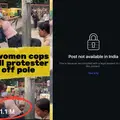
Instagram Crackdown and the Surge in India’s Online Content Blocking
By Drooid · · How we work
In this breakdown
01
The Alleged Instagram Crackdown
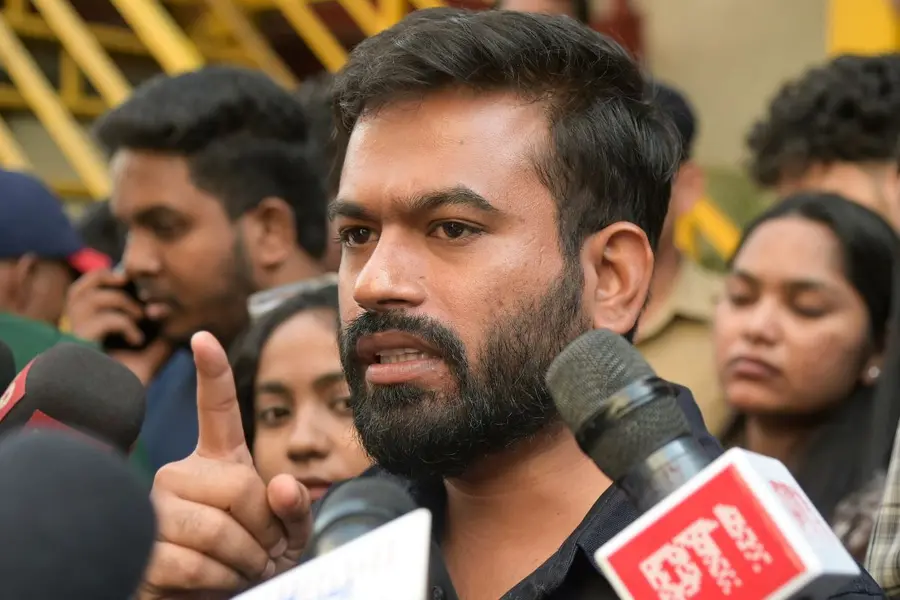
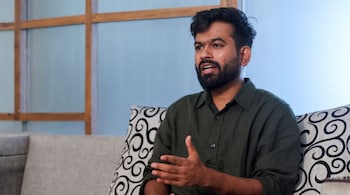
Cockroach Janata Party (CJP) founder Abhijeet Dipke accused the central government of systematically removing anti-government posts on Instagram, saying the effort “won’t work” because the platform merely hosts questions whose roots lie beyond social media. Satirist Varun Grover complained that a poem about the government’s 2047 vision was removed, calling the action “cowardly.” The Internet Freedom Foundation (IFF) reported that several journalists and political cartoonists had their Instagram accounts restricted in October, often without clear legal justification.
02
Legal Challenges and Court Interventions
The Delhi High Court issued a notice on October 27 to the Centre after a petition challenged the withholding of the Instagram handle @bring_back__ballot, which advocates paper ballots. A hearing is set for November 6. The Punjab and Haryana High Court, on October 5 2026, set aside a Facebook page restriction after finding the police intimation invalid. The Kerala High Court, scheduled for November 5, has asked the Union and state governments to produce any order directing Meta to block the Malayalam news portal NoCap’s Facebook page. Earlier, the Karnataka High Court dismissed Twitter’s 2022 challenge to blocking orders in June 2023, and the Supreme Court upheld the constitutionality of Section 69A in 2015, confirming that blocking must be limited to grounds listed in Article 19(2).
Visual evidence
Images from the story
03
Scale of Government Blocking Orders
Between January and September 2026, authorities issued 31,000 blocking orders—a near-tripling since 2023 and a 35 % rise over the same period in 2025. *The Indian Express* reported roughly 1.95 lakh orders to Instagram, Facebook and YouTube between March and July 2026, averaging about 1,275 per day, with Instagram accounting for nearly 100,000. The differing datasets highlight a lack of unified reporting on takedown volumes.
04
Background & Context
India’s online-content blocking framework rests on Section 69A of the Information Technology Act, 2000, and the 2009 Blocking Rules, which empower the Centre to direct intermediaries to block content on grounds such as national security, public order, sovereignty and integrity. Section 79(3)(b) requires a qualifying notice before action. The government’s use of these powers intensified during Operation Sindoor (launched May 7 2025) after the April 22 terror attack in Pahalgam, when more than 1,400 URLs were blocked as “false or misleading” and “anti-India.” Earlier instances include blocking during the 2021 farmers’ protests and the 2022–2023 wave of AI-related misinformation.
05
Official Statements & Responses
Officials said the rise in blocking orders reflects the ease with which AI tools spread misleading content and the need to protect public order during national-security episodes. The Ministry of Electronics and Information Technology, which issues the directions, has not provided detailed public explanations for individual orders, citing procedural confidentiality.
06
Criticism & Opposition
- Internet Freedom Foundation: Points to opaque notices that omit the specific legal provision, authority or content basis for restrictions, raising concerns about due-process violations.
07
Data & Statistics
- 31,000 blocking orders (Jan-Sep 2026) – NDTV.
- ?195,000 orders (Mar-Jul 2026) – Indian Express; Instagram ?100,000, Facebook ?80,000, YouTube ?15,000.
- 1,400 URLs blocked during Operation Sindoor (May 2025).
08
What’s Next
- November 6: Hearing on the *Bring Back Ballot* Instagram petition (Delhi High Court).
- November 5 (scheduled): Kerala High Court consideration of the NoCap Facebook blocking request.
- Ongoing monitoring of the Centre’s use of Sections 69A and 79(3)(b) as AI-generated content expands.