
Full Breakdown
DOJ Lawsuit Targets Alaska Senate Ballot Over “Dual-Sullivan” Confusion
By Drooid · · How we work
In this breakdown
01
Core Event
On October 22, 2026 (scheduled) the U.S. Department of Justice filed a federal suit in Alaska seeking to block certification of the U.S. Senate election if incumbent Republican Senator Dan Sullivan loses and the margin could be attributed to votes for independent candidate Daniel J. Sullivan Jr. The complaint argues that the similar names may mislead voters and that, had all challenger votes been counted for the incumbent, Sullivan would have won. The suit asks a court to preserve ballots for a post-election investigation of voter intent.
Watch
Related reporting
cbsnews
Video: AG Blanche says DOJ is "doing our own research under the law" with Alaska ballot challenge
cbsnews
Video: Trump travels to Alaska for rally amid tight Senate race between Sullivan and Peltola
ddhq
What to know about Flydubai cockpit clash as pilot is arrested
02
Background & Context
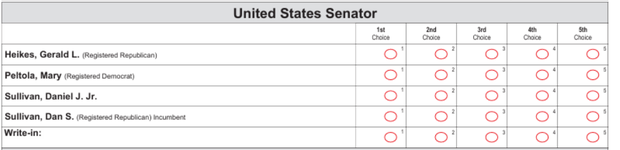
Alaska’s top-four primary and ranked-choice voting (RCV) system places both names on the ballot. The Alaska Supreme Court affirmed in June that the two names may appear, rejecting a lower-court effort to exclude the challenger. Republican officials contend the duplicate name could siphon votes from Senator Sullivan, aiding Democratic nominee Mary Peltola. The DOJ’s complaint relies on the National Voter Registration Act (NVRA), which governs registration but not ballot design.
Visual evidence
Images from the story




03
Data & Statistics
- Primary (August 2026): Sullivan — > 68,000 votes; Daniel J. Sullivan Jr. — 4,107 votes (? 2 %).
- Ballot design: Incumbent listed as “Dan S.” with an “Incumbent” label; challenger shown as “Daniel J. Sullivan Jr.”
- Early voting began October 19, 2026.
04
Official Statements & Responses
- Alaska Department of Law (Division of Elections) says the lawsuit “has no legal basis,” noting the ballot already distinguishes the candidates and that any confusion can be resolved through RCV.
05
Criticism & Opposition
Election-law scholars dismiss the suit as untenable. Nicholas Stephanopoulos, Harvard law professor, called the complaint “zero legal merit,” pointing out that the NVRA does not cover ballot composition and that Congress has not granted the DOJ authority to intervene in state-run federal elections.
06
Conflicting Reports & Gaps
- Legal basis: DOJ cites the NVRA’s preamble on “election integrity,” but experts say the statute provides no cause of action for ballot-design disputes.
- Determining confusion: The complaint seeks an investigation into voter intent, yet the secret-ballot principle makes such a determination difficult without breaching privacy.
- Impact of RCV: DOJ argues RCV could mask confusion; the state counters that voters can rank both Sullivans, mitigating error.
07
Verbatim Quotes
- “The Department of Justice does not seek to stop any ballot from being cast or to stop the certification of Alaska's election,” — Attorney General Todd Blanche
- “This case is a press release disguised as a lawsuit,” — Joshua Douglas, law professor
08
What’s Next
- October 27, 2026: U.S. District Judge Sharon Gleason set an expedited briefing schedule, allowing DOJ response by October 29, 2026 (scheduled).
- October 28, 2026: Intervenors must reply by noon; a ruling was expected that evening.
- November 3 (scheduled): Alaska voters will cast ballots; the court’s decision could affect certification of the results.