
Full Breakdown
Trump’s Persistent Election-Rigging Claims During His Second Term
By Drooid · · How we work
In this breakdown
01
Core Event: Repeated Allegations of a Stolen Vote
From the start of his second term, former President Donald Trump has repeatedly asserted that U.S. elections are “rigged” and “stolen.” (February and April 2026) and, in Georgia, declared that Senator Jon Ossoff’s 2020 victory was the result of a rigged election.
02
Background & Context: Historical Norms of Concession
U.S. presidents have traditionally accepted electoral outcomes, even when personally disappointed. Historians note that John Adams, Abraham Lincoln, Herbert Hoover, Jimmy Carter and George H.W. Bush all conceded without publicly questioning vote counts. Republican Richard Nixon and Democrat Al Gore also accepted razor-thin defeats in 1960 and 2000, respectively. Trump’s sustained public denigration of the ballot count marks a departure from this longstanding democratic bargain.
Visual evidence
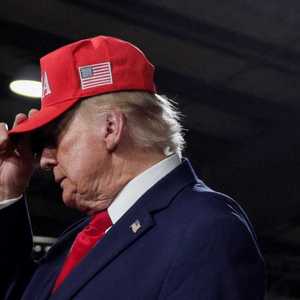
Images from the story
03
Data & Statistics: Frequency and Content of Claims
- A CBS News “60 Minutes” report dated October 18 documented that Trump made over 150 public statements in the first 21 months of his second term alleging election fraud.
- The July 16 address was described as the “centerpiece” of his election-rigging narrative, yet the documents shown were redacted and did not demonstrate any stolen votes.
- In February and April 2026, Trump’s social-media posts repeated the claim that elections were a “laughingstock.”
- Legal challenges cited include a lawsuit in Alaska seeking to overturn a Senate race and an effort to invalidate roughly 20,000 California votes alleged to belong to non-citizens.
04
Official Statements & Responses
- William Barr, Trump’s former attorney general, concluded that fraud was not present on a scale that could alter the 2020 result.
- The Republican secretary of state in Georgia reported that the state’s presidential ballots were counted three times, reinforcing the integrity of the tally.
- Election officials and bipartisan local auditors note that nearly every jurisdiction retains a paper trail, conducts audits, and performs recounts when margins are narrow.
05
Criticism & Opposition
- He describes the president’s claims as “baseless” and warns that they erode public confidence in democracy.
- Election-rights experts, citing four decades of testimony in over 100 voting-rights cases, contend that legitimate concerns focus on partisan gerrymandering, not on the accuracy of vote counts. They point to studies showing non-citizen voting to be “vanishingly rare.”
- Political analysts note that Trump’s promise to accept midterm results only if they are “honest” functions as a coded assurance that Republicans must win.
06
Why It Matters: Democratic Implications
Repeated assertions that elections are fraudulent, unsupported by evidence, undermine the “simple bargain” whereby losers accept results because both parties trust the count. By framing the ballot as an enemy, Trump provides his supporters with a justification to reject unfavorable outcomes, potentially destabilizing upcoming electoral processes, including the November 3 midterm elections.
07
Conflicting Reports & Gaps
The sources uniformly report that no substantive evidence of widespread fraud has been found. No major outlets present contradictory data on the number of fraud claims or the integrity of the 2020 election, so no conflicting reports are identified.
08
What’s Next: Upcoming Midterm Elections
The November 3 midterms are scheduled to occur less than a week after the October 28 column by Lichtman. Observers expect further lawsuits and pressure on Republican legislators and election officials, as Trump’s pattern of post-election litigation is likely to continue.