
Full Breakdown
Israel’s 2026 Election Deadlock: Netanyahu vs. Eisenkot
By Drooid · · How we work
In this breakdown
01
Core Event
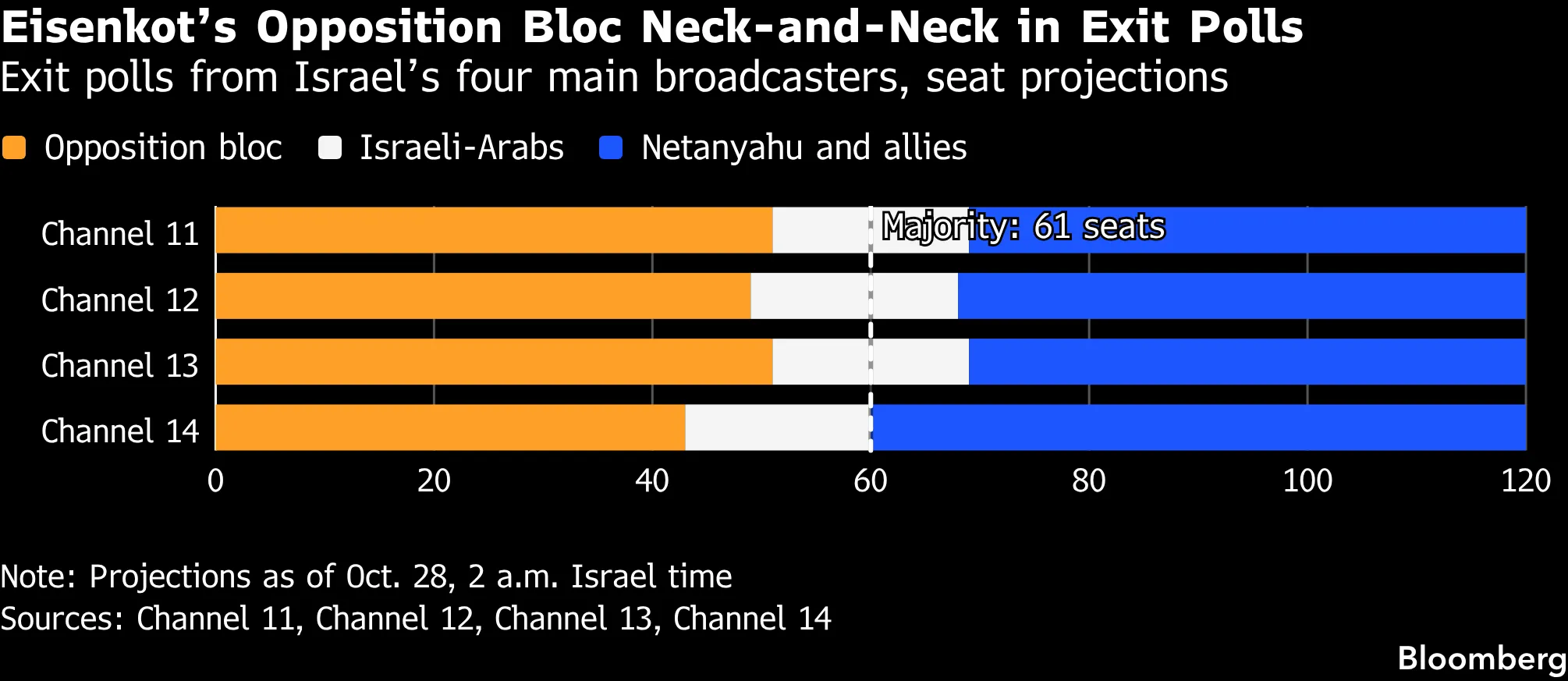
Israel’s parliamentary election produced a stalemate. Exit-poll data released on October 28 2026 showed the right-wing bloc led by Prime Minister Benjamin Netanyahu and the centrist “change” bloc headed by former IDF chief of staff Gadi Eisenkot each falling short of the 61 seats needed for a majority in the 120-seat Knesset. Projections gave Netanyahu’s bloc 50–53 seats and Eisenkot’s bloc 51–52 seats, while the two Arab party lists together were projected to win roughly 17–19 seats. No side therefore possessed a clear path to form a government.
Watch
Related reporting
youtube
LIVE: Israel's election results
02
Background & Context
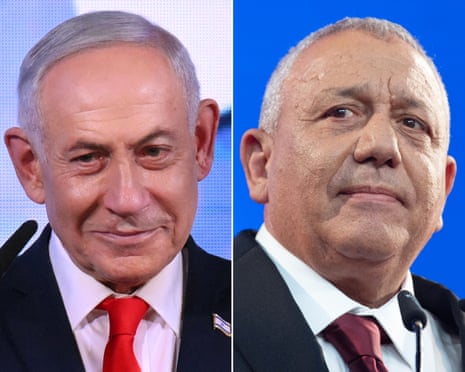
The vote was Israel’s first national election since the Hamas-led assault on October 7 2023, which killed 1,200 Israelis and sparked a war in Gaza and confrontations with Hezbollah and Iran. Netanyahu, 77, has been prime minister for a cumulative 19 years. Eisenkot, 66, entered politics four years ago after serving as chief of staff (2015-2019) and positions himself as a security-hawk with a centrist agenda. Both framed the election as a referendum on wartime leadership and the coalition’s far-right partners.
Visual evidence
Images from the story




03
Timeline
- October 27 2026 – Election day; polls open 7 a.m.–10 p.m.
- October 28 2026 – Exit-polls released by Channels 11, 12 and 13; seat projections published.
- November 4 2026 (scheduled) – Central Elections Committee to publish official results.
- Post-election – President Isaac Herzog to begin consultations; the first designated candidate will have 28 days (extendable by 14 days) to assemble a coalition.
04
Data & Statistics
- Voter turnout: 77.7 %, highest since 1999.
- Likud projected at 24–25 seats; Eisenkot’s Yashar party 21–23 seats.
- Arab parties together projected at 16–19 seats, a historic showing.
- Far-right religious parties led by Itamar Ben-Gvir and Bezalel Smotrich projected to secure 13 seats within Netanyahu’s bloc.
05
Official Statements & Responses
President Isaac Herzog warned against another election: “We must do everything we can, certainly after yesterday, to avoid another round of elections.”
Netanyahu, addressing Likud supporters after the polls closed, called for “a strong, right-wing national government” and reiterated his partnership with President Trump on confronting Iran.
President Trump said his endorsement of Netanyahu was intended to help “finish the job” against Iran.
06
Criticism & Opposition
Opposition leader Yair Golan of the Democrats declared, “The public has spoken, it has fired the Netanyahu government.”
Arab party leader Mansour Abbas warned that a Netanyahu-led government would threaten Arab citizens, stating, “If we join a government of change, we will be able to see substantial changes, not just empty talk.”
Joint List candidate Faten Gattas condemned the incumbent government: “We refuse the occupation and racism, and we will remain here.”
07
Conflicting Reports & Gaps
Exit-polls differed on the exact seat balance: Channel 12 projected Eisenkot’s bloc ahead 52-50, while Channels 11 and 13 showed a tie at 51-51. Arab party seat totals also varied between 16 and 19. The official count due by November 4 will resolve these discrepancies.
08
What’s Next
President Herzog will begin formal consultations with the leaders of the 120 Knesset factions within the next week. The first nominee will have 28 days (with a possible 14-day extension) to secure a majority. If no coalition emerges, a second candidate will be tasked, and failing that, new elections are expected in early 2027. The outcome will determine whether Israel continues under Netanyahu’s caretaker administration or sees a new government formed under Eisenkot or another coalition arrangement.