
Full Breakdown
Israel’s 2026 Election Deadlock: President Herzog Urges Unity to Avert New Vote
By Drooid · · How we work
In this breakdown
01
Background & Context
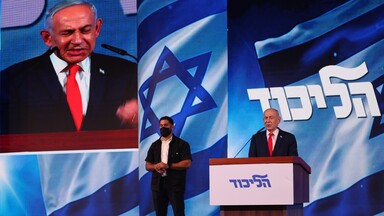
Israel’s 120-member Knesset is elected by nationwide proportional representation, requiring 61 seats for a governing majority. The October 27, 2026 election produced a fragmented parliament: the right-wing bloc led by Benjamin Netanyahu fell short of the threshold, while the opposition bloc headed by former IDF chief Gadi Eisenkot also lacked a clear path to 61 seats. Israel has previously held multiple elections in quick succession when coalition talks stalled.
02
Core Event – Herzog’s Call for Open-Mind Negotiations
President Isaac Herzog said he would begin consultations after receiving the official results, urging all parties to approach talks with an open mind to avoid another election.
Verbatim Quote
- “One thing must be understood… we must do everything, certainly after yesterday, to avoid another round of elections. I expect everyone who comes here to arrive with an open mind,” — Isaac Herzog
Visual evidence
Images from the story
03
Data & Statistics
- Netanyahu bloc – projected 53 seats (Channel 12)
- Eisenkot bloc – projected 48 seats (Channel 12)
- Arab parties (Joint List + Ra’am) – projected 19 seats (Channel 12)
Other outlets gave slightly different projections, and more than 500,000 “double-envelope” ballots (soldiers, diplomats, hospital patients) remained uncounted at the time of reporting.
04
Official Statements & Responses
- Mansour Abbas, Ra’am chairman, said “currently there aren’t numbers for a government,” indicating openness to talks with either side.
05
Criticism & Opposition
Opposition leaders criticised Netanyahu’s rhetoric that framed Arab parties as a threat, while Abbas’s willingness to negotiate suggests a possible shift in the traditional exclusion of Arab parties from coalition talks.
06
Conflicting Reports & Gaps
Seat tallies differ across sources: Channel 12’s 53-48-19 split, The Times of Israel’s similar provisional numbers, direct polls’ 55-49-16 estimate, and Channel 14’s 60-seat projection for Netanyahu. The final count will depend on the pending double-envelope ballots, whose impact remains uncertain.
07
Why It Matters / Impact
If no coalition reaches 61 seats, Israeli law mandates dissolution of the Knesset and a new election, potentially as early as early 2027. A caretaker government would limit major legislative action and affect domestic and foreign-policy stability, while prolonged deadlock could erode public confidence in democratic institutions.
08
Timeline
- Oct 27, 2026 – Election day.
- Oct 28, 2026 – President Herzog’s open-mind appeal.
- By Nov 4 – Official results scheduled for publication.
- Following week – Herzog to receive results and start consultations.
- Mandate period – First designated lawmaker has 28 days to form a government, with a possible 14-day extension; a second candidate may be appointed if the first fails.
09
What’s Next
Herzog must select a lawmaker he believes can assemble a coalition within the 42-day window. The ensuing negotiations will determine whether Israel forms a majority coalition, a minority government supported by Arab parties, a unity arrangement, or heads to another election.