
Full Breakdown
Microsoft Cloud Surge Fuels Earnings Beat Amid AI-Heavy Capital Spending
By Drooid · · How we work
In this breakdown
01
Earnings Overview
Microsoft reported fiscal first-quarter results that topped Wall Street expectations. Revenue reached $92.28 billion, up 19 % year-over-year, and net income climbed to $36.6 billion. Free cash flow hit $18.6 billion, roughly $10 billion above forecasts, while Azure posted 48 % year-over-year growth. Shares rose more than 5 % in after-hours trading on October 28, 2026.
Watch
Related reporting
akamaized
What to expect from Microsoft
02
Background & Context
For the first time, Microsoft disclosed Azure revenue in dollar terms, allowing a clearer benchmark against rivals Amazon Web Services and Google Cloud. The company also merged its “Intelligent Cloud” and “Productivity and Business Processes” units into an “Agents and Infra” segment that now accounts for roughly 83 % of total revenue. These changes accompany Microsoft’s broader AI push, including Copilot services and first-party AI models.
Visual evidence
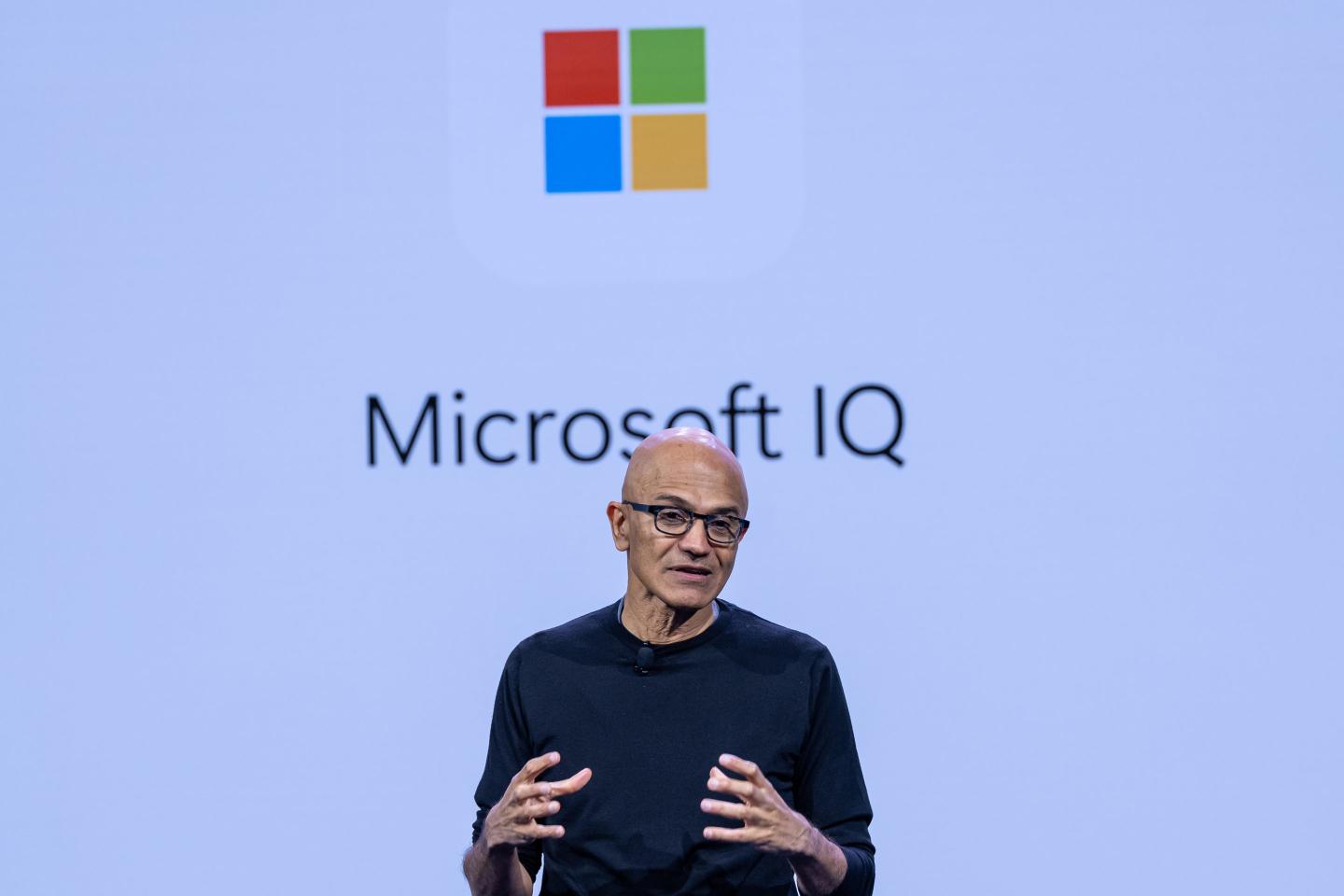
Images from the story

03
Data & Statistics
- Azure revenue: $33.17 billion (48 % growth)
- Adjusted EPS: $4.89 vs. $4.73 expected
- Free cash flow: $18.6 billion, $10 billion above consensus
- Capital expenditures: $45.2 billion, below the company’s $50 billion projection
- Forecast Azure growth (Q2): 49 %–50 % (analyst estimate 47.6 %)
- Forecast total sales (Q2): $96 billion–$97.1 billion (vs. $95.6 billion expected)
04
Official Statements & Responses
- Satya Nadella, CEO: Emphasized a shift from “shiny-object” AI projects to long-term, broad-based customer commitments and noted that enterprise demand now exceeds supply.
- Amy Hood, CFO: Said the lower capex figure reflects delays in third-party capacity deliveries rather than a reduction in overall spending plans.
- Jonathan Neilson, VP of Investor Relations: Confirmed the capex shortfall stemmed from delayed hardware deliveries and that Microsoft’s investment trajectory remains unchanged.
05
Verbatim Quotes
- “Microsoft's first-quarter report was about as clean as it gets for a company this size,” — Jesse Cohen, senior analyst at Investing
- “We still have demand that exceeds supply,” — Amy Hood, Microsoft CFO
06
Why It Matters
Microsoft’s Azure growth shows its AI-focused infrastructure investments are translating into revenue, contrasting with rivals such as Alphabet and Meta, which have reported negative free cash flow amid heavy AI spending. Generating strong free cash flow while expanding AI-related capacity positions Microsoft to fund further data-center build-outs without heavy reliance on external financing.
07
Conflicting Reports & Gaps
Analyst expectations for Azure revenue varied: Visible Alpha estimated $32.84 billion, while StreetAccount projected $32.32 billion. Both forecasts were surpassed by the reported $33.17 billion. No other substantive discrepancies appear.
08
What’s Next
Microsoft projects second-quarter Azure growth of 49 %–50 % and total sales of $96 billion–$97.1 billion. Capital expenditure for the remainder of calendar 2026 is expected to reach roughly $170 billion, with an additional $56.9 billion needed in the final three months to meet its $175 billion annual capex target. The firm will continue to monitor third-party capacity deliveries while expanding lower-cost AI options for enterprise customers.