
Full Breakdown
Prime Video’s “Castle Walls” Marks the First Fully AI-Generated Series on a Major Streaming Platform
By Drooid · · How we work
In this breakdown
01
AI-Driven Production Milestone
Prime Video’s two-episode series *Castle Walls* debuted as the first end-to-end AI-created drama to launch on a leading streaming service. Produced by Turkish studio Ay Yapim, the show was assembled with a suite of generative video tools, while human voice actors performed the dialogue. The narrative is set in the 11th-century Alamut Castle, though reviewers note that the visual and narrative cues provide little concrete sense of the historical period.
02
Production Approach and Creative Inputs
According to Ay Yapim, the series employed human screenwriters—Kerem Deren and Çisil Hazal Tenim—to draft the script, after which AI systems generated the visual assets. The studio has emphasized that the project “used AI to amplify” human creativity rather than replace it. Human performers supplied the vocal tracks, and the final episodes run 17 minutes each, totaling roughly 34 minutes of content.
Visual evidence
Images from the story
03
Critical Reception
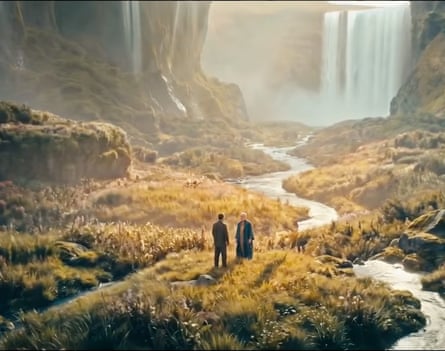
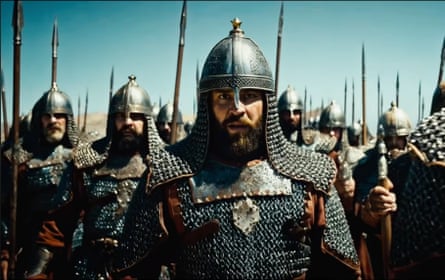
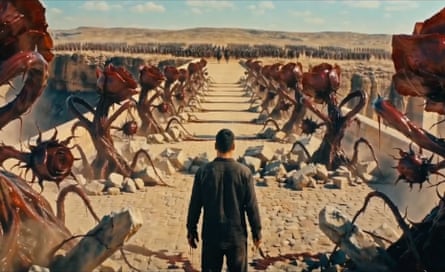
The Guardian’s review describes the opening imagery as bold in color but quickly degrades into “plasticky” and “spectral” character renderings that resemble low-quality wax figures. Visual motifs such as exaggerated eagles, desert cages, and over-dramatic lighting are characterized as over-prompted, giving the impression of a prompt-driven aesthetic rather than artistic intention. The reviewer suggests that early AI-generated works may be comparable to the nascent silent-film era—revolutionary at inception but likely to be eclipsed by more refined applications.
04
Potential Implications for Media
Commentators argue that *Castle Walls* illustrates a pivotal moment where algorithmic tools intersect with traditional storytelling. The series demonstrates that fully AI-produced visual content can reach mainstream distribution, prompting industry debate over the balance between automation and human artistic input. The prevailing view is that future productions will need collaborative workflows that allow creators to harness AI for enhancement while preserving the human elements that audiences value.