
Full Breakdown
Netanyahu’s Likud Accuses Arab Parties of Election Theft Amid Deadlocked Knesset
By Drooid · · How we work
In this breakdown
01
Election Outcome and Seat Distribution
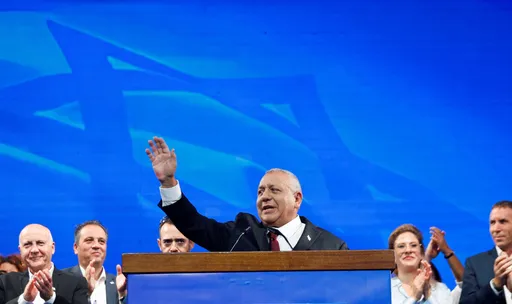
Preliminary counts for Israel’s 26th Knesset show the Likud-led bloc holding 53 of the 120 seats, while the opposition Yashar party led by former IDF chief Gadi Eisenkot holds 48 seats. The two Arab parties—Ra’am and the Joint List—are projected to secure a combined 19 seats, a record high for Arab representation. No bloc has reached the 61-seat majority required to form a government, creating a parliamentary deadlock.
02
Likud’s Fraud Allegations
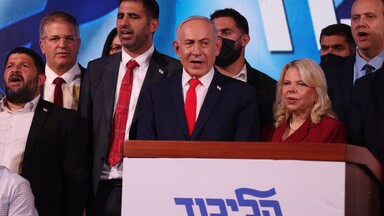
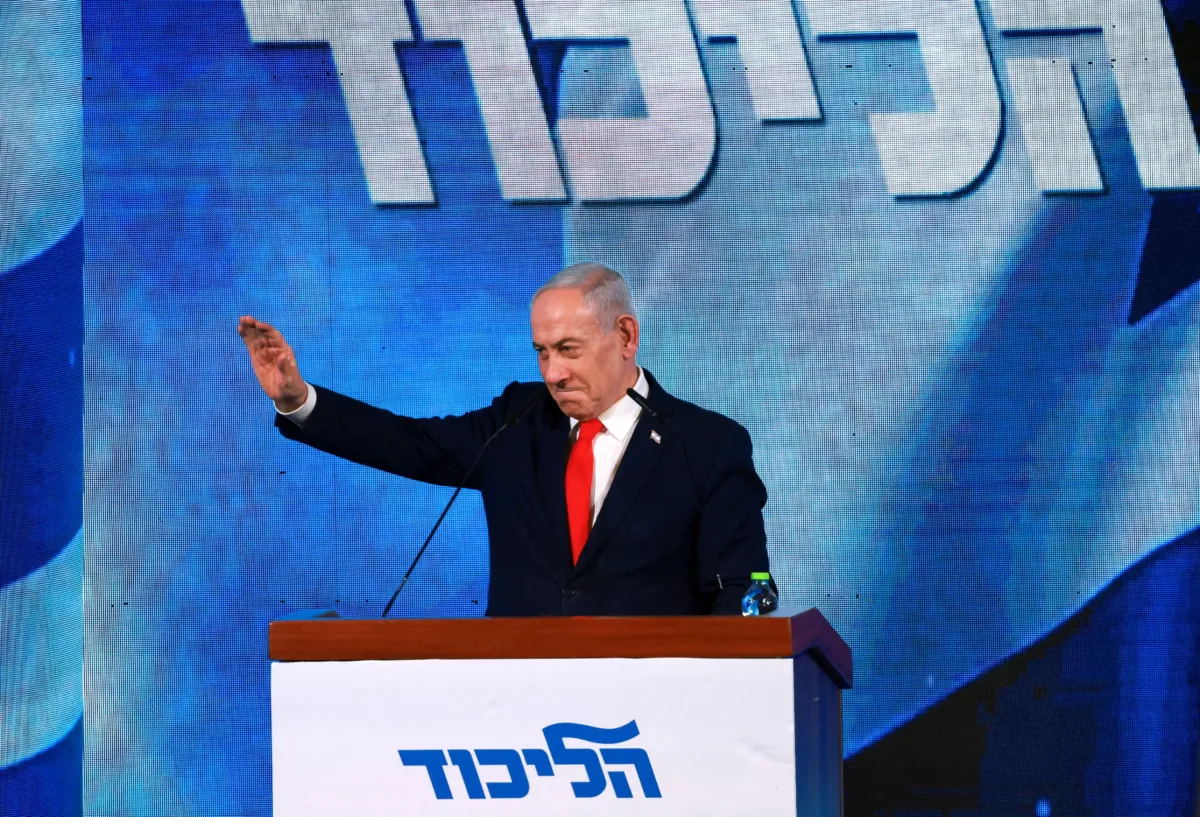
Following the count, Likud issued a statement accusing the Arab parties of “stealing the election” through bribery, threats, violence, forgery and the use of prohibited voter-mobilisation software. Specific allegations include cash envelopes found with Ra’am ballots, intimidation of polling-station officials and coordinated voting irregularities in Arab communities.
Visual evidence
Images from the story
03
Police and Election-Committee Findings
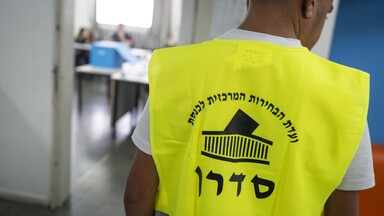
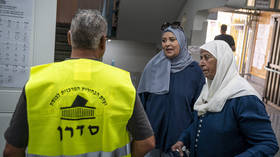
Israel Police reported that 48 complaints of fraud or impersonation were filed nationwide—about 40 % fewer than in the previous election. Major General Boaz Blatt, head of the police’s Investigations and Intelligence Division, stated that “there’s nothing dramatic.” The Central Elections Committee confirmed receipt of roughly 10,000 irregularity reports but dismissed about 80 % as unrelated to election integrity. Both agencies said they found no investigative or intelligence-based evidence supporting Likud’s claims.
04
Opposition Response
Joint List leader Yousef Jabareen rejected the fraud narrative as “the words of losers,” while Ra’am’s Mansour Abbas accused Netanyahu of deliberately inciting Arab voters for political gain. He also noted that Arab parties are prepared to cooperate with his bloc to form a coalition.
05
Official Statements & Responses
President Isaac Herzog, whose constitutional role includes consulting parties on a prime-ministerial candidate, urged all leaders to approach negotiations with an “open mind” and emphasized the need to avoid another election. The Central Elections Committee indicated that final results, including the pending double-envelope ballots from soldiers, diplomats and voters with disabilities, are expected within the next few days.
06
Data & Statistics
- Likud bloc: 53 seats (preliminary)
- Eisenkot bloc: 48 seats (preliminary)
- Arab parties (Ra’am + Joint List): 19 seats (record)
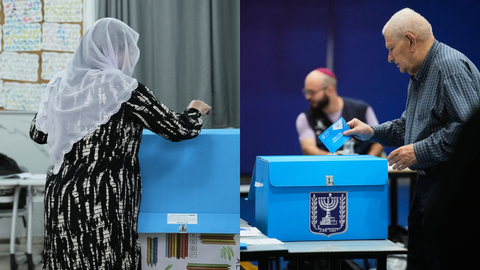
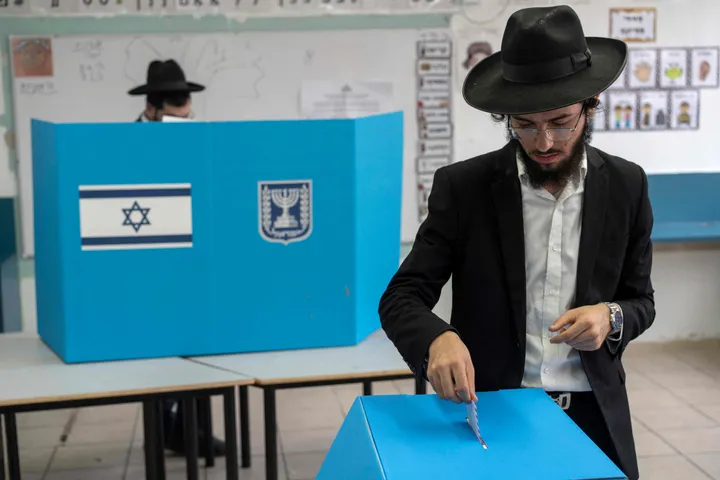
- Voter turnout: 44.9 % by early afternoon, the highest hourly figure since 1973
- Double-envelope ballots pending: 430,000–480,000, enough for over 10 seats
- Police complaints: 48 (down 40 % from prior election)
- Committee-reviewed irregularity reports: ~10,000, with ~80 % dismissed
07
Conflicting Reports & Gaps
Likud’s allegation of systematic fraud contrasts sharply with police and committee assessments that found no evidence of widespread wrongdoing. The party has not released the “hundreds of testimonies” it claims to possess, leaving a gap between the accusation and publicly verifiable proof.
08
Verbatim Quotes
- “We must do everything to avoid another round of elections,” — Isaac Herzog, President of Israel
- “This has broken every record held by the committee since it began compiling hourly turnout figures in 1973.” — Dean Livne, Acting Secretary-General, Central Elections Committee
09
What’s Next
President Herzog will begin formal consultations with all elected parties within the next week to identify a candidate capable of assembling a 61-seat coalition. The designated candidate will have 28 days—extendable by 14 days—to negotiate a governing agreement; failure to do so triggers a second-round mandate and, ultimately, the possibility of new elections.