
Full Breakdown
Melania Trump-Brokered Ceasefire in Oleshky Expands Humanitarian Access
By Drooid · · How we work
In this breakdown
01
Core Event: Localized Truce Takes Effect
At 4:00 a.m. Moscow time on October 27, 2026, a limited cease-fire between Ukrainian and Russian forces began in the Russian-occupied city of Oleshky, Kherson region. The pause was intended to enable humanitarian convoys to deliver food, medicine and water and to create evacuation corridors for the town’s remaining residents.
Watch
Related reporting
akamaized
First lady Melania Trump secures ceasefire for Ukrainian city
02
Background & Context
Oleshky, a town of roughly 24,000 people before the 2022 invasion, has been under Russian control since the early days of the war. Fighting has reduced the civilian population to about 2,000, most of them elderly, living amid mined roads, intermittent electricity and severe shortages. Earlier attempts at localized truces collapsed quickly, and the city’s plight drew international attention, including a phone call on October 16 between Pope Leo XIV, President Volodymyr Zelenskyy and President Vladimir Putin urging aid access.
Visual evidence
Images from the story


03
Timeline
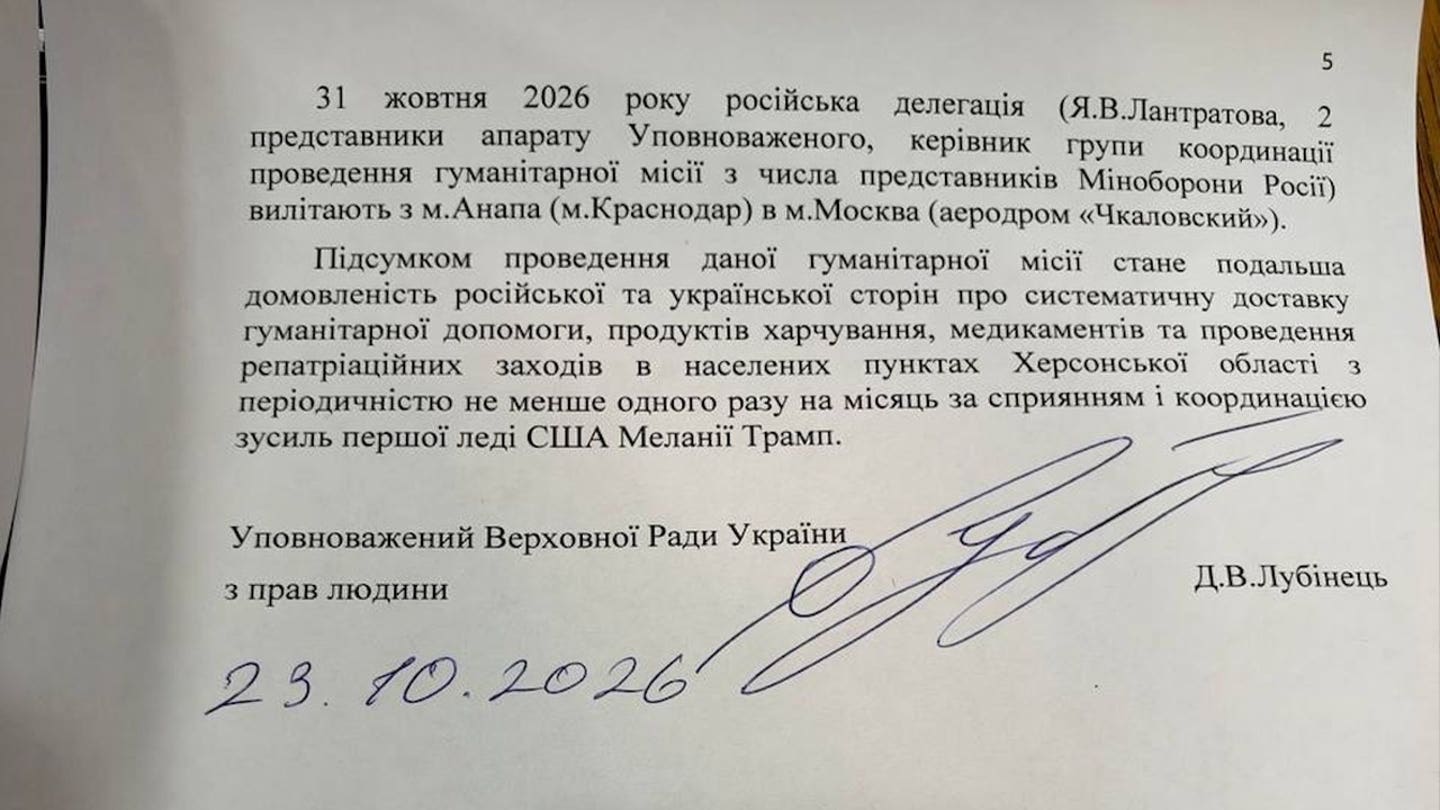
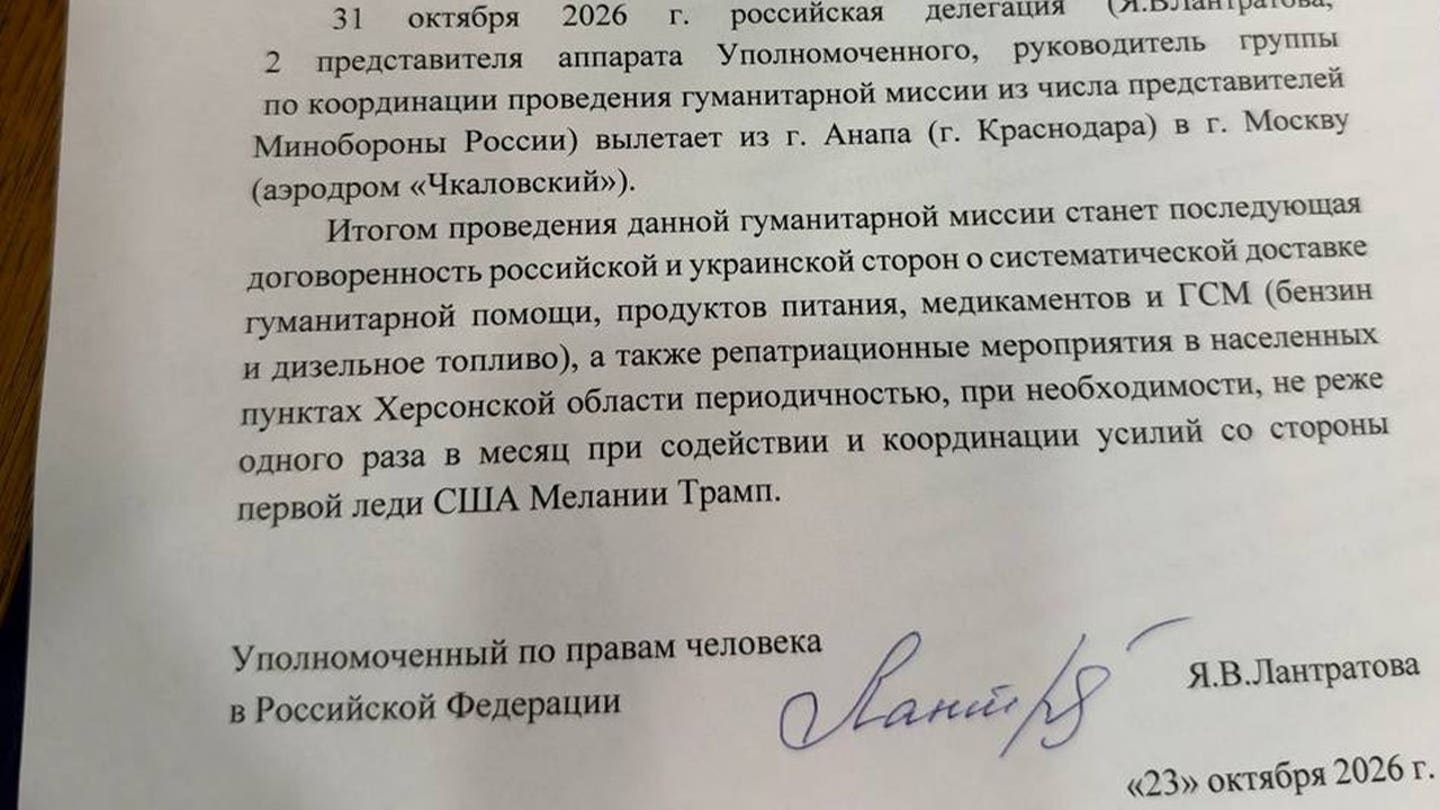
- October 23, 2026 – Cease-fire agreement announced, with Melania Trump identified as the “exclusive intermediary.”
- October 27, 2026 – Cease-fire begins at 4:00 a.m. Moscow time; timing accelerated two days ahead of schedule.
- Early November 2026 – Cease-fire slated to remain in effect until November 1 (scheduled) according to Ukrainian MP Davyd Arakhamia.
04
Data & Statistics
- Pre-war population: ~24,000.
- Current civilian count: estimates range from 1,700 to 2,000.
- Approximately 34 children have been reunited with families in prior exchange efforts led by the first lady.
- The humanitarian mission is expected to last about one week, with a possible extension negotiated by the first lady.
05
Official Statements & Responses
Ukrainian President Volodymyr Zelenskyy expressed gratitude for the truce and said Ukraine was ready to receive evacuees. Russian Human Rights Commissioner Yana Lantratova confirmed no cease-fire violations had been recorded. Ukrainian parliamentary commissioner for human rights Dmytro Lubinets affirmed that both sides were honoring their commitments. The Russian Defense Ministry reported that its forces had halted shelling toward Kherson to prepare for the operation.
06
On-the-Ground Reports
Residents described a rare calm in nearby Kherson, yet many voiced fear that the lull would be short-lived. Volunteer Ksenia Arkhipova reported that evacuees feared Russian officials might screen phones for pro-Ukrainian ties. Local café owner Oleksandra Kostenko noted the streets were unusually quiet, adding that “it will end, and they will terrorize us.”
07
Conflicting Reports & Gaps
Sources differ on the exact number of civilians remaining in Oleshky, citing figures of 1,700, 2,000 and, in earlier statements, up to 6,000. The cease-fire’s end date is variously described as “early November,” “until November 1,” or “until Saturday,” reflecting a lack of a single confirmed deadline. Details of convoy routes and de-mining operations remain undisclosed, as both parties requested confidentiality on certain agreement provisions.
08
What’s Next
Technical talks between delegations from Ukraine, Russia and the United States are slated for Abu Dhabi in November, aiming to build on the Oleshky truce. Both sides have indicated willingness to negotiate extensions of the cease-fire if needed, with the first lady expected to remain involved in coordinating any follow-up humanitarian operations across the Kherson region.