
Full Breakdown
Supreme Court Defers Decision on Legality of “Logical Discrepancy” in Delhi’s Special Intensive Revision
By Drooid · · How we work
In this breakdown
01
Core Event: Court Questions Legal Basis of Logical Discrepancy Category
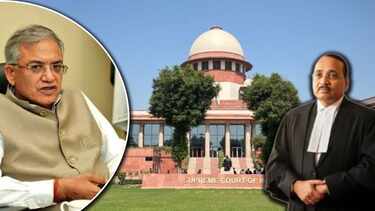
On October 28, a three-judge bench of the Supreme Court—Chief Justice Surya Kant, Justice Joymalya Bagchi and Justice V Mohana—heard petitions challenging the Election Commission of India’s (ECI) use of a “logical discrepancy” category to flag voters during Delhi’s Special Intensive Revision (SIR). The bench clarified that it has not yet ruled on the constitutionality of the category, noting that earlier approvals for West Bengal were interim and that the Bihar SIR judgment did not address logical discrepancy.
02
Background & Context
SIR is a nationwide exercise to purge deceased, duplicate or shifted voters and to update addresses, using the 2003 electoral roll as a reference. The Supreme Court’s May 27 judgment upheld the overall legality of SIR but left open questions about mechanisms such as logical discrepancy. The category was first employed in West Bengal after the Bihar SIR began on June 24 2025; extensions occurred on October 27 2025 and May 14 2026.
Visual evidence
Images from the story
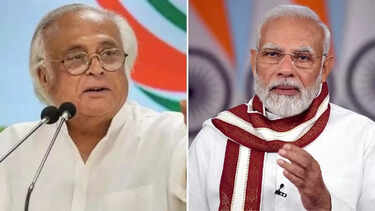
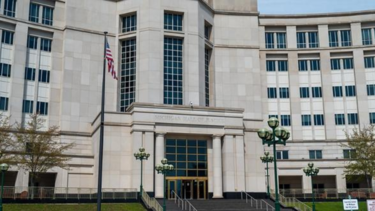
03
Data & Statistics
- 14.5 million electors were on the draft Delhi roll at the start of SIR.
- 9.7 million submitted enumeration forms; 4.7 million did not.
- 1.934 million (?19.34 lakh) were flagged under the “logical discrepancy” category.
04
Official Statements & Responses
The bench asked how the ECI could reopen entries from the 2003 list on the basis of logical discrepancy, emphasizing that the 2003 roll had already undergone a full SIR. Justice Bagchi noted that Bihar’s judgment does not bind the Court on this issue.
Chief Justice Kant urged the Commission to “reach out” to voters who missed enumeration forms rather than requiring them to file Form 6, which is intended only for first-time registration.
Senior advocate D S Naidu, representing the ECI, said the October 30 deadline for claims might be extended and pledged a detailed response within two weeks.
05
Criticism & Opposition
Petitioners Anjali Bhardwaj and Amrita Johri, supported by senior advocate Prashant Bhushan, argued that the logical discrepancy mechanism lacks transparency and forces existing voters to file Form 6 as if they were new registrants.
The Indian National Congress, led by Rahul Gandhi, filed a joint petition questioning the arbitrary exclusion of names on this basis and urging procedural safeguards.
06
Conflicting Reports & Gaps
- The ECI has not published a formal definition of “logical discrepancy,” despite issuing notices to 1.934 million voters.
- The Court has signaled concern over “mechanical” issuance of notices but has not yet ruled on whether the criteria satisfy meaningful human scrutiny.
07
Verbatim Quotes
- “Your scheme is that in 2003, everything was looked into in Special Intensive Revision. From 2003 to 2026, we have got summary revisions but not SIR. If that is so, a man in the 2003 list, how can this SIR reopen his entry on logical discrepancy?” — Justice Bagchi
- “Instead of burdening them to approach you, why don’t you reach out to them?” — CJI Kant
08
What’s Next
The bench scheduled a follow-up hearing two weeks after the October 28 session. The ECI is expected to return with procedural adjustments, and the October 30 deadline may be extended. The final Delhi electoral roll is slated for publication on December 4. The Supreme Court’s ultimate ruling on the legality of the logical discrepancy category will shape future SIR exercises nationwide.