
Full Breakdown
New Electric Ray Species Discovered in Arabian Sea Highlights Deep-Sea Biodiversity
By Drooid · · How we work
In this breakdown
01
Discovery Announcement and Core Findings
On October 27, 2026, the Zoological Survey of India (ZSI) announced the identification of a previously undocumented electric ray, Tetronarce ramanamurthyi—commonly called the Arabian Black Electric Ray. The species was recovered from deep waters off India’s southwestern coast in the southeastern Arabian Sea, marking the first confirmed record of the genus *Tetronarce* in the northern Indian Ocean. Nine specimens formed the basis of the description, which was published in the international taxonomy journal Zootaxa.
02
Scientific Context and Methodology
Electric rays belong to the cartilaginous fish group and generate electric discharges for predation and defense. Prior to this finding, the presence of *Tetronarce* in the Indian Ocean was unverified, leaving a gap in the region’s deep-sea fauna inventory. Researchers combined traditional morphological examination with molecular tools. DNA sequencing of mitochondrial COI and ND2 genes revealed genetic divergences of 2.2 %–6.7 % when compared with the closest relatives *T. tokionis* and *T. nobiliana*. These molecular results, together with distinctive anatomical features, confirmed the specimens as a separate evolutionary lineage.
Visual evidence
Images from the story
03
Key Researchers and Honoree
- Dr K K Bineesh, Scientist E at ZSI’s Marine Biology Regional Centre, Chennai, led the taxonomic work.
- Anil Kasinath, Junior Research Fellow at the same centre, assisted in specimen collection and analysis.
- Dr David A. Ebert, Pacific Shark Research Center, San Jose State University (USA), collaborated on genetic assessments.
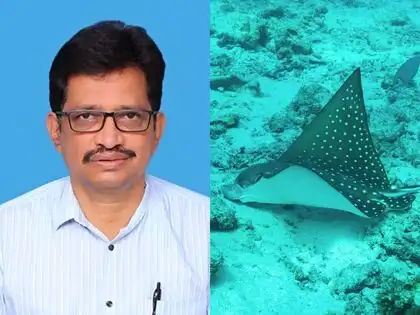
- The species name honors Dr M V Ramana Murthy, Mission Director of India’s Deep Ocean Mission under the Ministry of Earth Sciences. Murthy, an IIT Madras-trained ocean engineer, has contributed to coastal research, desalination, marine hazard mitigation, and ocean-technology development.
04
Data and Statistics
- Specimens examined: 9
- Habitat: Deep-sea sandy or muddy seabed of the southeastern Arabian Sea
- Coloration: Uniformly dark bluish-black to dark-brown dorsal surface
- Disc shape: Flattened, wider than long
- Spiracle feature: Absence of papillae around spiracles
- Genetic divergence: 2.2 %–6.7 % from related *Tetronarce* species
05
Official Statements and Mission Impact
The Deep Ocean Mission, launched by the Ministry of Earth Sciences, focuses on deep-sea exploration, marine biodiversity assessment, and technology development for ocean research.
06
Why It Matters for Marine Science
The addition of *Tetronarce ramanamurthyi* to the regional species list enriches the documented biodiversity of the northern Indian Ocean and provides a new reference point for comparative studies of cartilaginous fishes. It also demonstrates the effectiveness of collaborative, interdisciplinary research that bridges Indian institutions with international experts. The finding may stimulate further deep-sea surveys, inform conservation priorities, and guide future technological investments under the Deep Ocean Mission.
07
Timeline
- May 30, 2025: The Ministry of Earth Sciences announced Dr M V Ramana Murthy’s superannuation as Director of the National Centre for Coastal Research.
- October 27, 2026: ZSI publicly disclosed the discovery and naming of *Tetronarce ramanamurthyi*.