
Full Breakdown
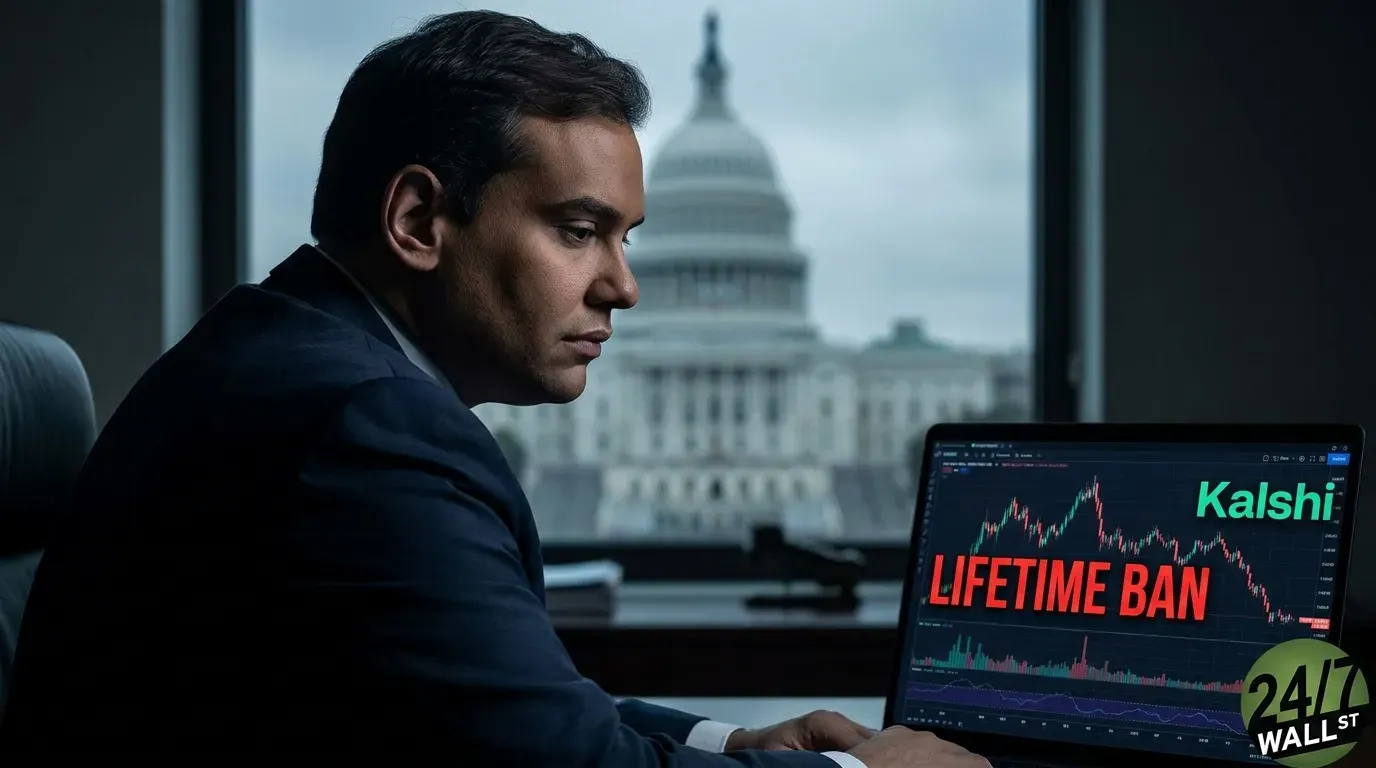
Utah Files Criminal Charges Against Prediction-Market Operator Kalshi and Its Founders
By Drooid · · How we work
In this breakdown
01
Core Event
On October 28, 2026, Utah Attorney General Derek Brown’s office filed 14 criminal counts in Salt Lake City against Kalshi Ex LLC and its co-founders, chief executive officer Tarek Mansour and chief operating officer Luana Lopes Lara. The complaint alleges a pattern of unlawful activity, a second-degree felony, 12 third-degree felonies for “online gambling promotion,” and a Class A misdemeanor for “general gambling promotion.” The felony charges carry potential prison terms of up to 15 years and fines up to $10,000; the misdemeanor carries up to 364 days in jail and a $2,500 fine.
Watch
Related reporting
akamaized
NBA Commissioner Adam Silver on the 2026 China Games, NBA Europe plans and prediction markets
02
Background & Context
Prediction markets allow users to trade contracts tied to real-world outcomes—sports, elections, weather, etc. The Commodity Futures Trading Commission (CFTC) classifies these contracts as derivative swaps and claims exclusive federal jurisdiction. States, however, argue that the contracts constitute illegal gambling. Utah, a state with a strict anti-gambling stance, has previously sued Kalshi and now escalated to criminal prosecution, becoming the second state—after Arizona—to pursue felony charges against the platform.
Federal courts have repeatedly rejected Kalshi’s attempts to block state enforcement. A federal judge held that the Commodity Exchange Act does not preempt Utah’s gambling laws, and the 10th U.S. Circuit Court of Appeals in Denver denied a preliminary injunction. The CFTC has responded by filing a separate lawsuit seeking to block Utah’s state enforcement and to prevent investigations of “CFTC-regulated entities and their affiliates.”
Visual evidence
Images from the story

03
Data & Statistics
- Charges: 14 counts (13 felonies, 1 misdemeanor).
- Felony breakdown: 1 second-degree felony (pattern of unlawful activity) + 12 third-degree felonies (online gambling promotion).
- Fees cited: 3 cents to 78 cents per transaction on Utah users.
- Alleged profits from Utah accounts: $30.5 million – $61.1 million (civil suit).
- Secret-account test: An investigator opened a Utah-address account on September 13, 2026, purchasing a dozen sports contracts over 11 days; one $5 contract on a Utah-state game yielded a $4.13 profit.
04
Official Statements & Responses
CFTC Chair Michael S.
Legal analyst Daniel Wallach (University of Miami School of Law) warned that Utah’s felony strategy could become a “bellwether” for other states, potentially shifting the regulatory landscape from civil actions to criminal prosecutions.
05
Conflicting Reports & Gaps
- Naming of executives: Bloomberg notes the 14 counts do not individually name the co-founders, while 247wallst states the complaint accuses each of them of involvement. Both agree the founders are targeted, but the precise legal phrasing differs.
- Number of felony counts: Some sources cite 13 felony counts; others describe 12 third-degree felonies plus one second-degree felony, totaling 13 felonies. The discrepancy is a matter of classification rather than count.
06
Verbatim Quote
- “This is a crazy overreach; Utah is clearly playing politics,” — S. Supreme Court. Kalshi, federal judge
07
What’s Next
The CFTC’s lawsuit seeks a preliminary injunction to halt Utah’s enforcement; a decision is pending. Federal appellate courts remain split on jurisdiction, and legal observers anticipate that the U.S. Supreme Court may hear arguments as early as early 2027, with a ruling expected by early summer 2027. The outcome will determine whether prediction-market contracts are regulated uniformly at the federal level or subject to a patchwork of state gambling laws.