
Full Breakdown
Tehran Talks Aim to De-Escalate the Middle-East Conflict
By Drooid · · How we work
In this breakdown
01
Core Event: High-Level Tehran Meeting of Mecca-Pact Nations and Iran
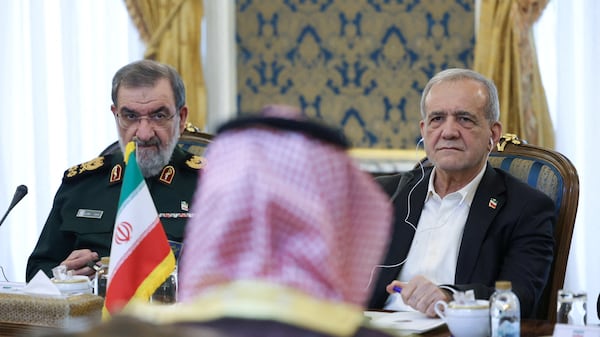
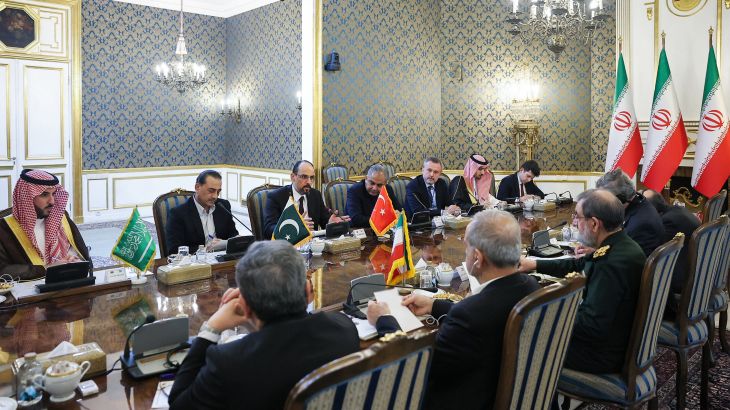
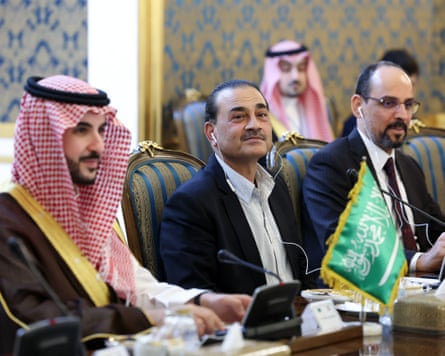
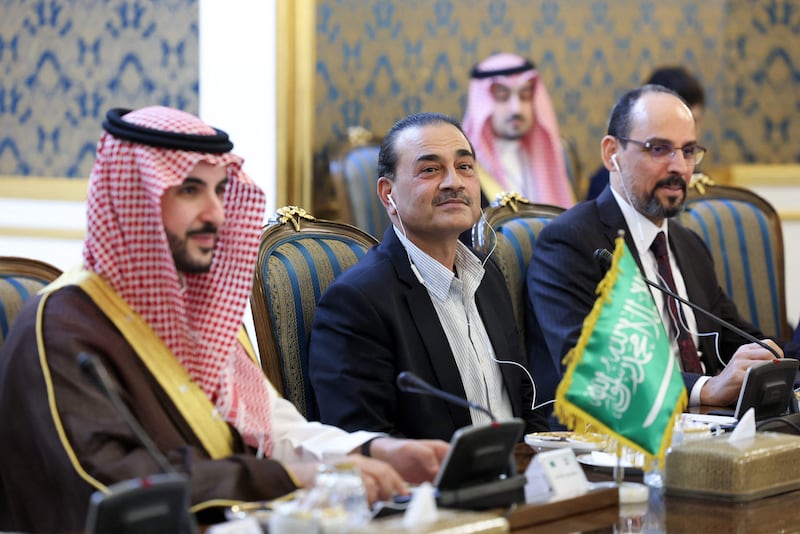
On Oct 26 senior officials from Saudi Arabia, Turkey and Pakistan met Iranian leaders in Tehran. Saudi Defence Minister Prince Khalid bin Salman, Pakistani Army Chief Field Marshal Asim Munir and Turkish Intelligence Chief Ibrahim Kalin were hosted by President Masoud Pezeshkian, Foreign Minister Abbas Araghchi and Supreme National Security Council secretary Mohsen Rezaei.
Watch
Related reporting
youtube
LIVE: Israel's election results
brightcove
Saudi-led coalition says it downed Houthi missiles, drones aimed at kingdom
akamaized
Iranian plots to kill Americans in Middle East have reached ‘advanced stages,’ intel memo warns
02
Background & Context
The regional war began in February after US and Israeli strikes hit Iranian targets, prompting retaliatory attacks that spread to Saudi Arabia and Yemen. In August the three Gulf powers signed the Mecha Joint Defence Agreement, pledging mutual defence. Iran-backed Houthi rebels have since intensified missile and drone strikes on Saudi infrastructure, while the United States and Israel have warned of further strikes ahead of their elections. Mediation by Qatar and Pakistan produced a June interim agreement on reopening the Strait of Hormuz, which quickly unraveled.
Visual evidence
Images from the story



03
Timeline
- Oct 26 – Saudi, Turkish and Pakistani officials meet Iranian officials in Tehran.
- Oct 27 – Gulf stock markets rise; Saudi index (+2.3 %).
- Oct 28 – Oil prices edge up on renewed supply-disruption concerns.
- June 18 – US-Iran memorandum of understanding aimed to end the war, tensions remain high.
04
Data & Statistics
- Saudi benchmark index advanced 2.3 % on Oct 27, driven by a 2.8 % jump in Al Rajhi Bank shares.
- Brent crude rose $1.44 to $115.32 per barrel and US WTI $2.88 to $102.78 per barrel on Oct 28.
- Houthi forces reported missile launches at Saudi pumping stations and Riyadh’s King Khalid International Airport; Saudi officials said interceptions destroyed three missiles and four drones.
- Egypt’s parliament authorized military support for Saudi Arabia on the same day as the Tehran talks.
05
Official Statements & Responses
- Turkey: President Recep Tayyip Erdogan expressed hope that all parties would refrain from actions that could drag the region into a new spiral of violence.
- Pakistan: A senior security official described the agenda as building a “regional non-aggression network” and noted Pakistan could act as a guarantor for any security framework.
- United States: Vice President JD Vance said Iran must reduce nuclear enrichment to end the war.
- Israel: Prime Minister Benjamin Netanyahu warned that Iran or its proxies could launch attacks before Israel’s election, describing the military as ready to “defend and strike.”
06
Criticism & Opposition
Israeli officials continue to view Iran as a direct security threat. Netanyahu’s warning reflects skepticism that diplomatic talks will curb Iranian proxy activity.
07
On-the-Ground Reports
Doctors Without Borders reported three strikes hit the port city of Mokha, with one landing 150 m from Mokha General Hospital; staff and patients were unharmed but the facility sustained damage. In Aden, a missile threatened a Médecins Sans Frontières aircraft preparing to take off, forcing the crew to seek shelter.
08
Conflicting Reports & Gaps
Houthi statements claim successful missile strikes on Saudi oil facilities and airports, yet Saudi officials have only reported interceptions. Independent verification of the claimed damage remains lacking.
09
What’s Next
Regional mediators from Qatar and Pakistan have indicated further dialogue will continue, with the possibility of a second round of talks in a neutral venue. OPEC+ producers are expected to meet later in the week to decide whether to keep December output targets unchanged, a decision that will affect oil market stability amid the ongoing conflict.