
Full Breakdown
French Student Protests Prompt Government Concessions Amid Growing Mobilization
By Drooid · · How we work
In this breakdown
01
Core Event
Since mid-September 2026, high-school and university students have staged large demonstrations across France, demanding better school conditions, more teachers and upgraded facilities. Major actions on October 17 and October 24 drew hundreds of thousands onto the streets. After two weekends of protests, the government announced $4.45 billion in loans for renovating school buildings, expanding university space and hiring additional staff. Student leaders called the package “crumbs” and vowed to keep pressure. Further actions are slated for October 31 and a national strike for November 5.
02
Background & Context
The “mouvement lycéen” expanded from a single Paris campus into a nationwide coalition that includes public-sector workers, climate activists and labor unions. Organizers cite rising living costs and shrinking social-service budgets as core grievances. French unions, which can legally call strikes, have marched alongside pupils, linking the protests to earlier movements such as the 2018 “gilets jaunes.”
Visual evidence
Images from the story
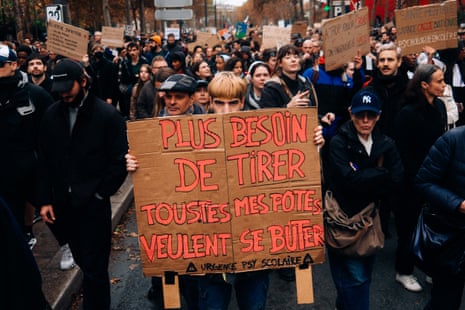
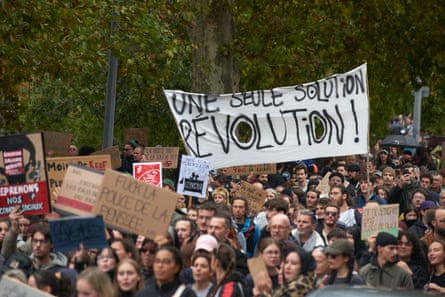
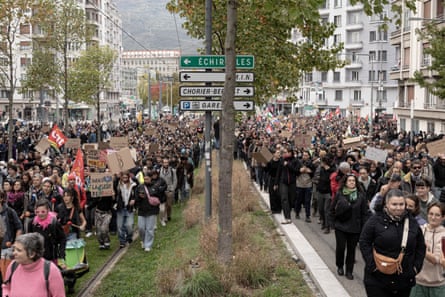
03
Key Figures & Groups
- Quentin Deluermoz – Historian, commentator on French protest culture.
- Robi Morder – Jurist and political scientist specializing in student movements.
- Eric Blanc – Assistant professor of labor studies, author of the *Labor Politics* Substack.
- l’Union Étudiante – National university student union, spokesperson for the demands.
- French government – Issuer of the $4.45 billion loan package and enforcer of protest bans.
04
Timeline
- October 17 – First large-scale protest weekend; largely peaceful but marred by looting.
- October 24 – Second weekend; state responded with policing, curfews and bans.
- October 31 – Planned additional actions.
- November 5 – National strike called by student and union groups.
05
Data & Statistics
- Hundreds of thousands of participants across the two October weekends.
- $4.45 billion in loans earmarked for school renovation, university expansion and hiring.
- 10 emergency measures drafted by students, including clean sanitary facilities and climate-controlled classrooms.
06
Official Statements & Responses
The government framed the loan package as a concrete step toward fixing infrastructure deficits and labeled some protesters “casseurs” and “looters” to justify police deployment. l’Union Étudiante said the aid is a minimal concession, reiterating plans for further demonstrations and a national strike. Police officials defended the use of “military-grade” equipment as necessary for public order.
07
Criticism & Opposition
Student representatives argue the loan amount is insufficient for the scale of the problems, noting many schools still lack basic sanitary facilities. Union analysts warn that the heavy police response could alienate younger demonstrators and damage the coalition’s legitimacy. Legal scholars caution that portraying protesters as “casseurs” may infringe on the constitutional right to demonstrate.
08
Verbatim Quotes
- “There’s this idea, very deeply rooted in France, that expressing yourself by demonstrating is a democratic right,” — Quentin Deluermoz
- “There’s something deeper at play here,” — Robi Morder
09
What's Next
The movement will hold actions on October 31 and a nationwide strike on November 5, aiming to push the government for a larger loan package and the full list of emergency measures. Observers note the outcome could influence the political landscape ahead of the spring 2027 presidential election.