
Full Breakdown
U.S. Moves Toward Electric Ferries as Hydrofoil Technology Gains Traction
By Drooid · · How we work
In this breakdown
01
Electric Ferry Initiatives in the United States
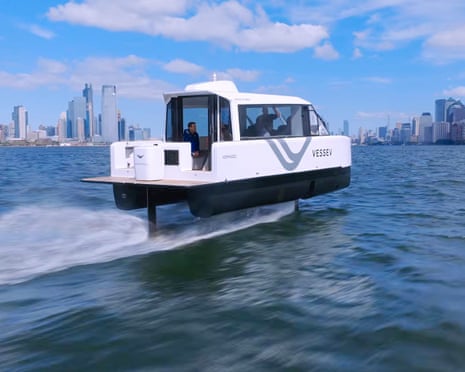
Vessev, a New Zealand-based builder of fully electric hydrofoil boats, is testing its design on New York Harbor and plans a first U.S. service on Lake Tahoe. The company’s hydrofoil lifts the hull about 1.5 feet, reducing water resistance. Vessev claims the design cuts drag by roughly 66 %, allowing smaller, lighter battery packs. Similar technology is already operating in Stockholm (Candela) and Norway, where the latter has ordered 20 electric hydrofoil vessels that the manufacturer says can lower energy use by up to 80 % compared with conventional boats.
Watch
Related reporting
youtube-nocookie
Flying Boats? How Electric Ferries Are Changing Water Travel
02
Technology and Efficiency Gains
Hydrofoils address a core challenge for electric vessels: heavy batteries increase power demand. By raising the hull, the boats experience less drag, improving range and lowering operating costs. The efficiency gains also make it feasible to replace diesel-powered ferries, which contribute to the United States’ transportation-related greenhouse-gas emissions.
Visual evidence
Images from the story
03
San Francisco’s Electrification Plan
San Francisco’s principal ferry agency carries about 3.5 million passengers annually on an 18-vessel diesel fleet. The agency intends to add four battery-powered ferries within the next two years as part of a $0.5 billion electric-overhaul that includes dock-side charging infrastructure. Agency head Seamus Murphy notes that rising diesel prices and advances in battery technology strengthen the business case, emphasizing that the upfront investment can be offset by lower fuel and maintenance costs over time. The new vessels will be the first high-speed, all-electric ferries operated by a U.S. ferry system.
04
Official Statements & Responses
He adds that a sustainable future will likely see many such vessels worldwide. Seamus Murphy stresses the agency’s extensive waterfront and the need to keep service reliable while transitioning to electric power. He also highlights the potential for domestic manufacturing jobs tied to the construction of the boats and their batteries, warning that the region does not want to be left behind in the emerging market.
05
Verbatim Quotes
- “It’s quite a curiosity at the moment,” — Eric Laakmann, the chief executive and co-founder of Vessev
- “We substantially reduce the drag that you feel and that’s really what makes electrification viable,” — Eric Laakmann, the chief executive and co-founder of Vessev
- “I think in a more sustainable future we’re likely to see more and more vessels like this around the world,” — Eric Laakmann, the chief executive and co-founder of Vessev
- “We have a lot of waterfront,” — Seamus Murphy
- “These jobs are going to get created in other countries and we have an ability to create them here if we manage this in the right way,” — Seamus Murphy