
Full Breakdown
Rising Student-Loan Delinquency and Policy Shifts Loom Over the 2026 Midterms
By Drooid · · How we work
In this breakdown
01
Student-Loan Delinquency Surge and Policy Shifts Ahead of the Midterms
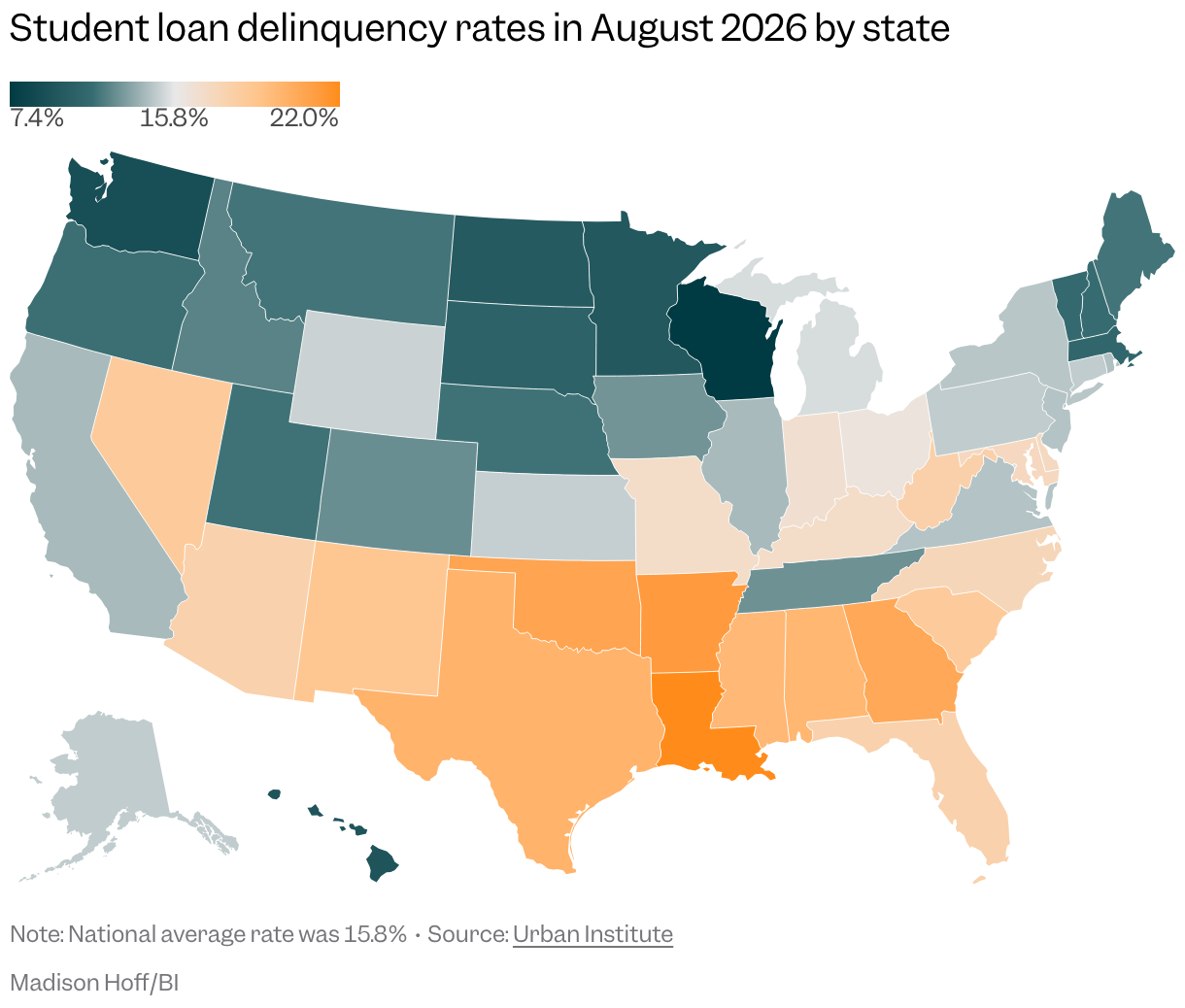
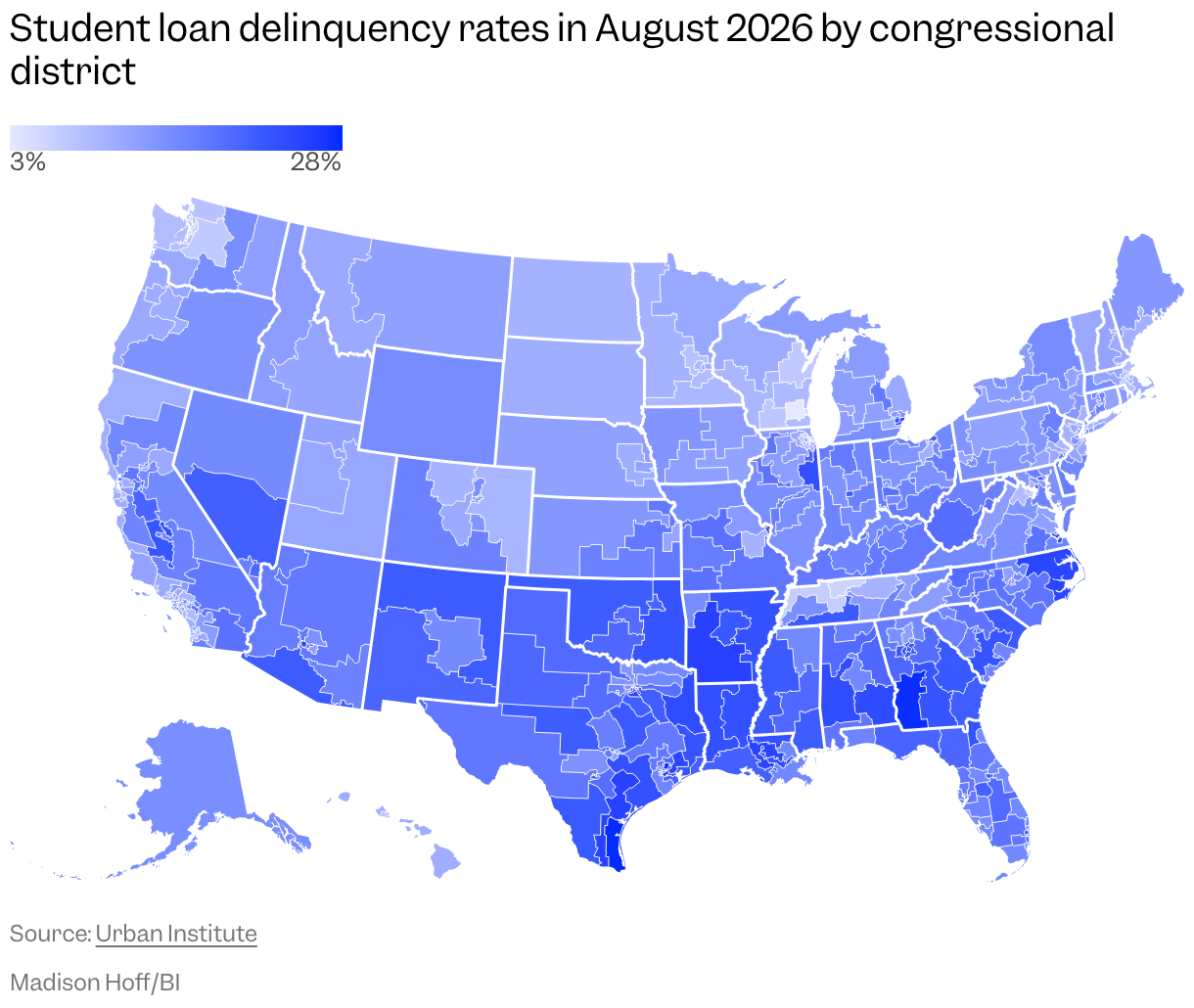
Borrower delinquency is climbing as the federal government prepares to tighten collection enforcement. As of June 30, 9.3 million federal student-loan borrowers were in default and 1.5 million were in late-stage delinquency, according to Federal Student Aid. Roughly 14 percent of the $1.7 trillion student-debt portfolio—about $234 billion—has entered default, while 16 percent of borrowers were 60 or more days late in 2026 (Urban Institute). The Department of Education (DOE) is moving defaulted accounts to the Treasury Department in phases and has launched an online portal to help borrowers return to good standing.
02
Background & Context
The pandemic-era repayment pause ended in early 2024, and the Biden administration’s SAVE plan is being phased out. The Trump administration’s new repayment framework is projected to raise average annual payments by $2,163 (Center for American Progress). The administration is also preparing to resume wage-garnishment and tax-refund offsets for defaulted borrowers.
Visual evidence
Images from the story

03
Data & Statistics
- Defaults: 9.3 million borrowers (June 30) + 1.5 million late-stage delinquent.
- Debt in default: $234 billion (? 14 % of total).
- Delinquency rate: 15.8 % of borrowers were at least 60 days behind in August (Urban Institute).
- Payment increase: Average annual rise of $2,163; individual borrowers like Luke Helton anticipate a $600 monthly increase.
- Political relevance: A Student Debt Crisis Center poll of 4,283 respondents (Sept 9 – Oct 14) found 88 % said their student-loan experience would affect their vote, with 71 % rating the influence as significant.
04
Why It Matters / Impact
Higher payments, looming wage-garnishment, and cost-of-living pressures are turning student-loan debt into a decisive issue for voters. In competitive Senate races in Texas and Ohio, delinquency rates exceed the national average, and nine House battleground districts identified by the Cook Political Report show similarly elevated non-payment rates. Analysts note that loan policy amplifies voter anxiety when combined with inflation and housing costs.
05
Official Statements & Responses
Treasury Secretary Scott Bessent described the new portal as a “clearer path back to repayment.” Republican Senator Roger Marshall praised the Trump administration’s “big beautiful” spending legislation as “transformational reforms to student loans.”
06
On-the-Ground Reports
Borrowers such as Sarah Bundy, a 55-year-old who has cycled through default for three decades, describe the looming garnishment as a threat to any remaining financial stability. Luke Helton, a Tennessee borrower, says the anticipated payment hike forces him to dip into retirement savings, prompting him to reconsider his support for the administration.
07
Verbatim Quotes
- “At my age, I can never get ahead of this,” — Sarah Bundy
- “They talked a big game about caring about the little people, and they just haven't,” — Luke Helton
08
Conflicting Reports & Gaps
Two sources report the same default figure (9.3 million) but differ on the proportion of borrowers behind on payments: BusinessInsider cites 16 % late >= 60 days, while Newsweek notes 15.8 %. The exact date when wage-garnishment will resume has not been disclosed.
09
What's Next
The November 3 midterm elections will be the first major national vote after the policy changes take effect, and analysts expect student-loan issues to feature prominently in voter decision-making. The DOE and Treasury have not announced a specific restart date for wage-garnishment, but the online portal for defaulted accounts is already live.