
Full Breakdown
IndiGo Faces Rising Fuel Costs, Considers Fare Hikes
By Drooid · · How we work
In this breakdown
01
Core Event: Fuel Surge Drives Loss and Potential Ticket-Price Increase
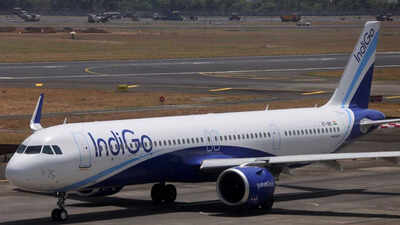
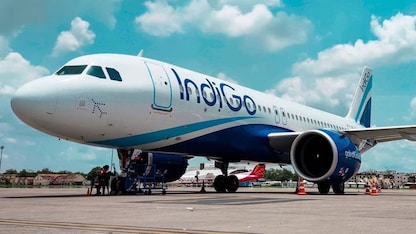
IndiGo’s parent, InterGlobe Aviation, reported a consolidated net loss of INR1,879.1 crore for the July-September quarter of FY 27. Aircraft fuel expenses rose 67.2 % year-on-year to INR9,966.8 crore, while total expenses climbed to INR26,188.4 crore, outpacing total income of INR24,311.9 crore.
02
Background & Context
The surge in jet-fuel costs is linked to the West-Asia geopolitical crisis and a sharp widening of the crack spread—the premium of jet fuel over crude oil. Historically averaging 21-22 %, the spread is projected to average about 65 % this year. A weakening rupee has also increased the dollar-denominated portion of IndiGo’s cost base.
Visual evidence
Images from the story


03
Data & Statistics
- Net loss: INR1,879.1 crore (down from a loss of INR2,582.1 crore a year earlier).
- Fuel expense increase: +67.2 % to INR9,966.8 crore.
- Revenue from operations: +25.9 % YoY to INR23,364 crore.
- Passenger traffic: 27.5 million (-4.7 % YoY).
- Capacity (ASK): 40.8 billion (-1 % YoY).
- Load factor: 80.3 % (-2.2 pp).
- Passenger yield: +34.3 % to INR6.30 per km.
- Cash balance (as of 30 Sept 2026): INR52,685 crore.
04
Official Statements & Responses
Walsh emphasized IndiGo’s “very efficient cost base” and “strong liquidity,” giving the airline flexibility to manage the cost surge. The carrier is reviewing its network and capacity plans, targeting low-single-digit ASK growth in the December quarter. Discussions are ongoing with the government about participation in the ATF Price Stabilisation Fund; Walsh said IndiGo would consider joining if appropriate. Long-term expansion, including the Airbus A350 rollout in 2028, remains on schedule.
05
Verbatim Quotes
- “No, we haven't been able to offset the very significant increase in the fuel bill. Similar to many airlines, we've recovered about 60% so we've only been successful in part recovering the fuel but that has led to us making a net loss in the quarter of 19 billion.” — Willie Walsh, IndiGo CEO
- “But we have no choice but to look to increase fares in an effort to offset the very significant increase that we have seen in the fuel bill,” — Willie Walsh
06
Why It Matters / Impact
If IndiGo raises fares, passengers could face higher ticket prices across domestic and international routes, potentially tempering demand for its low-fare model. Competitors with higher cost structures may find the environment more challenging, while IndiGo’s strong cash position could sustain fleet and network investment. The broader Indian aviation sector remains exposed to volatile fuel markets and currency fluctuations, shaping pricing strategies industry-wide.
07
What's Next
- Fare adjustments are expected as the airline seeks to recover unrecovered fuel costs.
- IndiGo may join the government’s fuel price stabilisation scheme pending further dialogue.
- Capacity is projected to grow by low single digits in the October-December quarter, with network reviews continuing.
- The Airbus A350 rollout slated for 2028 proceeds unchanged.
- Monitoring of West-Asia disruptions will influence Middle-East flight schedules, already reduced by roughly 30-40 flights per day.