
Full Breakdown
Hebron Under Military Lockdown: A Week of Raids, Detentions and Displacement
By Drooid · · How we work
In this breakdown
01
Core Event – Seventh Day of Hebron Lockdown
For seven consecutive days the Israeli army has maintained a full-scale lockdown of Hebron, the occupied West Bank’s largest city. Israeli forces have sealed all entrances, conducted nightly raids on neighbourhoods such as Ein Deir Bahha and the al-Jaladah roundabout, and converted dozens of Palestinian homes into military posts. Two Palestinians were injured and seven detained during a Thursday raid, according to Wafa. The Palestinian Prisoner’s Society reports at least 110 people—including three women and seven children—detained since the operation began. More than 3,000 residents have been forced to leave their homes as demolition teams raze structures and settlers attack villages in the surrounding Masafer Yatta area.
Watch
Related reporting
brightcove
Israeli forces continue West Bank raids as Hebron lockdown enters sixth day
brightcove
A week of Israel’s lockdown in Hebron: What’s happened, when will it end?
brightcove
Israel expands expulsions in occupied West Bank to cement control
02
Background & Context
The crackdown follows a shooting near the illegal Israeli settlement of Telem in which two Israeli soldiers were killed. The gunmen responsible were later killed by Israeli forces in Hebron.
Visual evidence
Images from the story

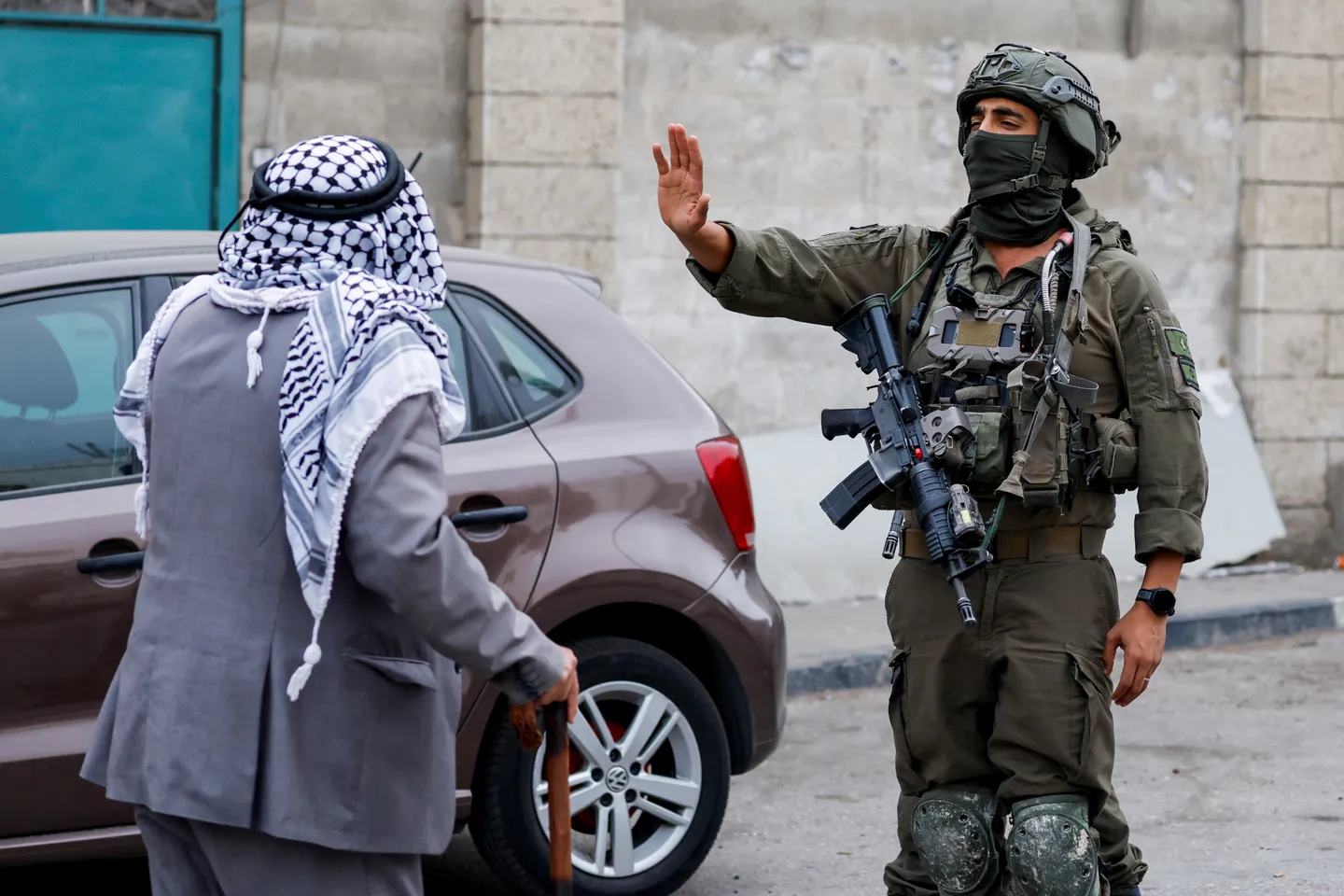


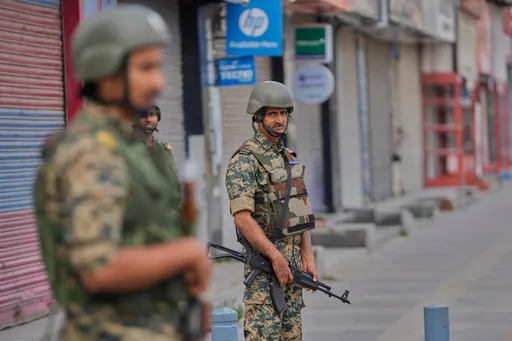
03
Data & Statistics
- Detentions: 110 people (Palestinian Prisoner’s Society); 7 injured (Wafa).
- Displacement: 3,000 residents forced out; UN-RWA director Roland Friedrich notes “more than 2,000” displaced, other reports cite “nearly 5,000.”
- Agricultural damage: Over 200 fruit trees uprooted, water wells destroyed, olive harvests prevented.
- Economic impact: Hebron provides roughly 40 % of Palestinian industrial output and 30 % of exports.
- Village isolation: 12 villages in Masafer Yatta cut off from markets and medical care.
04
Impact – Humanitarian and Economic Effects
The lockdown has restricted movement, preventing access to hospitals, schools and workplaces. Israeli soldiers fired tear-gas canisters at Al-Ahli Hospital, causing panic among patients and staff. Loss of agricultural assets and interruption of industrial production threaten livelihoods in a city that supplies a substantial share of the Palestinian economy.
05
Official Statements & Responses
- Benjamin Netanyahu pledged to “destroy terrorist infrastructure” and “build the infrastructure for settlement” ahead of the Oct. 27 election.
- Al-Haq called the siege “a prohibited act of aggression” that violates international law.
06
Criticism & Opposition
Human-rights groups and UN officials have denounced the measures. Euro-Med Human Rights Monitor’s Muhammed Shehada warned that collective punishment has reached “unprecedented levels” and serves as a “terror tactic” to advance de facto annexation. Al-Haq and B’Tselem argue the operation is politically motivated, aiming to secure settler votes before the elections.
07
On-the-Ground Reports
Journalists Andrey X, Adele Shoko and Jasper Nathaniel were assaulted by settlers; Andrey X lost consciousness and was detained without medical care. Footage captured Israeli soldiers beating 70-year-old shopkeeper Hijazi Shawer, a community leader.
08
Conflicting Reports & Gaps
- Displacement figures vary: UN-RWA cites “more than 2,000,” other sources claim “nearly 5,000.”
- Detention counts differ between the Palestinian Prisoner’s Society and reports of 240 families forced from homes.
- No independent verification is provided for the exact number of homes converted into military barracks.
09
What’s Next
Prime Minister Netanyahu has announced plans to extend the lockdown across the entire West Bank. The UN human-rights office has called for an immediate end to collective punishment and compensation for unlawful evictions. Israeli elections are scheduled for Oct. 27, and observers note that the security crackdown may influence voter sentiment, though analysts caution that policy shifts are unlikely regardless of the outcome.