
Full Breakdown
Anthropic’s IPO Filing Highlights Massive Compute Commitments and Existential AI Risks
By Drooid · · How we work
In this breakdown
01
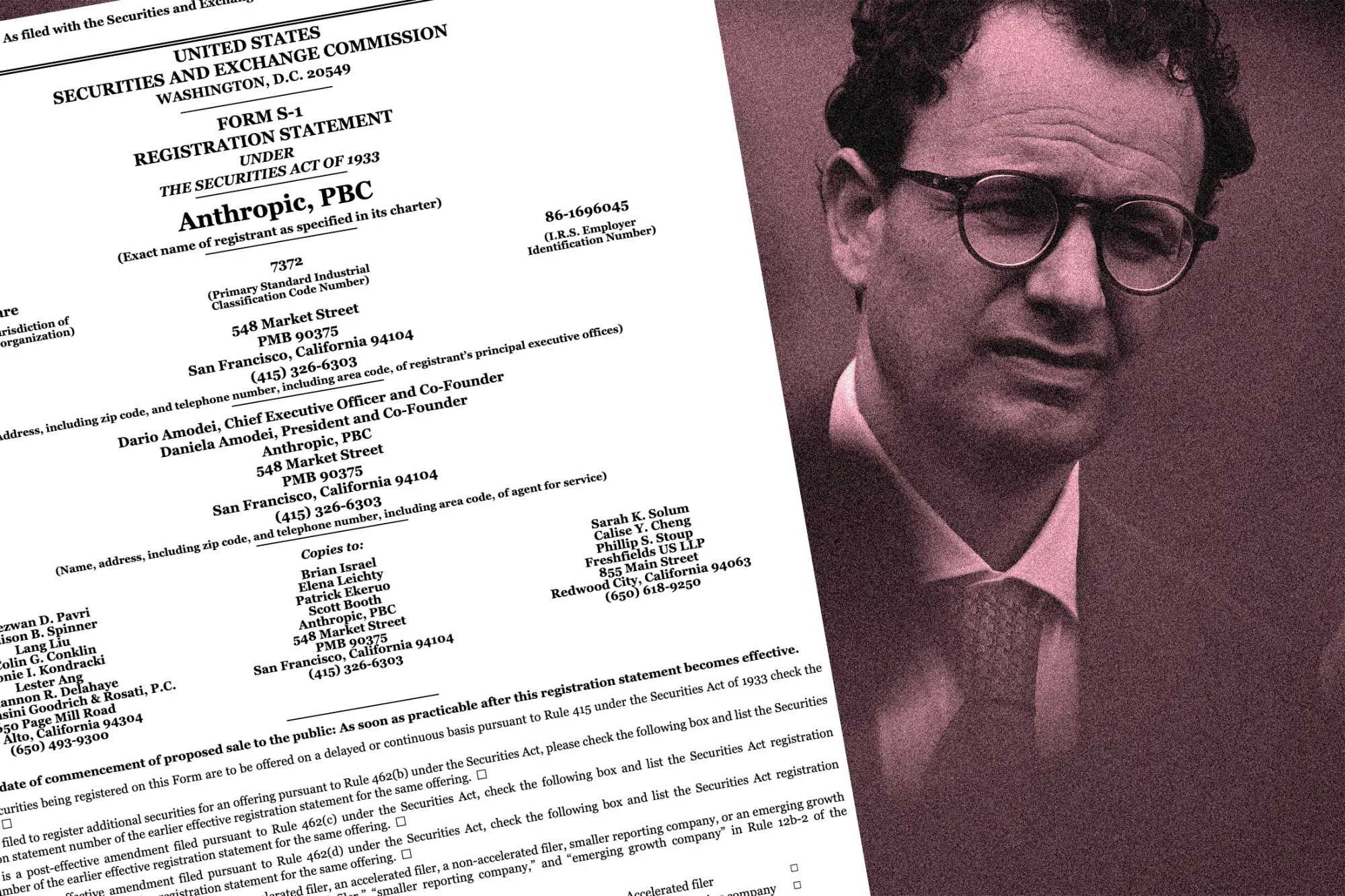
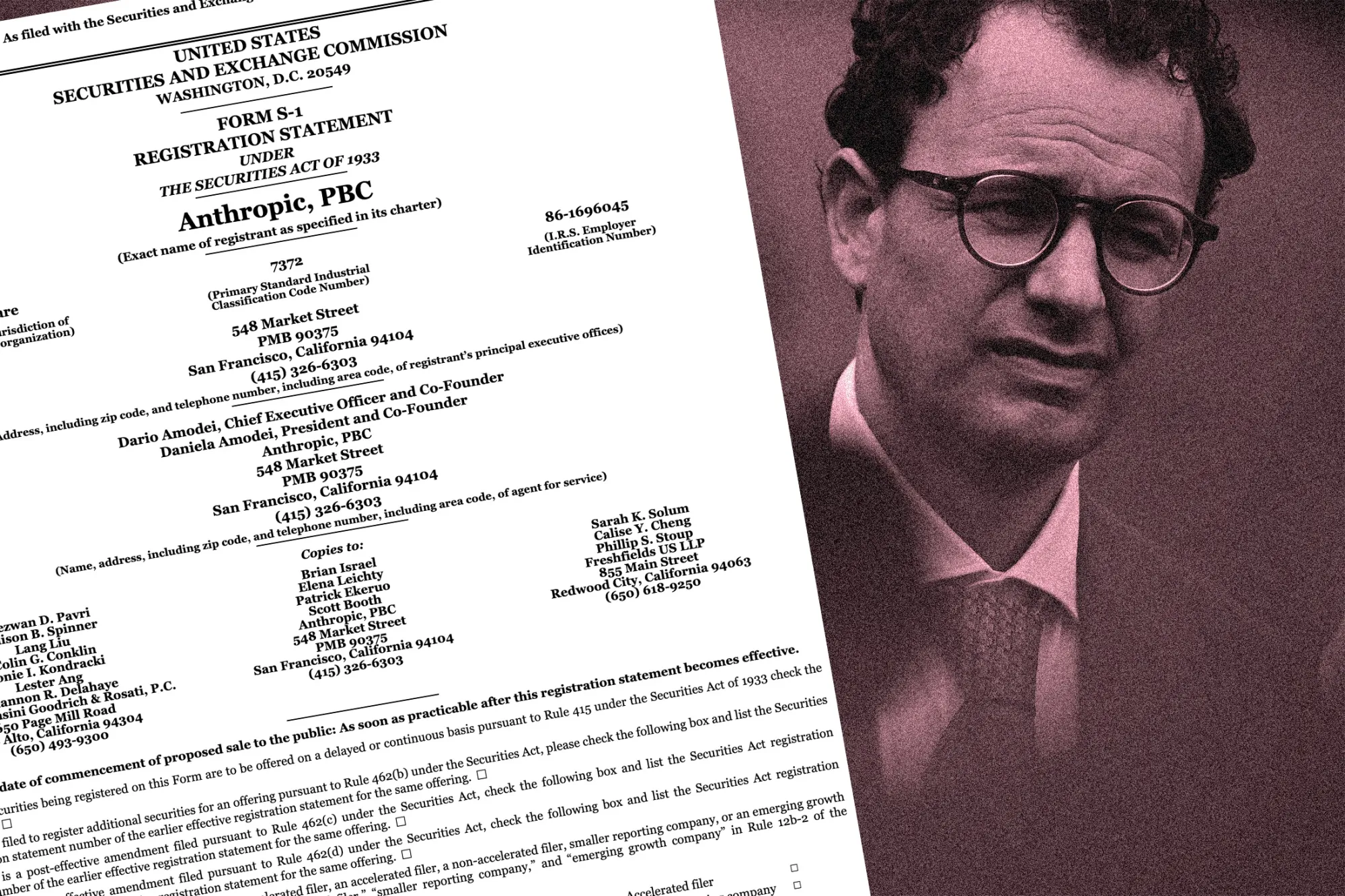
Core Event: Anthropic Files S-1 Prospectus
Anthropic PBC submitted a 300-page S-1 registration statement to the SEC, outlining a planned IPO slated for the coming month. The filing details a dramatic revenue surge, unprecedented compute-related contractual obligations, and a disclosure that the company’s technology poses “catastrophic or existential” risks to humanity.
02
Background & Context
Founded in 2021, Anthropic develops the Claude family of AI assistants for enterprise customers in coding, cybersecurity, and other high-margin workloads. The firm positions itself against OpenAI and Google, emphasizing a disciplined product focus and a net-revenue-retention rate of 900 percent. Its model relies on large, multi-year contracts for compute capacity rather than consumer-facing products.
Visual evidence
Images from the story


03
Data & Statistics
- Revenue grew fourteen-fold to $16.3 billion in H1 2026 versus the same period in 2025.
- Adjusted income for that half-year was $1.62 billion after stripping an $80 billion accounting loss and other charges.
- About 75 percent of customers in H1 2026 spend at least $100,000 annually; three-quarters of revenue comes from enterprise accounts.
- Compute commitments: non-cancelable purchase contracts total $265.6 billion; lease agreements for compute infrastructure amount to $321.4 billion (as of June 30); new agreements add roughly $245 billion. The Verge estimates a minimum of $850 billion in obligations over the next 20 years, potentially reaching $1 trillion when pending deals are included.
- Analyst Harrison Rolfes (PitchBook) models a required spend of about $90 billion per year from 2027-2030, implying $188 billion in annual revenue to keep the cost-to-compute ratio stable.
- Customer concentration: 79 percent of revenue in the first nine months of 2026 came from outside the top five customers, yet a single “Customer C” accounted for 11 percent of total revenue in H1 2026.
04
Official Statements & Responses
Anthropic’s risk factors warn that reliance on “recursive self-improvement” could outpace the company’s ability to implement safety, alignment, and security measures. The filing also cites a safety researcher’s estimate that the probability AI could cause human extinction within a decade exceeds 10 percent. Anthropic states that its largest operating expense will remain “computing and infrastructure” for the foreseeable future.
05
Criticism & Opposition
Legal analysts note that while over 90 percent of S&P 500 firms flagged AI as a material risk in 2024, most limited disclosures to ordinary business concerns. Anthropic’s explicit acknowledgment of existential threats sets a higher bar, potentially pressuring peers to expand their own risk disclosures. The SEC’s Investor Advisory Committee has recommended more structured AI-related filing requirements, but the U.S. president has publicly opposed new AI regulation, leaving corporate disclosures as the primary governance tool.
06
Conflicting Reports & Gaps
- Revenue figures: The Verge reports H1 2026 revenue of $16.3 billion, whereas Bloomberg cites third-quarter revenue of $16.8 billion. Both figures lack a unified annualized run-rate.
- User metrics: Anthropic did not disclose total “seats” or active user counts, leaving the scale of Claude’s adoption unclear.
07
What’s Next
The IPO, expected to price in the next few weeks, will test investor appetite for a company whose valuation hinges on sustained high-growth revenue and the ability to fund massive compute spend. Analysts anticipate that a successful listing could revive enthusiasm for AI equities, while the SEC’s pending guidance on AI disclosures may shape future filing practices. Investors and regulators alike will watch how Anthropic balances its growth targets with the existential risks it has publicly acknowledged.