
Full Breakdown
Netanyahu vs. Eisenkot: Israel’s Tight Election Leaves Government Formation Uncertain
By Drooid · · How we work
In this breakdown
01
Election Outcome and Seat Distribution
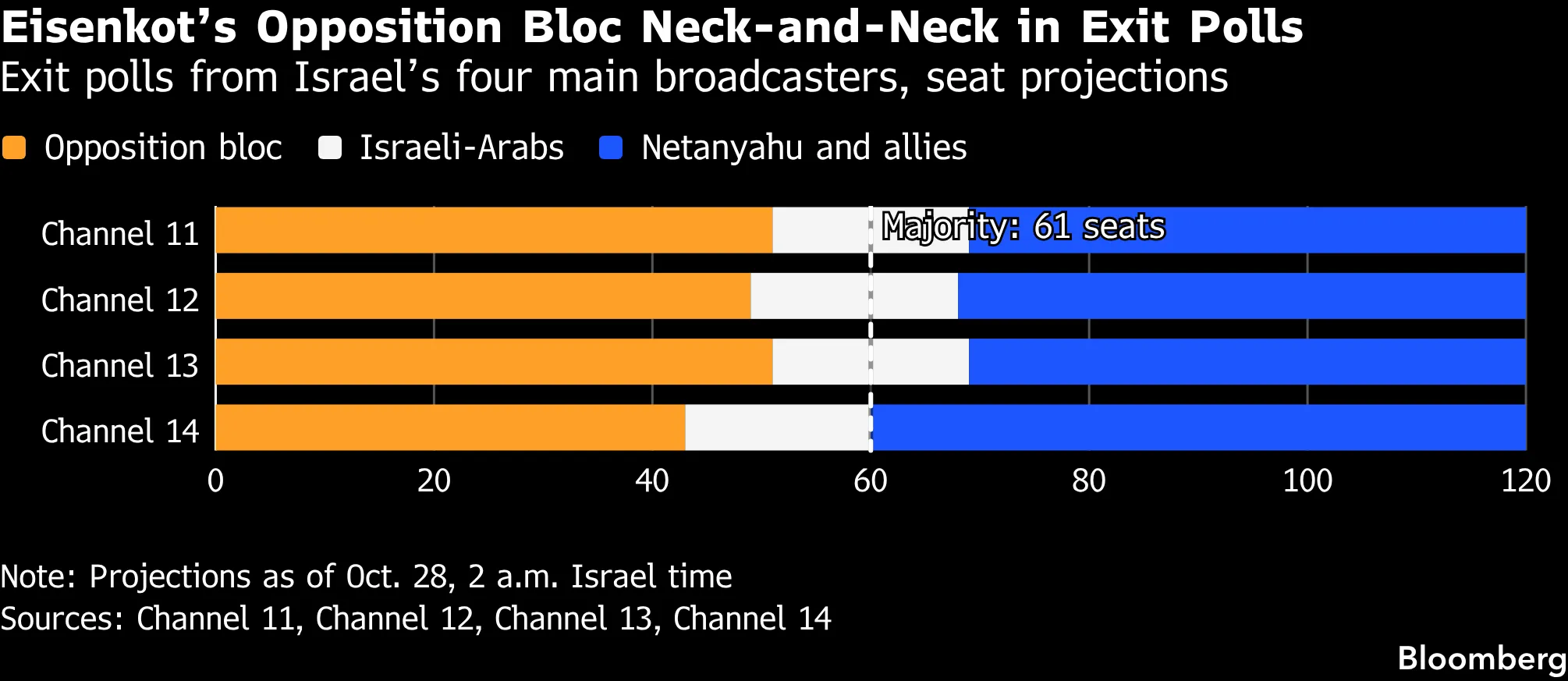
The Central Elections Committee reported that, after 90.2 % of votes were counted, the Netanyahu bloc was projected to hold 53 seats and the opposition bloc 48 in the 120-member Knesset. Exit polls gave an even split of 51 seats each. Both fall short of the 61 seats needed for a majority, making the 19 seats won by Arab parties decisive.
02
Coalition Deadlock and Negotiation Landscape
President Isaac Herzog called on all politicians to approach coalition talks with “open minds” and warned that a second election must be avoided. Opposition leader Gadi Eisenkot, chairman of the Yashar party, declared his bloc’s right to form a government based on the preliminary results.
The Joint List (projected 12 seats) and Ra’am (projected 7 seats) have signaled willingness to support a minority government that excludes Netanyahu, while Avigdor Liberman of Yisrael Beytenu has ruled out joining a coalition that includes Arab factions.
Visual evidence
Images from the story
03
Allegations of Fraud and Foreign Interference
Netanyahu’s Likud bloc accused Arab parties of “stealing the election” through fraud and demanded an immediate investigation. Eisenkot countered that Likud was running an “organized campaign to delegitimize” the results.
The Shin Bet security agency began probing alleged foreign funding of Arab-community turnout, focusing on possible contributions from Qatar and Turkey. Qatar’s foreign-ministry spokesperson Majed al-Ansari denied any interference. The investigation, directed by Central Elections Committee chair Justice Noam Sohlberg, is expected to conclude in the coming days.
04
Official Statements & Responses
- Shin Bet chief David Zini confirmed the agency is briefing party leaders on the probe and will present findings to Justice Sohlberg.
- Ra’am chairman Monsour Abbas welcomed the decision to investigate foreign-funding suspicions, stating the party supports a transparent inquiry.
05
Criticism & Opposition
- Avigdor Liberman called for a criminal probe into Netanyahu for allegedly attempting to involve the Israel Defense Forces to delay the election and refused to join either bloc’s coalition.
- Yair Golan, leader of the Democrats party, warned that “the public has spoken—it has fired the Netanyahu government,” and urged a swift formation of a new administration.
06
Data & Statistics
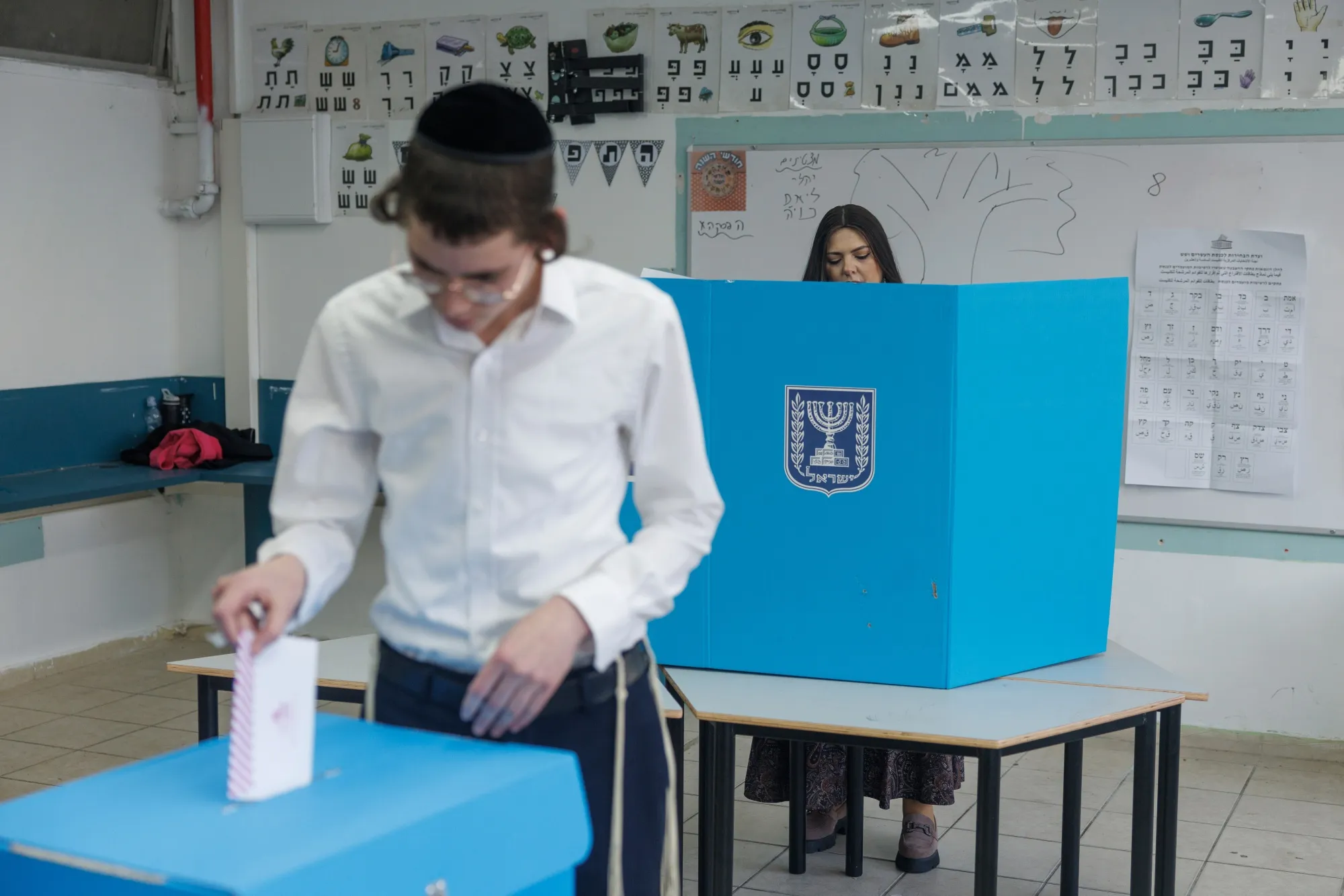
- Voter turnout reached approximately 78 % before polls closed at 10 p.m., a near-record level.
- Double-envelope ballots, used by soldiers, patients, prisoners and election workers, accounted for the remaining 9.8 % of votes and could still affect final seat totals.
- The Arab parties’ combined 19 seats represent the largest parliamentary bloc for any minority group in Israeli history.
07
Impact on Security Policy and the Iran Question
Both candidates linked the outcome to Israel’s stance toward Iran. Netanyahu reiterated his partnership with U.S. President Donald Trump and suggested a renewed “strike” against Tehran could be imminent. Eisenkot described regime change as “not an achievable goal” and emphasized a more modest, diplomatic approach. Analysts note the deadlock could delay decisive action on Iran.
08
Conflicting Reports & Gaps
- Seat projections differ: the Committee’s 53-vs-48 estimate versus exit polls showing a 51-51 tie.
- The effect of double-envelope ballots remains uncertain; officials acknowledge they could shift the final seat count.
- A senior Committee official indicated that even if foreign-funding allegations are substantiated, they would not be extensive enough to alter the election outcome.
09
What’s Next
President Herzog will meet party leaders to begin formal coalition consultations. Shin Bet expects to deliver its findings to Justice Sohlberg within days, after which the Committee will decide on any corrective measures. Coalition talks are set to continue through the week, with a minority government or a second election possible if no majority emerges.