
Full Breakdown
UK Government Subsidy for Rolls-Royce UltraFan Engine Development
By Drooid · · How we work
In this breakdown
01
Core Deal: £1.25 bn Public Funding for a £2.5 bn Ten-Year Programme
The UK Treasury has committed £1.25 bn to a ten-year research programme with Rolls-Royce to develop a demonstrator UltraFan engine for future narrow-body jets, supporting 3,300 UK jobs through 2029. The subsidy is part of the industrial strategy announced in the October 2026 Budget.
02
Background & Context
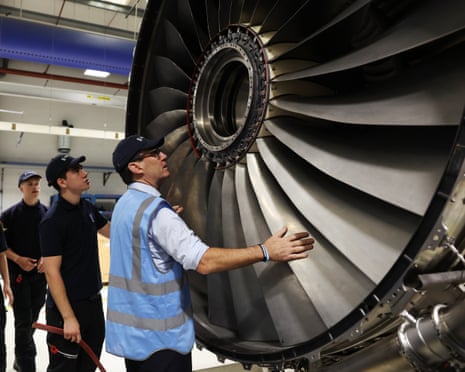
Rolls-Royce, a long-time supplier of wide-body engines, left the single-aisle market in 2012. The UltraFan, a geared turbofan under development for more than a decade, has been aimed at long-haul aircraft. Targeting the narrow-body segment—about eight times larger than its current civil-engine business—would put the company against GE Aviation’s CFM International and Pratt & Whitney.
Visual evidence
Images from the story



03
Timeline
- October 2026 Budget – Chancellor John Healey announces the joint £2.5 bn programme, with the government covering half the cost.
- 13 Oct – Avolon orders 70 Trent 7000 engines for 35 Airbus A330-900s.
- 20 Oct – Rolls-Royce expands CorporateCare Enhanced coverage for Pearl engines (unrelated to UltraFan).
- 24 Oct (scheduled) – Treasury confirms an additional £20.4 bn for the National Wealth Fund and British Business Bank, earmarked for defence and industrial projects.
- 31 Jul – GAO report finds the U.S. CERP engine programme 38 % over budget, highlighting execution risk for large government-backed projects.
- 29 Oct – Market analysis notes the pending status of the Rolls-Royce research agreement.
04
Data & Statistics
- Programme cost: £2.5 bn total, £1.25 bn from the UK government.
- Job impact: 3,300 direct UK jobs through 2029; Rolls-Royce projects “tens of thousands” of additional roles if a UK engine slot is secured.
- Economic contribution: Potential £120 bn boost to the UK economy over the programme’s life.
- Export potential: About 80 % of aircraft-engine revenue is exported.
- Market size: Narrow-body segment roughly eight times larger than Rolls-Royce’s current civil-engine market.
- Commercialisation timeline: Demonstrator engines expected around 2030; service entry projected for the mid-to-late 2030s.
05
Official Statements & Responses
Rolls-Royce’s chief executive called the deal a “landmark moment” for the UK aerospace sector, emphasizing high-value jobs and supply-chain transformation. Prime Minister Andy Burnham linked the agreement to his “reindustrialisation” agenda, saying Britain’s industrial strength must be a core part of its future.
06
Verbatim Quotes
- “The single biggest opportunity in aerospace over the next 50 years is to secure a UK engine position on next generation narrow body programmes,” — the government
- “Britain has always been an industrial powerhouse. But that strength isn’t just part of our past, it should be a core part of our future too. That’s why we’re driving forward reindustrialisation and this agreement shows what that looks like in practice.” — Tufan Erginbilgic, chief executive
07
Conflicting Reports & Gaps
- Cost-share clarity: Rolls-Royce has not disclosed its exact investment, and the government warned the split is “not neutral.”
- Funding certainty: The Treasury’s additional capital is described as an “expected” grant rather than an approved state grant.
- Execution risk: The GAO report on the U.S. CERP programme underscores the risk that large, government-funded engine projects can exceed budgets and face delays, a factor not yet resolved for the UK initiative.
08
What’s Next
The next step is formal approval of the research funding and finalisation of the public-private agreement, with no set date. Rolls-Royce must then progress the demonstrator engine and secure an aircraft-manufacturer partner; engine partner selection is expected in the “coming years,” with programme launches around 2030 and service entry in the mid-to-late 2030s.