
Full Breakdown
Netanyahu Accuses Arab Parties of Election Fraud Amidst Knesset Deadlock
By Drooid · · How we work
In this breakdown
01
Core Event
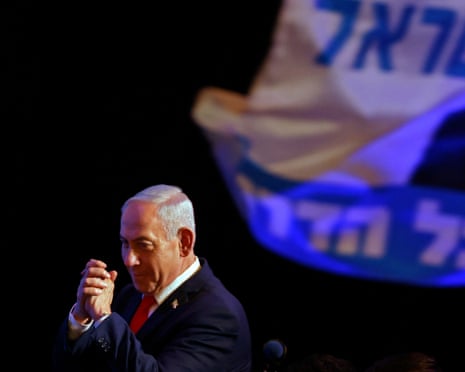
Prime Minister Benjamin Netanyahu alleged that Arab-Israeli parties had been financed by a foreign power to “steal” the recent parliamentary election. No material evidence has been released. The accusations came after preliminary results showed Netanyahu’s bloc winning 53 of the 120 Knesset seats, short of the 61 seats needed for a majority.
02
Background & Context
The election was the first since Israel’s military operation in Gaza that followed the 7 October 2023 Hamas attack. Netanyahu’s far-right coalition had governed for four years, but the vote left both his bloc and the opposition bloc led by Gadi Eisenkot without a majority. Two Arab parties—the Joint List and Ra’am—secured a combined 19 seats, a historic high for Arab-Israeli representation.
Visual evidence
Images from the story



03
Data & Statistics
- Likud and allies: 53 seats (largest single party with 27 seats)
- Eisenkot’s bloc: 48 seats
- Arab parties (Joint List + Ra’am): 19 seats
- Arab-Israeli voter turnout: ? 80 %, described as “record” by observers.
04
Official Statements & Responses
- Dean Livneh, acting director-general of the Central Elections Committee, said there was “no basis” for the fraud claims.
- Police officials reported voting was “relatively trouble-free” and called the allegations groundless.
- A senior adviser to Qatar’s prime minister, Majed al-Ansari, denied any Qatari involvement.
05
Criticism & Opposition
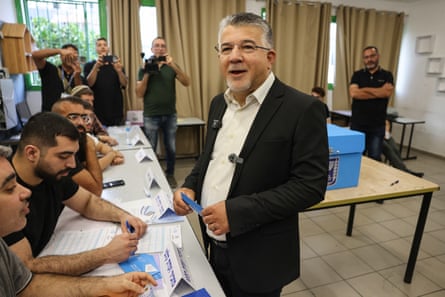
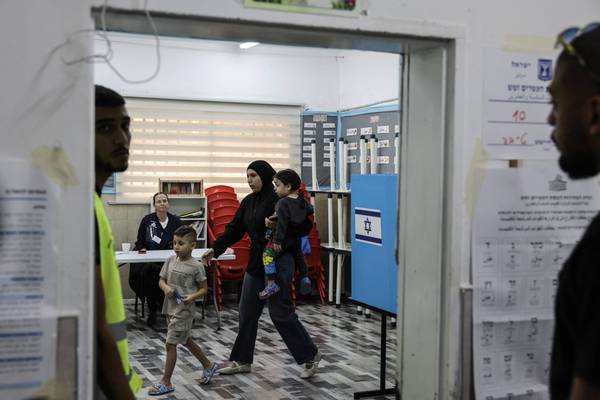
Opposition leaders and civil-rights groups condemned the accusations as a smear campaign. Gadi Eisenkot called for an impartial investigation and warned against using the claims to delay the Knesset’s convening. Yousef Jabareen, Joint List chairman, said Netanyahu was “defeated at the ballot box.” Ahmad Tibi, a Joint List Knesset member, described the effort as an attempt to “intimidate and scare” the opposition. Former prime minister Naftali Bennett noted the irony of blaming Qatar while his own advisers have faced similar accusations. The Association for Civil Rights in Israel (ACRI) warned of deliberate obstruction of Arab voters, citing long queues and police presence at polling stations.
06
Verbatim Quotes
- “It’s already clear that Likud and Netanyahu have embarked on a coordinated, organised campaign seeking to delegitimise the results of the election,” — Gadi Eisenkot
- “Netanyahu was defeated at the ballot box,” — Yousef Jabareen, Joint List chairman
- “This entire campaign is directed against Eisenkot, to prevent him, intimidate and scare him off forming a government that relies on external support from the Joint List or Ra’am,” — Ahmad Tibi
07
Conflicting Reports & Gaps
Likud’s claim of “hundreds of testimonies” contrasts with statements from the Central Elections Committee and police that no evidence has been presented. Media reports note that ballot packets in some Arab towns were printed only in Hebrew and that far-right monitors attempted procedural delays, but officials say these actions did not affect overall vote counting. No independent audit of the alleged foreign financing has been released.
08
What’s Next
President Isaac Herzog will consult the leaders of all parties elected to the new Knesset and task a party leader—potentially Netanyahu or Eisenkot—with forming a coalition. If no coalition emerges within the statutory period, the Knesset could remain deadlocked for up to two months, after which a second election may be called for the spring. Netanyahu will continue as caretaker prime minister until a government is installed.