
Full Breakdown
Kazakhstan Unveils $14 Billion Infrastructure and Nuclear Power Drive
By Drooid · · How we work
In this breakdown
01
Core Announcement
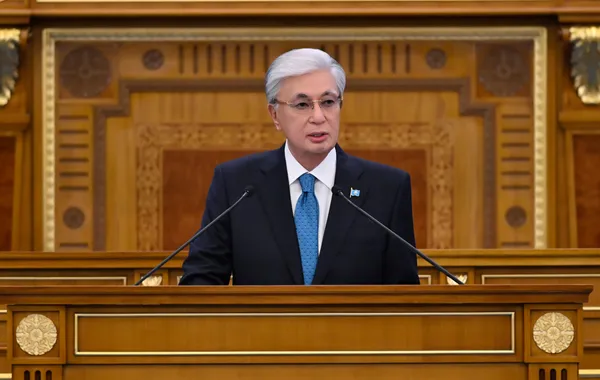
In his State-of-the-Nation address on October 28, President Kassym-Jomart Tokayev presented a programme to modernise infrastructure, secure an electricity surplus and build two nuclear power plants (NPPs). He linked the plan to “an increasingly unpredictable geopolitical environment” and to Kazakhstan’s ambition as an Eurasian logistics hub.
02
Funding and Project Scope
Tokayev said 6.5 trillion tenge (? US$14 billion) will be drawn from the National Fund through 2029 for the “People’s Construction” programme. The allocation covers:
- About 70 new hospitals and ? 50 education, sports and cultural facilities.
- 1.5 trillion tenge for social projects in late 2026-early 2027.
- Transport upgrades, notably the Bakty–Ayagoz railway (opening 2027) and the Aral-Caspian Highway (completion 2028).
State funds will act as a guarantee to attract private investment rather than covering all costs.
Visual evidence
Images from the story

03
Energy Strategy
Kazakhstan generated 123 billion kWh of electricity in 2025 and consumed 124.6 billion kWh, leaving a shortfall of about 1.5 billion kWh covered by imports, according to KEGOC. Tokayev set a target for a sustained electricity surplus by 2029 through:
- Starting construction of the Balkhash NPP in 2027.
- Advancing the Moyinkum NPP agreement.
- Expanding clean-coal, solar generation and modernising existing plants and transmission lines.
He also proposed a state strategic uranium reserve to secure fuel for the nuclear fleet.
04
Logistics and Transport Ambitions
The address highlighted Kazakhstan’s role in overland freight corridors:
- Roughly 85 % of China-to-Europe rail freight already passes through Kazakhstan.
- The Bakty–Ayagoz railway will raise annual rail capacity from ? 28 million to 48 million metric tons.
- The Aral-Caspian Highway will shorten the Trans-Caspian route by 1,000 km, cutting delivery times by three days.
05
Official Statements & Responses
The IMF forecast cited by the President projects Kazakhstan’s GDP to exceed €350 billion this year, with per-capita income over €17 000 and the industrial sector contributing more than 14 % of GDP.
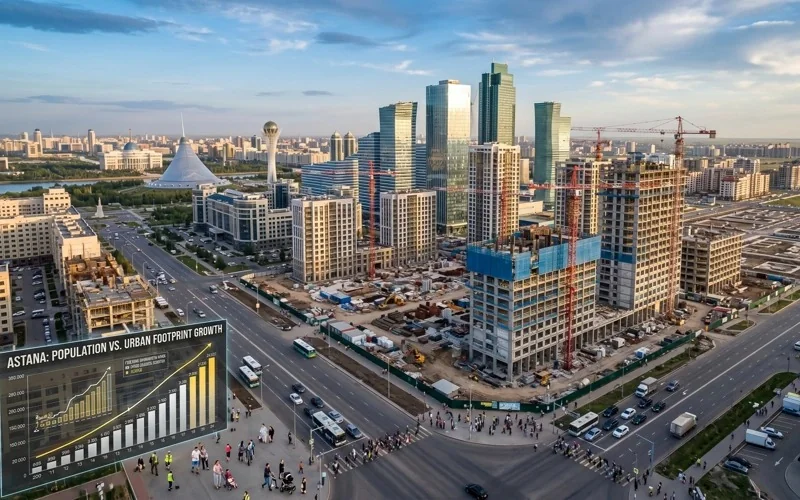
Tokayev announced that 2027 will be the “Year of Nationwide Large-Scale Construction,” focusing on roads, airports, railway stations, healthcare facilities and housing.
06
Conflicting Reports & Gaps
Sources differ on the Balkhash NPP start date: some say construction can begin “next year” (2027), while other reports schedule opening for 2034, suggesting the 2029 surplus target may rely on other projects. Details on financing the uranium reserve were not provided.
07
Verbatim Quotes
- “It’s a rather simple sort of ‘business’, and one that has persisted for decades. I’m assured that this is standard practice in the energy sector,” — Jomart Tokayev
- “I am deeply convinced that this initiative will provide jobs for hundreds of thousands of people, and our entire nation, especially the younger generation, will benefit from it,” — Jomart Tokayev
- “The logic behind the decisions being made is simple: state funds must become a guarantee for attracting private investment,” — President Tokayev
- “Without quality roads and modern roadside service infrastructure, Kazakhstan cannot claim the status of a global transit corridor or a Eurasian transport and logistics hub,” — Jomart Tokayev
08
What’s Next
- 2027: Year of Nationwide Large-Scale Construction; start of the new Astana airport; launch of the Bakty–Ayagoz railway.
- 2028: Completion of the Aral-Caspian Highway.
- 2029: Target year for achieving a sustained electricity surplus and the final disbursement of the 6.5 trillion-tenge fund.