
Full Breakdown
Spain’s Deadliest High-Speed Train Collision of 2026
By Drooid · · How we work
In this breakdown
01
Core Event
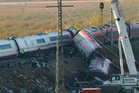
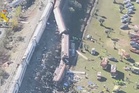
On October 28 a Renfe AVE service traveling from Madrid to Seville struck the rear of a stationary Iryo train near Urda in Toledo province. The impact derailed multiple carriages, sending the front of the Renfe train and the rear of the Iryo train down an embankment. Official counts vary, with some sources reporting 68 fatalities and others 69, and more than 100 injured. A total of 544 passengers were aboard the two trains (397 on Renfe, 147 on Iryo).
02
Background & Context
This crash is the second fatal high-speed accident on Spain’s Madrid-Seville corridor in 2026. The first, on January 18, killed 46 people when an Iryo train derailed and collided with a Renfe service near Adamuz, Córdoba. Spain operates Europe’s largest high-speed network, much of it built in the 1990s. The line still relies on the German-origin Linienzugbeeinflussung (LZB) signalling system, slated for replacement by the EU-mandated European Rail Traffic Management System (ERTMS) by 2050.
Visual evidence
Images from the story




03
Timeline
- January 18 – Adamuz crash (46 dead).
- October 28 – LZB failure leads to collision near Urda.
- October 29 – Government declares three days of national mourning.
- December 13 – Renfe suspends ticket sales on the Madrid-Andalusia corridor.
- November 29 – Scheduled national election.
04
Data & Statistics
- Reported deaths: 68 (France 24, NewsWav) or 69.
- Injured: 80 (Spain’s health minister) to more than 107.
- Passengers: 544 total.
- EU safety data: 0.09 train fatalities per billion km vs 2.52 for cars (European Commission).
- Maintenance spending: €1.5 billion annually (2018-2022) with ~16 % earmarked for upkeep, compared with 34-39 % in France, Germany, Italy (Reuters).
05
Official Statements & Responses
Transport Minister Óscar Puente said a computer communications malfunction disabled the LZB system along a 63-km stretch at about 8:30 a.m., forcing trains to stop. He added that a “wrong decision” by the control centre authorised the Renfe train to resume travel despite an active red signal. Prime Minister Pedro Sánchez announced three days of mourning, pledged a thorough investigation, and vowed to strengthen safety measures. Renfe said the train was instructed to continue and that investigators will determine the exact sequence of events. The European Commission noted that ERTMS specifications aim to replace national signalling systems across the EU by 2050.
06
Criticism & Opposition
The train-drivers’ union SEMAF maintained a planned strike, citing unmet safety standards and demanding comprehensive safety systems.
07
On-the-Ground Reports
Passenger Rafael Barcelo described being thrown from his seat when the impact occurred, saying he was “lucky” to have stepped away for coffee. Survivor Tangui Binier recounted “dead bodies, missing limbs” and expressed uncertainty about recovery.
08
Conflicting Reports & Gaps
- Fatality count differs between 68 and 69.
- The speed of the Renfe train at impact is reported as “up to 200 km/h” (Puente) and elsewhere as an estimated range around 170-180 km/h, with no definitive measurement released.
- Whether the Renfe train received an explicit “proceed” order or acted on a default procedure remains under investigation.
09
What’s Next
Investigators are analysing audio recordings between drivers and the control centre, as well as LZB failure logs. The control centre’s decision-making process is a focal point of the probe. Rail services on the Madrid-Andalusia corridor remain suspended pending safety reviews, and ticket sales are halted until December 13. The upcoming November 29 election is expected to intensify political scrutiny of the government’s rail-safety policies.