
Full Breakdown
NZ First Calls for Cancellation of $6-8 billion Frigate Replacement in Favor of Drone-Centred Defence
By Drooid · · How we work
In this breakdown
01
Background & Context
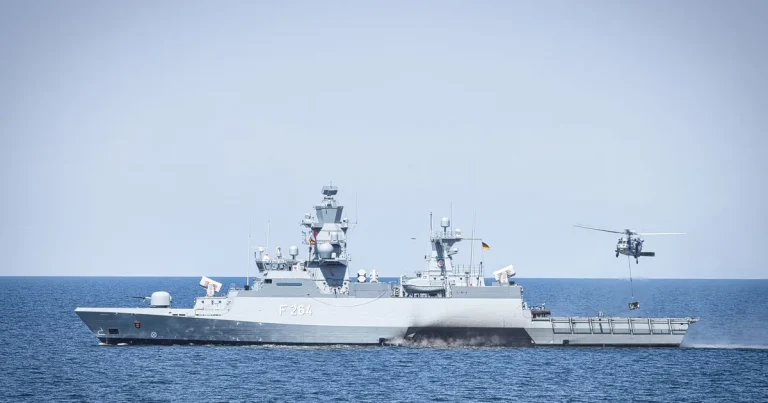
New Zealand’s Defence Capability Plan (2025) earmarked a $12 billion upgrade that includes two new frigates to replace the ageing Anzac-class vessels HMNZS Te Kaha and Te Mana. NZ First, led by former defence minister Ron Mark, proposes scrapping the frigate purchase and redirecting funds toward unmanned systems, additional C-130J Hercules aircraft, and domestic war-reserve munitions. Mark’s stance is shaped by recent visits to Ukraine, where uncrewed drones were used to sink the Russian cruiser Moskva.
02
Core Event
In an interview with Newsroom, Ron Mark announced that NZ First would seek to cancel the $6-8 billion frigate programme and instead invest in a “second amphibious warship” capable of deploying swarms of air, surface and under-sea drones. The proposal would free Crown capital for modular vessels, long-range surveillance, a cyber force, and expanded tactical airlift. Mark argues that a $2 billion frigate purchase would limit the ability to cover New Zealand’s vast oceanic domain.
Visual evidence
Images from the story


03
Data & Statistics
- Estimated upfront cost of two new frigates: $6 billion–$8 billion.
- Projected total life-cycle cost over 30 years: ? $22 billion (Just Defence).
- Current Defence Capability Plan allocation (2025): $300 million–$600 million for frigate sustainment through 2028 versus $50 million–$100 million for uncrewed persistent surface surveillance vessels.
- NZDF annual report (ending June 30 2026) notes a 7.9 % regular-force attrition rate and 13 % civilian staff attrition; retired Colonel Bernard Isherwood claims an overall attrition rate of ? 14.5 %.
04
Official Statements & Responses
- Paul Goldsmith, National’s defence spokesperson, argues that if NZ First were serious about defence, it should not place Ron Mark in a low list position, implying skepticism about the party’s commitment.
- The New Zealand Defence Force (NZDF) states it continues to meet domestic emergency response times and can support requests from other government agencies, while declining further comment on specific leadership issues.
05
Criticism & Opposition
Retired Colonel Bernard Isherwood, former NZSAS commander, criticises senior officers for lacking combat experience and alleges a “climate of fear” that drives talent away. He also disputes the NZDF’s attrition figures, insisting the higher rates he cited are accurate.
06
Conflicting Reports & Gaps
- Attrition rates: NZDF reports 7.9 % regular-force and 13 % civilian attrition; Isherwood claims an overall 14.5 % rate.
- Funding adequacy: Labour’s O’Connor questions whether the $12 billion upgrade adopted in 2025 was ever fully funded, a point not addressed by the government’s current statements.
07
Verbatim Quotes
- “Military people are not public servants,” — Bernard Isherwood
- “It is clear that there has been historic underfunding of Defence. That is why this Government has committed to doubling our defence spending to ensure we have a modern, combat-capable NZDF that pulls its weight internationally and domestically.” — Ron Mark
08
Why It Matters / Impact
Shifting from legacy frigates to drone-centric capabilities could reduce capital outlays and increase operational flexibility, aligning New Zealand’s naval strategy with emerging asymmetric warfare trends. The proposal raises questions about interoperability with allies, the industrial base’s capacity to produce advanced unmanned systems, and the strategic risk of relying heavily on uncrewed platforms without a robust manned fleet.
09
What’s Next
The formal Cabinet advice on the frigate procurement is scheduled for the end of 2027. NZ First’s policy will likely become a bargaining point in coalition negotiations following the upcoming election, influencing how much of the projected $22 billion life-cycle cost is allocated to domestic drone development versus traditional warship acquisition.