
Full Breakdown
Supreme Court Rejects Call for Public Disclosure of Beneficial Owners in AIFs and FPIs
By Drooid · · How we work
In this breakdown
01
Core Decision (October 29, 2026)
On October 29, 2026 the Supreme Court, in a three-judge bench headed by Justice B.V. Nagarathna, declined to issue a mandamus directing the Securities and Exchange Board of India (SEBI) to require full public disclosure of the ultimate beneficial owners (UBOs) and portfolio holdings of Alternative Investment Funds (AIFs) and Foreign Portfolio Investors (FPIs). The Court held that such a direction could be issued only if an existing legal or regulatory framework mandated the disclosure; in the absence of any such regime, the judiciary could not create one.
02
Background & Context
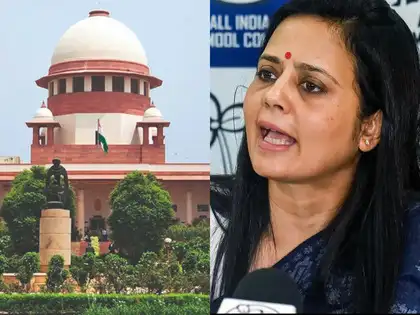
Member of Parliament Mahua Moitra (Trinamool Congress) filed a public-interest litigation under Article 32, arguing that the rapid expansion of AIFs and FPIs had created opacity that could facilitate market manipulation, money-laundering and tax evasion. Unlike mutual funds, which are subject to the SEBI Mutual Fund Regulations 1996 and the SEBI Collective Investment Scheme Regulation 1999, AIFs and FPIs operate under comparatively lax disclosure rules. SEBI-registered AIFs rose from 42 in March 2013 to more than 1,528 by March 2025, and their assets under management grew to almost INR13 lakh crore by the end of 2024. Assets under custody of registered FPIs exceeded INR74 lakh crore in 2025, dwarfing the INR68 lakh crore AUM of mutual funds that year.
Visual evidence
Images from the story





03
Data & Statistics
- AIF count (Mar 2025): 1,528 (up from 42 in 2013).
- AIF AUM (2024-25): ? INR13 lakh crore.
- FPI AUC (2025): > INR74 lakh crore.
- Mutual-fund AUM (2025): ? INR68 lakh crore.
- Retail investor base: roughly 14 crore individuals.
04
Official Statements & Responses
The bench emphasized that the Court’s jurisdiction under Article 32 does not extend to crafting new regulatory policy. Solicitor General Tushar Mehta, representing the Centre and SEBI, warned that imposing a blanket public-disclosure requirement could “destroy” the national economy and noted that SEBI already receives the relevant information for regulatory oversight. SEBI’s response dated September 19 2025 confirmed that no statutory provision required the public release of UBO data, though the regulator could obtain such details during investigations. The bench concluded that, without a legislative or regulatory mandate, it could not compel SEBI to disclose the information publicly.
05
Criticism & Opposition
Advocate Prashant Bhushan, appearing for Moitra, argued that the lack of transparency leaves “innocent investors” vulnerable to manipulation by entities that can “artificially boost share prices.” He cited the Supreme Court-appointed expert committee’s findings in the Adani-Hindenburg case to underscore the regulatory vacuum.
06
Verbatim Quotes
- “SEBI is the regulator. It has been granted certain powers. The situation in the country and in the international economy keeps on evolving,” — Justice D.K. Upadhyay
- “If we grant this prayer, will it be good for the market?” — Justice Nagarathna
- “PMLA requires that those who hold more than 10% economic interest in a particular company are only required to disclose. If 5 people own 9.9% each and together they own more than 50% they are not required to disclose. 5 persons from the same family,” — Prashant Bhushan
07
What’s Next
The Court disposed of the petition but left “legal remedies open,” allowing Moitra to pursue representation before SEBI. The regulator may consider formulating a disclosure framework, but any such policy must be enacted by the legislature or SEBI itself before the judiciary can enforce it.