
Full Breakdown
BOJ Holds Rates at 1.25% and Declares Underlying Inflation at Target
By Drooid · · How we work
In this breakdown
01
Core Event
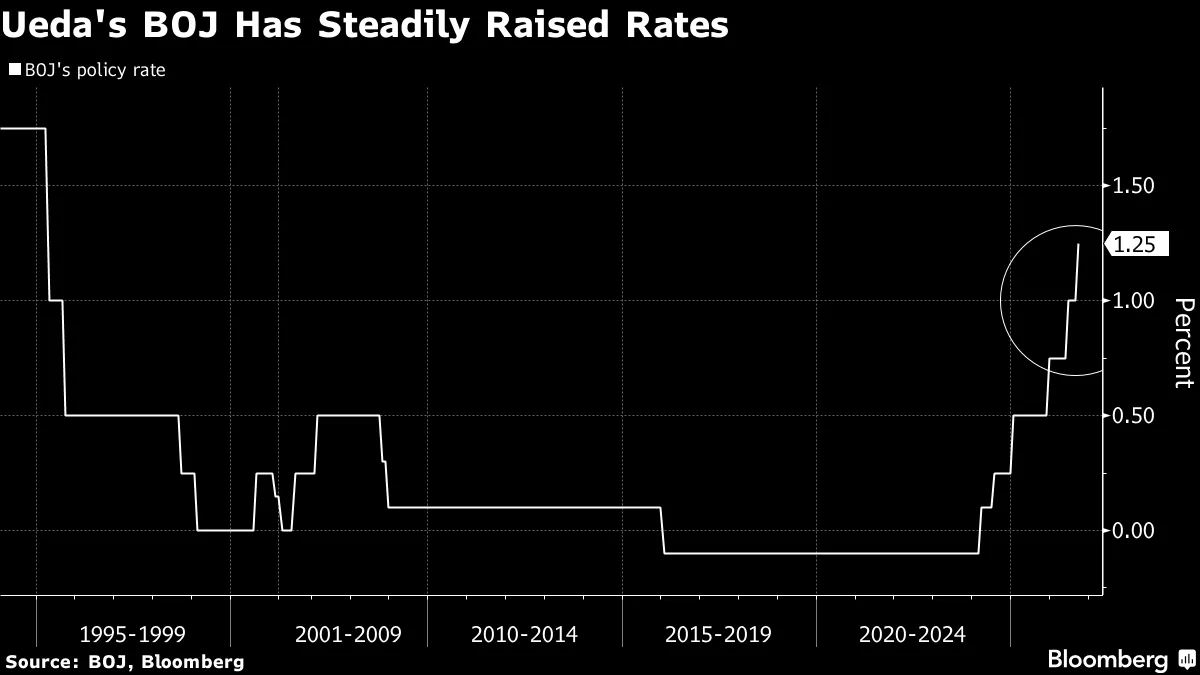
On Oct 30, the Bank of Japan (BOJ) kept its short-term policy rate—the uncollateralized overnight call rate—at 1.25% after an 8-1 board vote. In its quarterly Outlook Report, the BOJ announced that “underlying inflation” has reached the 2 % price-stability target for the first time since the goal was set in 2013. The decision was accompanied by a plan to accelerate the disposal of exchange-traded-fund (ETF) holdings to about ¥860 billion a year starting in January.
02
Background & Context
Japan introduced a 2 % inflation target in 2013 under Governor Haruhiko Kuroda. The target was finally met in Oct 2026 after years of ultra-loose policy, the end of negative rates in 2024, and a series of hikes that lifted the benchmark to its highest level since 1995. The BOJ’s shift from “coaxing inflation upward” to “anchoring it at target” marks a new policy phase.
Visual evidence
Images from the story

03
Data & Statistics
- Policy rate: 1.25 % (held)
- Underlying inflation: judged “generally consistent” with 2 % target (BOJ)
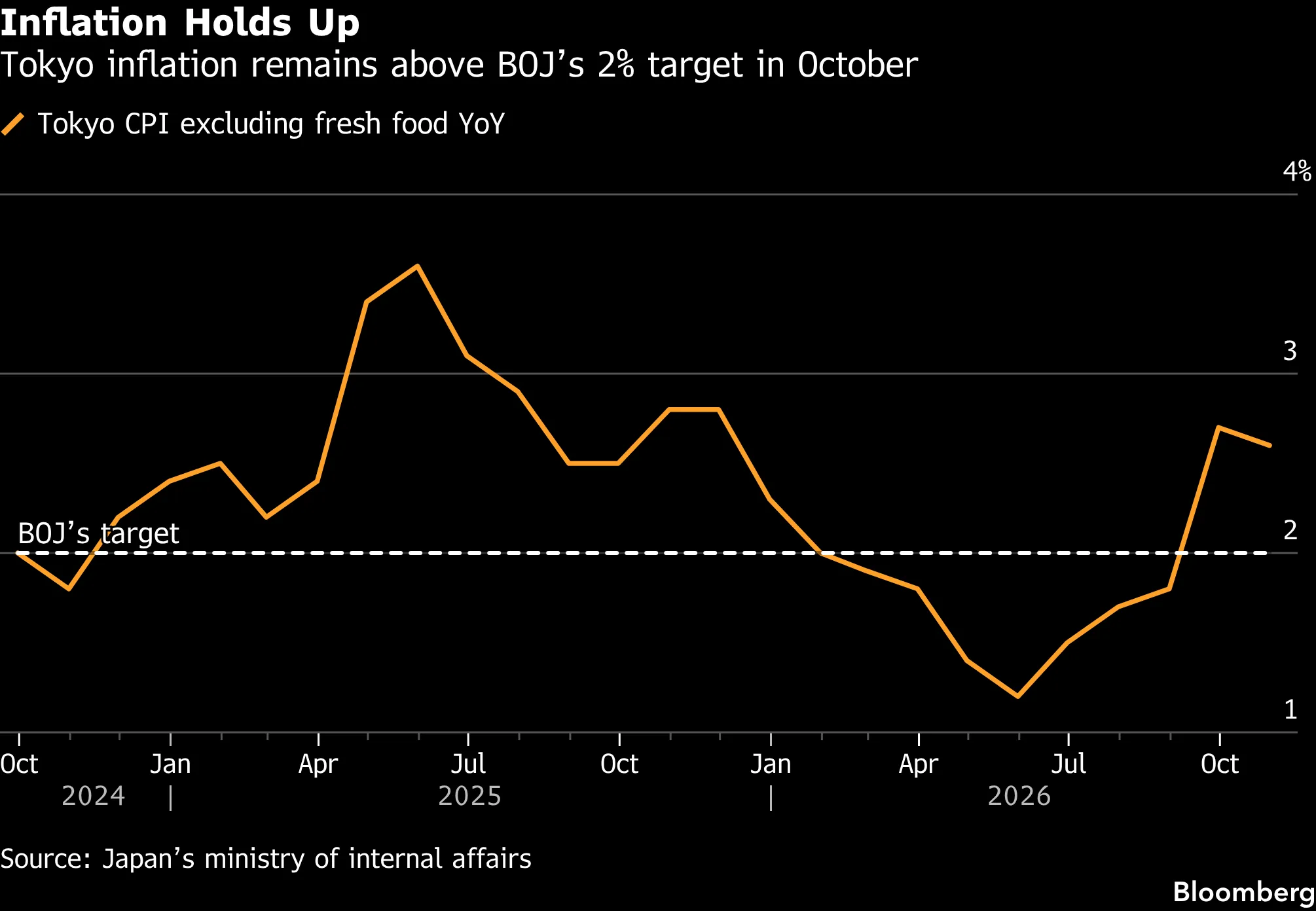
- Core CPI (Tokyo, Oct): 2.6 % YoY
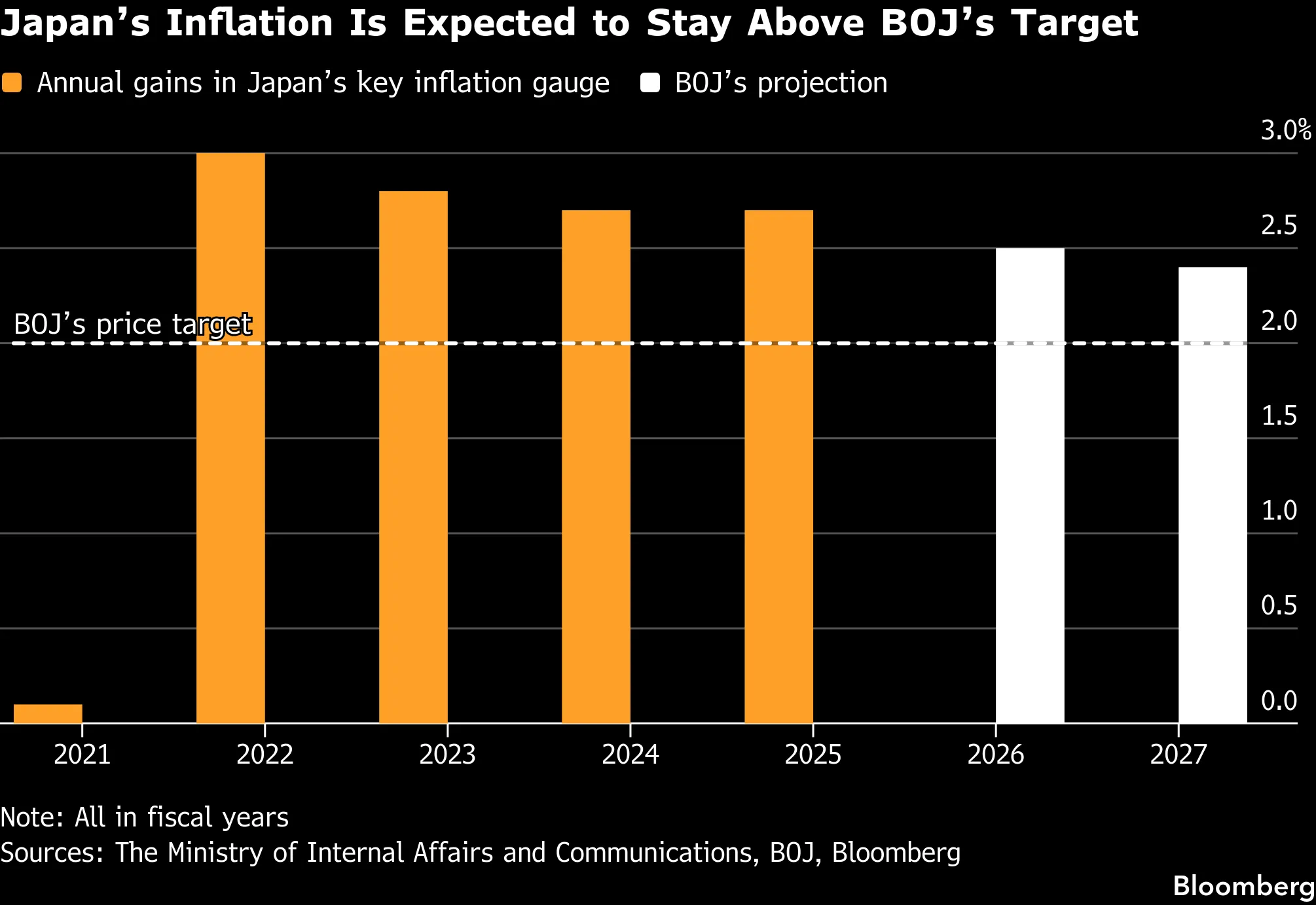
- Core-core inflation forecast (FY 2027): 2.7 % (up from 2.6 %)
- ETF sales pace: accelerated from ¥330 billion to ¥860 billion annually, a 43-year unwind horizon
04
Official Statements & Responses
The bank will focus on “anchoring” inflation and monitoring upside risks from higher oil prices, AI-driven demand, and a weak yen. Governor Kazuo Ueda will explain the decision at a news conference later on Friday. The BOJ also signaled readiness to raise rates “once every few months” if inflation pressures persist, noting that the neutral rate is estimated between 1.1 % and 2.5 %.
05
Criticism & Opposition
A board member proposed raising the policy rate to 1.5 %, a 25-basis-point increase, but was outvoted by Governor Ueda and the majority.
06
Verbatim Quotes
- “The BOJ is likely to judge that underlying inflation has now reached around 2%,” — Ryutaro Kono, chief Japan economist at BNP Paribas
- “In five or six years, a first-grader basically enters middle school. If someone claimed that inflation persisting through that entire period isn’t a trend, it’s hard to see people accepting that,” — Seisaku Kameda, former BOJ chief economist
07
Conflicting Reports & Gaps
The BOJ’s assessment of “underlying inflation” at 2 % contrasts with headline CPI figures that have stayed above 2 % for 45 months nationally and 2.6 % in Tokyo for October. Different gauges (core CPI, core-core CPI, and the BOJ’s internal measure) yield slightly divergent readings, leaving some uncertainty about the precise inflation trajectory. The impact of accelerated ETF sales remains unclear; the BOJ estimates a 43-year unwind, but market participants note the annual sales represent only about 0.1 % of market turnover.
08
Why It Matters / Impact
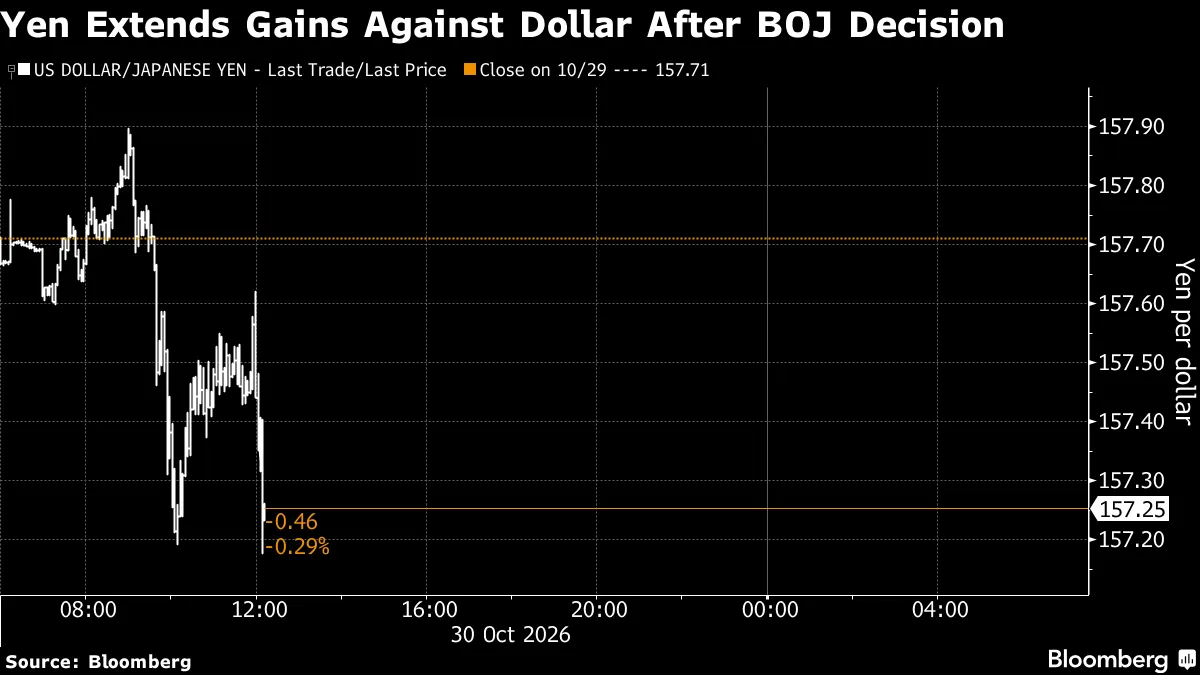
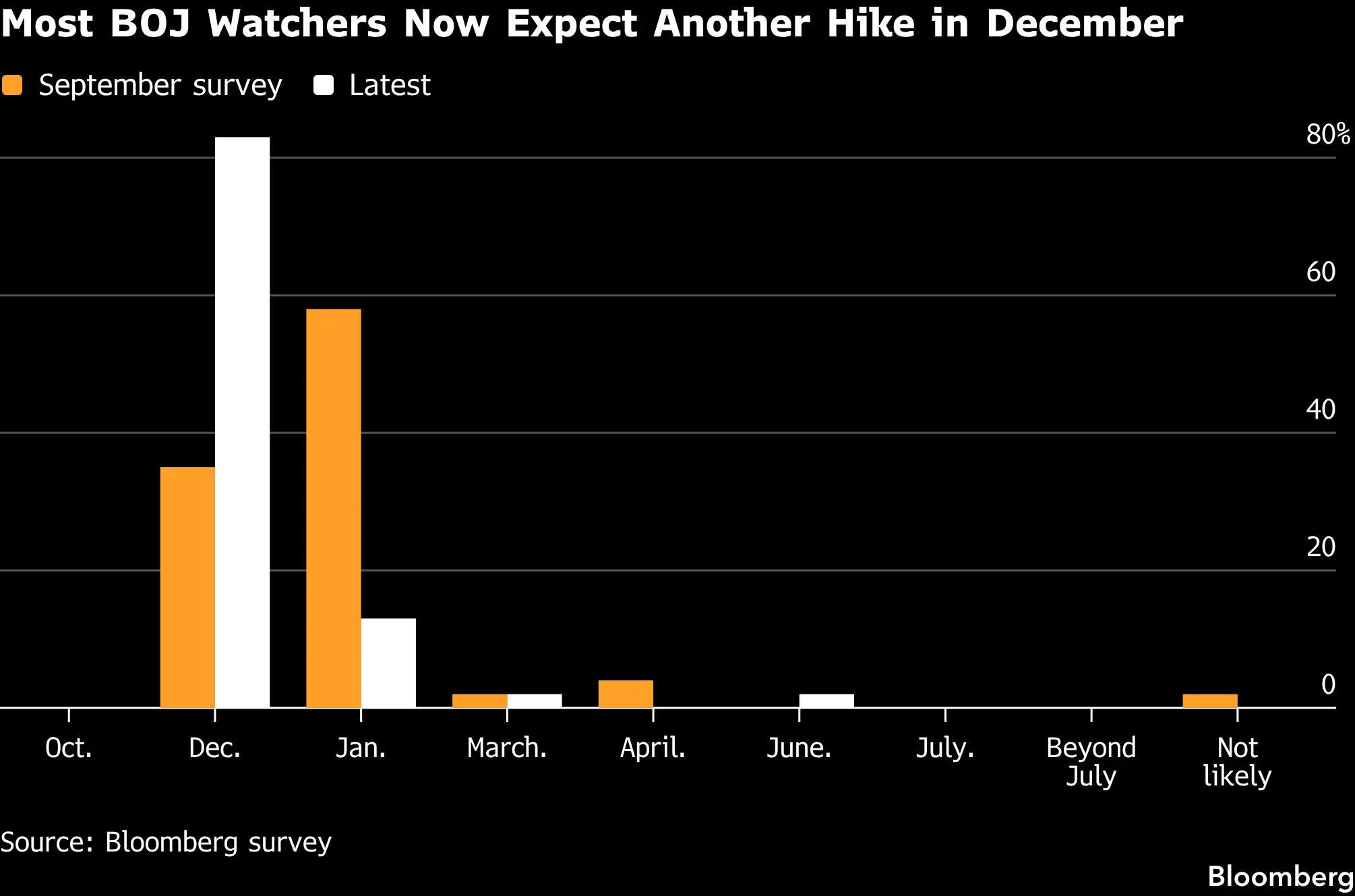
Recognizing the inflation target as met removes the primary obstacle to further tightening, making a December rate hike highly probable. Markets have already responded: the yen rose to ¥157.12 per dollar after the announcement, and Japanese government-bond yields slipped modestly. A continued hawkish stance could strengthen the yen, raise borrowing costs for households, and affect equity valuations, especially in technology-heavy sectors sensitive to rate changes.
09
What’s Next
Governor Ueda’s news conference later on Friday will provide clues on the timing of the next hike and the bank’s view of inflation anchoring. Analysts expect the BOJ to signal a likely move in December, with many projecting a terminal rate around 1.75 %–2 %. The accelerated ETF sales program will begin in January, and its market impact will be monitored throughout the year.