
Full Breakdown
Stalemate in Israel’s 2026 Election: Coalition Options Threaten Campaign Promises
By Drooid · · How we work
In this breakdown
01
Core Event – No Bloc Reaches a Governing Majority
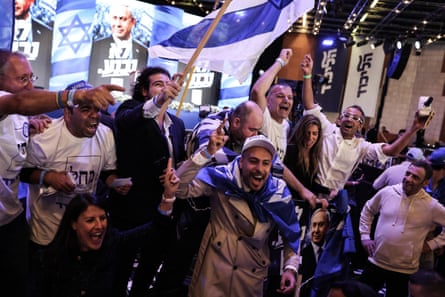
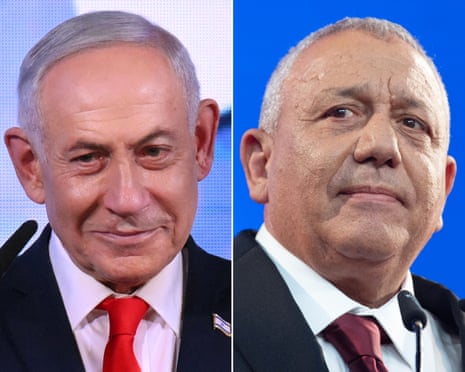
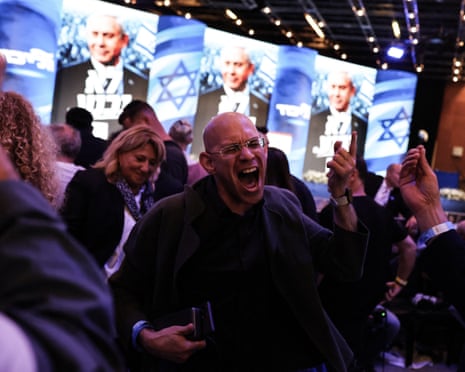
Israel’s 2026 parliamentary election left the 120-seat Knesset without a clear majority. The Likud-led bloc secured 53 seats, while the opposition bloc headed by former IDF chief Gadi Eisenkot obtained 48 seats. Arab-led parties—the Joint List and United Arab List (Ra’am)—won a combined 19 seats, a record high for Arab representation. With 61 seats needed for a governing coalition, both major blocs fell short, prompting coalition talks.
02
Background & Context – Campaign Pledges and Redlines
Eisenkot’s “change” bloc (Yashar, B’Yachad, Yisrael Beytenu, Democrats) pledged not to join a government that included Arab parties and to end the ultra-Orthodox exemption from mandatory service. The three parties most resistant to Arab participation—Yashar, B’Yachad and Yisrael Beytenu—ruled out any coalition with the Joint List or Ra’am. Netanyahu’s right-wing bloc, comprising Likud, Shas, United Torah Judaism, Otzma Yehudit and the Religious Zionist Party, described cooperation with Arab parties as “a disgrace.”
Visual evidence
Images from the story

03
Data & Statistics – Seat Distribution
Swipe across the table to see all columns.
| Bloc | Parties (seats) | Total seats |
|---|---|---|
| Netanyahu bloc | Likud 26, Shas 7, UTJ 7, Otzma Yehudit 7, Religious Zionist 6 | 53 |
| Eisenkot bloc | Yashar 21, B’Yachad 12, Yisrael Beytenu 7, Democrats 8 | 48 |
| Arab parties | Joint List 11, Ra’am 8 | 19 |
04
Official Statements & Responses – Leaders’ Positions
- Gadi Eisenkot reiterated that the Arab parties “did not meet his conditions” and pledged to prevent any delay in the Knesset’s swearing-in.
- Yair Golan, Democrats chairman, called for a coalition that includes Arab parties to replace Netanyahu.
- Avigdor Liberman, Yisrael Beytenu chair, limited his options to “Zionist parties only,” excluding Arab parties and Netanyahu’s bloc.
- President Isaac Herzog urged parties to keep “open minds” and warned against a repeat election.
- Justice Noam Sohlberg, chair of the Central Elections Committee, ordered a Shin Bet probe into alleged foreign funding, expected to conclude soon.
05
On-the-Ground Reports – Public Pressure for a Broad Coalition
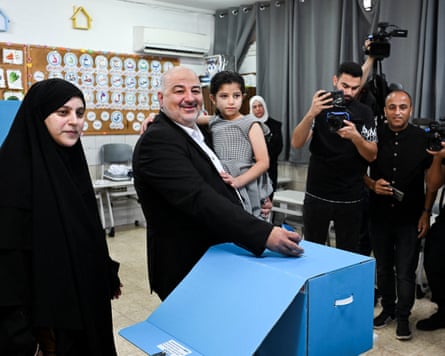
Deputy mayor Amir Badran of Tel Aviv-Jaffa, of mixed Jewish-Palestinian heritage, voiced support for such a partnership. High Arab voter turnout—estimated at nearly 80%—has been highlighted as decisive.
06
Conflicting Reports & Gaps – Divergent Projections and Allegations
Exit-polls varied, with some outlets projecting Netanyahu’s bloc at 50–52 seats and the opposition at 49–52, while others showed a slight advantage for Netanyahu. Netanyahu’s camp alleged foreign interference favoring Arab parties; Qatar denied involvement, and the committee’s investigation has found no evidence that alleged funding would have altered the result.
07
What’s Next – Timeline of Pending Actions
- President Herzog is expected to assign the mandate to form a government after consulting party leaders.
- The Shin Bet investigation will be presented to Justice Sohlberg shortly.
- The Knesset is scheduled to be sworn in on November 10; if no coalition emerges, a fresh election could be called, extending Netanyahu’s caretaker role.
The deadlock forces both blocs to confront breaking explicit campaign pledges—either by partnering with Arab parties, relying on ultra-Orthodox support, or forming a unity government with Netanyahu—each option reshaping Israel’s political landscape.