
Full Breakdown
Tokyo Core Inflation Exceeds BOJ Target Ahead of Policy Decision
By Drooid · · How we work
In this breakdown
01
October Core Inflation Results
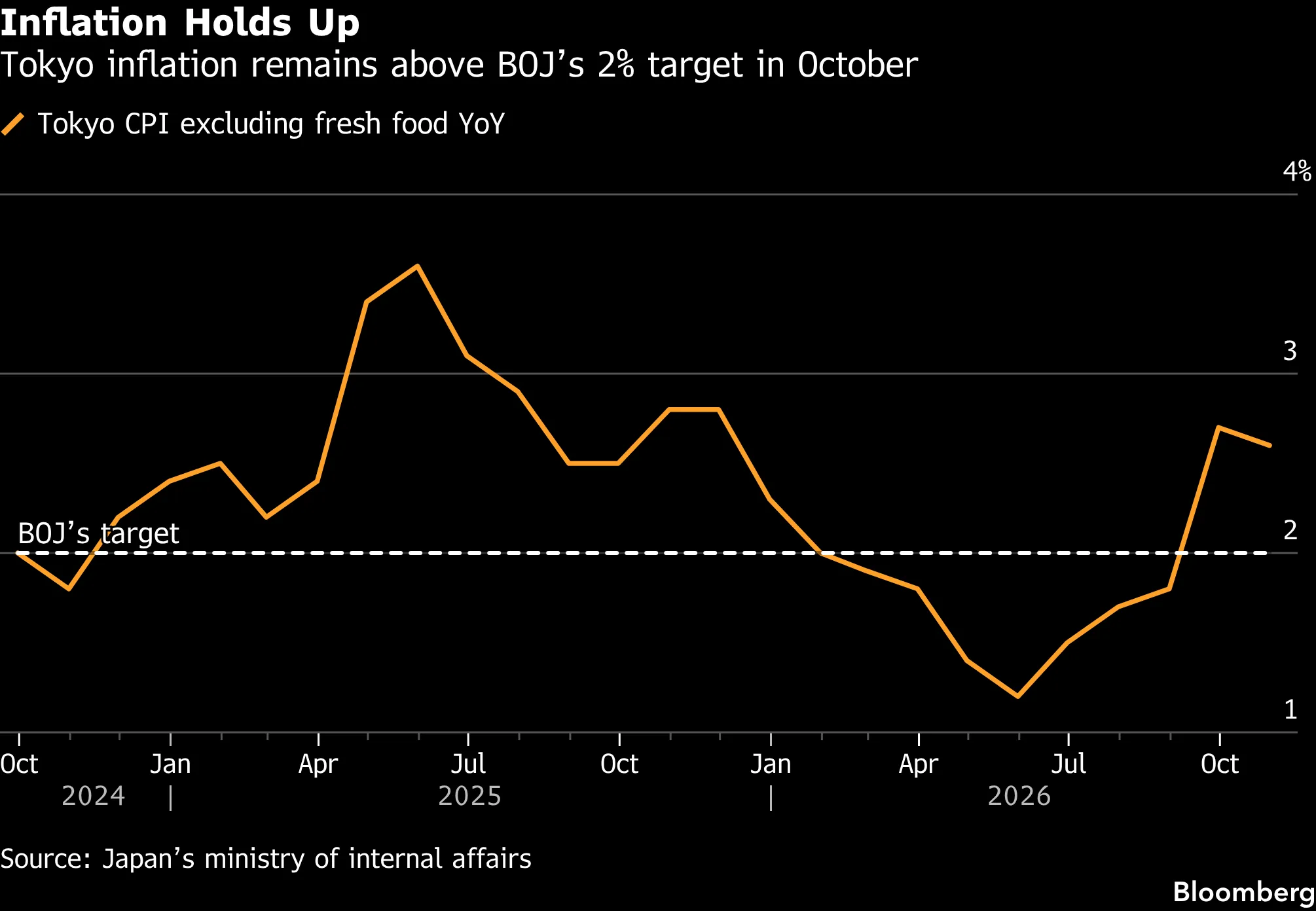
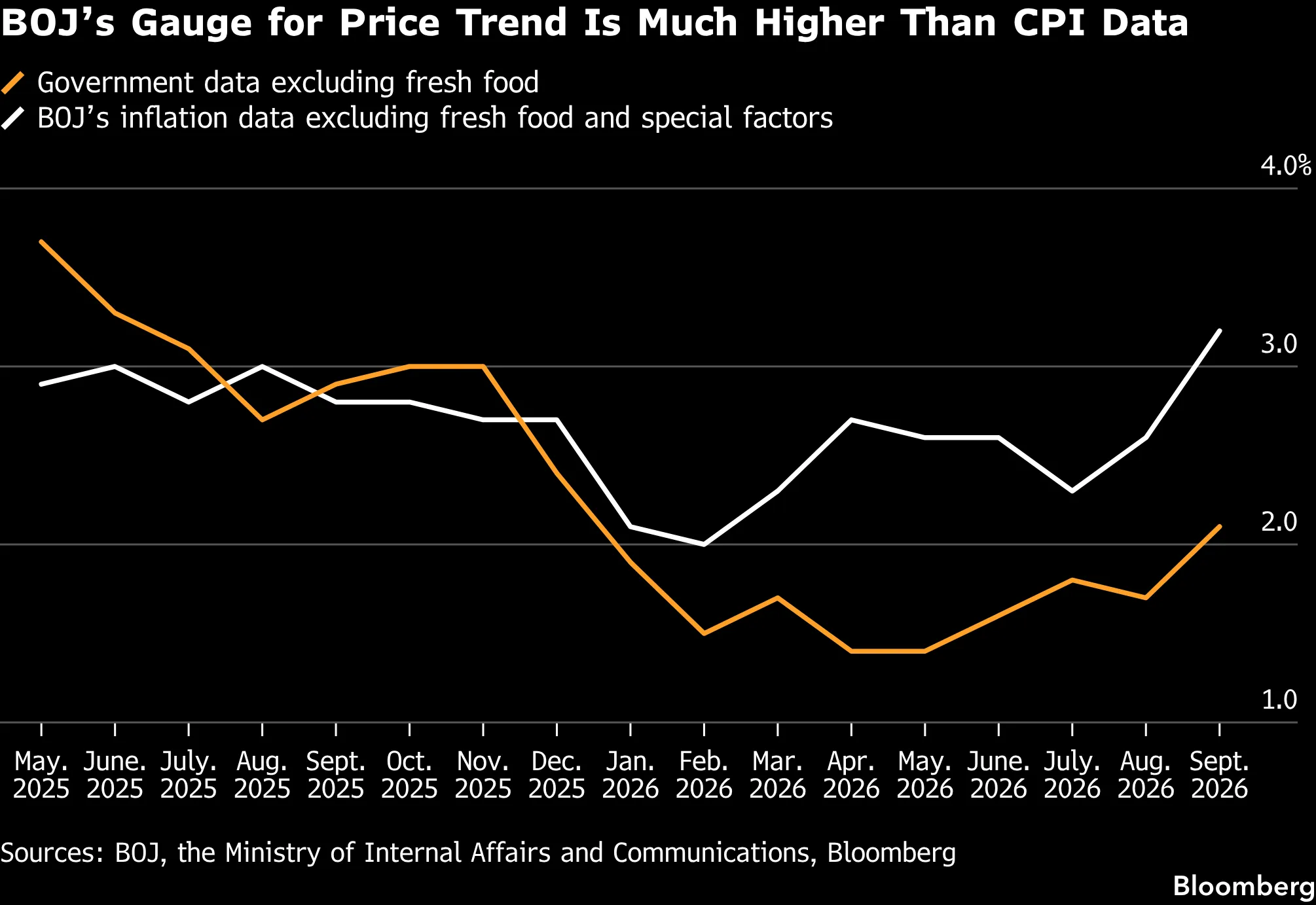
Tokyo’s core consumer-price index (CPI) that excludes fresh food rose 2.6% year-on-year in October, matching the median market forecast and easing slightly from a 2.7% gain in September. The broader headline CPI for the capital stood at 2.8% year-on-year. A narrower gauge that also strips out energy—used by the Bank of Japan (BOJ) as a “cleaner signal” of underlying price trends—registered 2.6%, down from 2.9% in September. The data were released on October 30 by the Ministry of Internal Affairs and Communications and reported by Reuters, Bloomberg and other outlets.
02
Background: BOJ’s 2 % Inflation Target and Recent Policy Moves
For more than a decade the BOJ has pursued a 2 % inflation target, aiming to lift the economy out of deflation. After a series of hikes that lifted the policy rate to 1.25%—the highest level since 1995—the central bank signalled that further tightening may be needed to keep underlying inflation from overshooting the target. Governor Kazuo Ueda’s team is expected to assess whether the latest Tokyo figures confirm that the underlying rate has finally reached 2 %.
Visual evidence
Images from the story

03
Data & Statistics
- Core CPI (ex-fresh food): 2.6% YoY (October) – Reuters, Bloomberg, Japan Times.
- Core CPI (ex-food & energy): 2.6% YoY (October) – Reuters; 2.4% YoY – TradingView (shows a slight divergence).
- Headline CPI: 2.8% YoY (October) – Ministry data.
- Unemployment (September): 2.4% – Labor Ministry.
- Jobs-to-applicants ratio (September): 1.19 (119 vacancies per 100 seekers) – Bloomberg.
- Industrial output (September): +2.2% month-on-month – Bloomberg.
04
Official Statements & Responses
The central bank has highlighted that steady rises in producer-price indices are feeding through to consumer prices, reinforcing the case for further tightening.
He added that businesses are now able to pass higher input costs on to consumers, suggesting that Japan has moved from a deflationary to an inflationary environment.
05
Conflicting Reports & Gaps
- Core CPI excluding food and energy: Reuters and Bloomberg report a 2.6% increase, whereas TradingView cites a 2.4% rise for the same month. Both measures are intended to capture underlying inflation, but the slight divergence highlights the sensitivity of the gauge to methodological differences.
- Impact of subsidies: Sources agree that summer subsidies on electricity and gas helped cap price pressure, but the extent to which their phase-out will affect future readings remains unquantified.
06
Verbatim Quotes
- “The cost-push factor driven by rising import prices is significant, while the so-called homegrown inflation aspect is limited,” — Atsushi Takeda, chief economist at Itochu Research Institute
- “Companies are now in a position to be able to pass on price increases to consumers,” — Atsushi Takeda, chief economist at Itochu Research Institute
07
What’s Next
Later on October 30, the BOJ will announce its policy decision. Market participants expect the bank to hold the rate at 1.25% but to signal whether a further 25-basis-point hike in December is likely. Traders are pricing an approximately 80 % probability of a December increase, based on overnight swaps activity. The outcome will influence yen strength, Japanese government-bond yields and equity valuations, especially in export-oriented sectors.