
Full Breakdown
Global Dockworkers Strike Targets Arms Shipments on October 30, 2026
By Drooid · · How we work
In this breakdown
01
Core Event
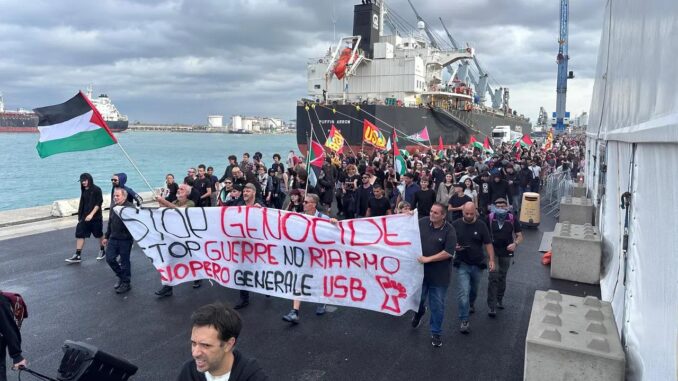
On October 30, 2026, dockworkers in 22 countries coordinated a simultaneous work stoppage at more than 110 ports. The action, branded the International Day of Action of Dockworkers and Port Workers, involved over 25 trade unions and was described by organizers as “historic” in scale. Strikes were scheduled for full-day shutdowns in France, Italy, Greece, Turkey and India, with shorter walkouts in Morocco, Cyprus and other locations. The unions demand an immediate end to the “genocide of the Palestinian people” and a broader halt to “imperialist wars.”
Watch
Related reporting
brightcove
What can a global strike of dockworkers achieve for Gaza?
02
Background & Context
The campaign builds on a February 2025 initiative in which Mediterranean dockworkers disrupted weapons shipments to Israel. Representatives from unions in Greece, Italy, France, Spain’s Basque Country, Turkey and Morocco convened in Istanbul in May 2026 and issued the “Istanbul Declaration,” calling for recognition of a Palestinian state within the 1967 borders, an end to U.S.–Israeli aggression, and solidarity with Cuba, Venezuela and Sudan. This strike marks the second coordinated International Day of Action this year.
Visual evidence
Images from the story


03
Data & Statistics
- Participating unions represent more than 110 ports across 22 countries on five continents.
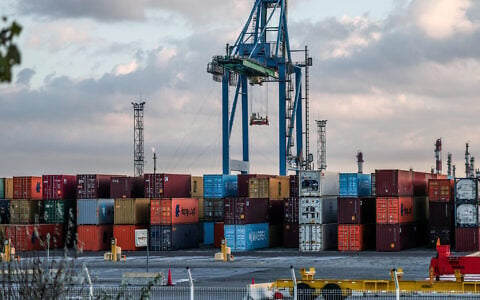
- Mediterranean ports slated to strike handle 63 % of container activity in the sea and 74 % of activity between southern France and Piraeus.
- The research collective No Harbour for Genocide (NHG) tracked 315 shipments of components for Elbit Systems—Israel’s largest arms maker—through 56 commercial ports from August 2025 to September 2026.
- NHG estimates the strike could idle over $2 billion of cargo, representing 13.5 % of global shipping and up to 40 % of Mediterranean cargo.
04
Official Statements & Responses
The International Transport Workers’ Federation (ITF) urged governments to secure a permanent ceasefire in Gaza and to recognise dockworkers’ right to refuse military cargo without reprisal.
On October 26, 2026, a United Nations Independent International Commission of Inquiry reported that the ceasefire agreement had not stopped killings in Gaza, describing ongoing “genocidal acts.” Organizers cite the report to frame the strike as a response to continued violations of international humanitarian law.
05
Criticism & Opposition
Mohammed al-Attar, a former Gaza dockworker now based in Hamburg, expressed “deep disappointment” with Germany’s Ver.di union, accusing it of “incomprehensible silence” over the Gaza conflict.
06
Conflicting Reports & Gaps
Impact estimates vary. Al Jazeera and a Stockholm International Peace Research Institute analysis cite 13.5 % of global shipping and 63 % of Mediterranean container activity at risk, while World Cargo News and the Seattle Times project more than 40 % of Mediterranean cargo and $2 billion in freight could be disrupted, but suggest the overall effect on global trade may be limited. Port authorities in Genoa and Le Havre indicate that operational disruption is expected to be “limited,” creating uncertainty about the actual scale of interruption.
07
Verbatim Quotes
- “In Europe, a regulation on military mobility is about to be approved, which will make it even easier for arms to be transferred without scrutiny,” — Linda Maggiore, Italian journalist and activist
08
What’s Next
Organizers will assess the strike’s effectiveness in the days following October 30, 2026, and consider whether coordinated industrial action can influence future arms-shipment policies. The ITF has called for continued monitoring of port operations and for governments to address the demand for an end to military use of civilian maritime infrastructure.