
Full Breakdown
Vance’s Letter to Iran’s Security Chief Aims to Revive Peace Talks Amid Threat of New Strikes
By Drooid · · How we work
In this breakdown
01
Core Diplomatic Initiative
Vice President JD Vance sent a personal letter to Mohsen Rezaei, secretary of Iran’s Supreme National Security Council, proposing a framework for direct talks that would place Iran’s nuclear programme on the agenda. The letter was delivered through Qatari mediators on a Sunday; a formal Iranian response is expected by Thursday. U.S. officials say the effort is intended to gauge whether Washington and Tehran can find enough common ground to persuade President Donald Trump not to issue a final order for a short, intense military campaign.
Watch
Related reporting
brightcove
What we know of Vance’s letter to Rezaei, as Trump warns Gulf to ‘prepare’
02
Background & Context
The conflict escalated on February 28 when the United States and Israel launched coordinated strikes, two days after Geneva talks that mediator Oman described as “significant progress.” Subsequent U.S. bombings on June 22 targeted Natanz, Fordow and Isfahan nuclear facilities. Iran responded by blockading the Strait of Hormuz, a chokepoint for roughly one-fifth of global oil and LNG shipments. The war has disrupted energy markets and prompted warnings of retaliation against U.S. and allied infrastructure in the Gulf.
Visual evidence
Images from the story


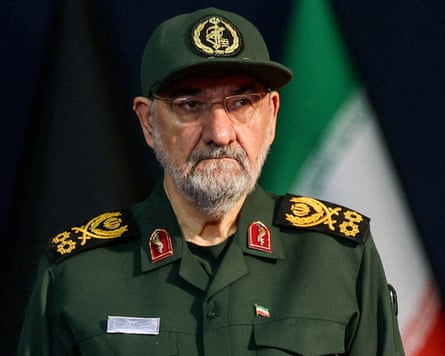


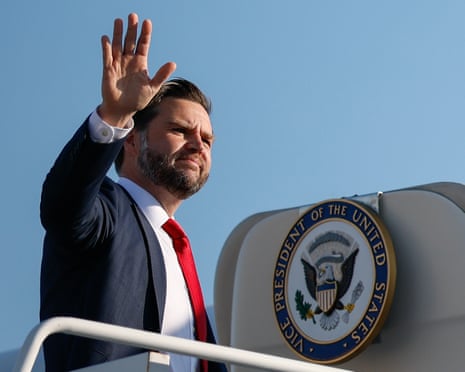
03
Timeline
- February 28 – U.S. and Israeli strikes commence.
- June 13 2025 – Israel attacks Iranian sites two days before a scheduled sixth round of U.S.–Iran talks in Oman.
- June 22 2025 – U.S. bombs Natanz, Fordow, Isfahan.
- October 21 – Iranian adviser Mehdi Mohammadi declares a “zero red lines” strategy.
- Late October 2026 – Vance’s letter delivered via Qatari mediators; Iran acknowledges receipt but has not replied.
- November 3 – Scheduled U.S. midterm elections; joint U.S.–Israel plans for a possible strike are reported.
04
Official Statements & Responses
- JD Vance told Fox News that President Trump would “never” allow the conflict to become “a forever war.”
- President Trump characterized the outreach as a request to help Iran obtain medical supplies and other humanitarian items, saying he had given Vance “the go-ahead.”
- U.S. officials have warned Gulf Arab states to prepare for potential renewed military action after the November 3 elections.
- U.S. Defense Secretary Pete Hegseth removed Lt. Gen. Brett Sylvia, the Pentagon’s top military planner, amid reports of renewed strike planning.
05
Criticism & Opposition
- Nader Hashemi, professor of Middle East politics, notes a recurring U.S. pattern of mixed signals.
06
Conflicting Reports & Gaps
- Direction of the Letter: Some sources say it was sent at Trump’s direction; Trump denies ordering the outreach, framing it as humanitarian.
- Iran’s Public Reaction: The New York Times reports the letter was “received well,” while other outlets note no official public comment.
- Scope of Negotiations: The Wall Street Journal says the letter discussed a framework without specific terms, whereas another source claims the focus was on preventing a “short, intense attack” and addressing the nuclear issue.
07
What’s Next
- Iranian Reply: Rezaei is slated to issue a formal response by Thursday, according to the New York Times.
- Midterm Elections: The November 3 elections could alter U.S. strategic calculations; analysts warn a post-election environment may increase the likelihood of a “short, intense” campaign.
- Potential Negotiation Venues: Qatar or Turkey have been mentioned as possible sites for a U.S.–Iran meeting if Tehran agrees to proceed.
The diplomatic overture by Vice President Vance represents the latest attempt to balance military pressure with a negotiated settlement, even as both sides grapple with deep mistrust and the prospect of renewed hostilities.