
Full Breakdown
Italy’s Nationwide Protests on Oct. 30, 2026: Cost of Living, Wages, and Military Spending
By Drooid · · How we work
In this breakdown
01
Mass Demonstrations Across More Than 50 Cities
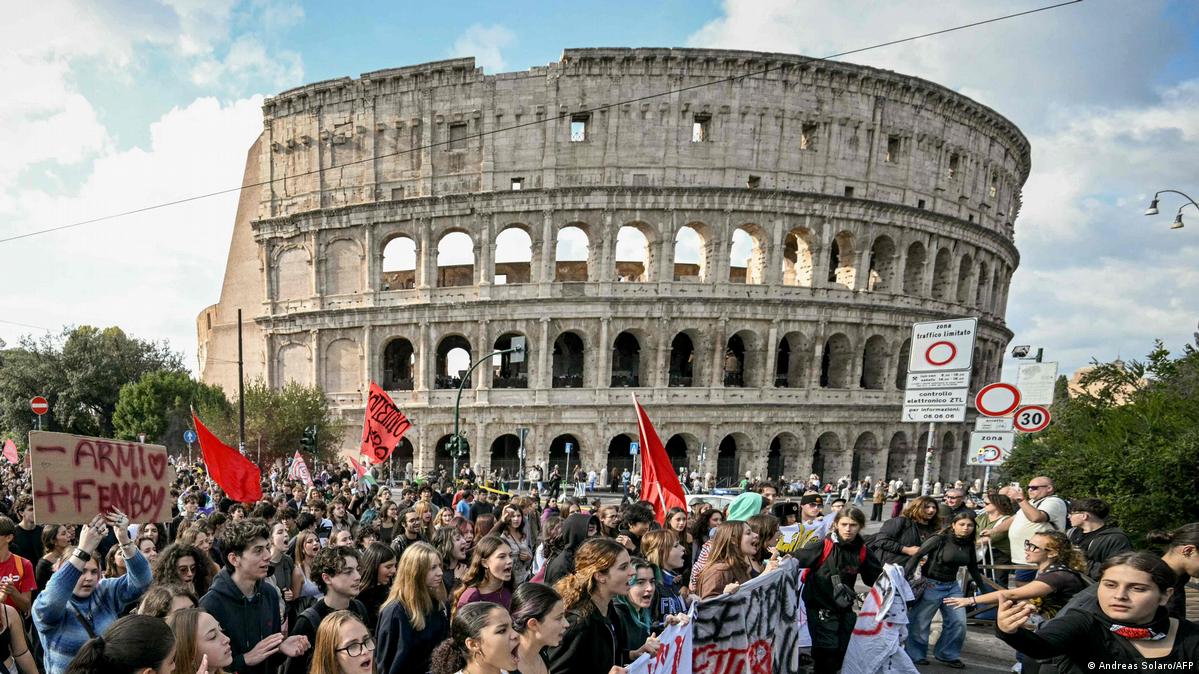
On Oct. 30, 2026, tens of thousands of Italians took to the streets in roughly 50 cities, from Rome and Milan to Turin, Bologna, Genoa and Naples. The anti-capitalist trade union Unione Sindacale di Base (USB) called a general strike that drew workers in the public and private sectors, including truck drivers, taxi drivers, farmers and students. Police and riot units were deployed in large numbers; isolated scuffles were reported in Turin and other locations, but most rallies remained peaceful through the morning.
Watch
Related reporting
brightcove
What are Italy’s new measures against violent protests?
02
Background and Context
The protests arrived amid a wave of cost-of-living unrest sweeping Europe. In Italy, consumer prices for food, energy, transport and bills have risen 68 % since 2000, while average wages fell nearly 5 %. Inflation was reported at either 5.4 % in October (one source) or 4.3 % (another source). The surge in fuel prices follows the war in the Middle East, prompting a €175.2-million aid package for truck drivers, farmers and fishermen. Parallel movements in France, Spain and Portugal have focused on education funding and housing, adding momentum to Italy’s demonstrations.
Visual evidence
Images from the story




03
Data and Statistics
- Participation estimates: “more than 100,000” people according to compiled counts; USB claimed “at least 1 million” by midday.
- Inflation: 5.4 % (source 14) vs. 4.3 % (source 16).
- Government aid: €175.2 million for transport-related sectors; an annual €2,500 bonus for workers under 30 in the draft 2027 budget.
- Security: 500 army troops deployed in Milan until year-end; extensive police, drone and helicopter presence in Rome.
04
Official Statements & Responses
Prime Minister Meloni stressed “great respect” for peaceful protesters on social media and framed vandalism as “criminality.” The Interior Ministry reported preventative arrests ahead of the marches. Following the Oct. 17-18 clashes in Milan, the government tightened penalties for public gatherings while easing rules on detaining minors, and introduced legislation removing legal protections for young people and increasing sentencing for rioting.
05
Conflicting Reports & Gaps
- Inflation figures differ between 5.4 % and 4.3 % for October, with no consensus on the official rate.
- Attendance numbers range from “more than 100,000” to the USB’s claim of “at least 1 million,” while police have not released their own estimates.
- Impact on transport: organizers expected widespread disruption, yet local and long-distance services remained largely operational during the morning.
06
Verbatim Quotes
- “I hope this can provide answers for young people in general… who feel that the state doesn’t care about them,” — Prime Minister Giorgia Meloni
07
What’s Next
The protests occur ahead of parliamentary elections slated for next year, though a specific date has not been set. The draft 2027 budget continues to discuss the €2,500 youth bonus and other measures aimed at families and workers. Analysts note that the government’s tightened public-assembly laws and the deployment of army troops may shape the tenor of future demonstrations.