
Full Breakdown
Maine Senate Race Turns Into Referendum on Trump Policies
By Drooid · · How we work
In this breakdown
01
Core Event
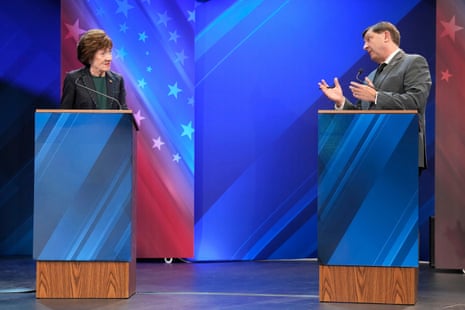
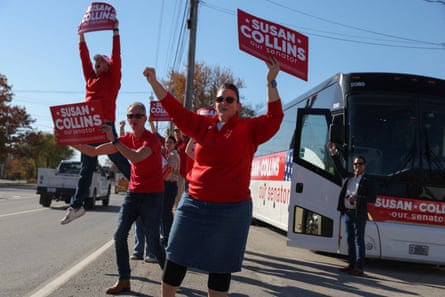
The 2026 U.S. Senate contest in Maine pits incumbent Republican Susan Collins, seeking a sixth term, against Democratic challenger Troy Jackson, a former state Senate president. With the election on November 3, the race has become a focal point for voters weighing the impact of President Donald Trump’s trade and foreign-policy agenda on the state’s economy, especially the lobster fishery and energy costs.
02
Background & Context
Since the February 2026 Supreme Court decision that struck down a broad set of Trump-era tariffs, the administration has signaled intent to reinstate many duties. Simultaneously, the Pentagon has increased forces in the Middle East, and Trump has hinted at further action against Iran. These national policies have filtered down to Maine, where rising fuel and heating-oil prices are reshaping voter concerns.
Visual evidence
Images from the story

03
Key Figures
- Susan Collins – Republican U.S. senator from Maine, 30-year Senate veteran, noted for occasional breaks with her party, including votes against repealing the Affordable Care Act and for impeaching Trump after the January 6 insurrection.
- Troy Jackson – Democratic former state Senate president, positioning himself as a working-class alternative and emphasizing federal resources he could deliver to Maine.
- Christian LaMontagne – 27-year-old lobster fisherman whose fuel costs have risen from about $350 to nearly $700 per week since the Iran war began.
- Cheryl Clukey – Retired school principal from Augusta, highlighting soaring heating-oil expenses that now exceed $6 per gallon.
04
Data & Statistics
- Fuel costs for LaMontagne’s lobster boat have doubled to “nearly $700” a week, with his catch requirement rising from 40 lobsters to “over 104” to cover fuel.
- A recent Marist poll shows only 42 % of likely Maine voters approve of Trump’s job performance, while 41 % say their congressional vote is primarily a vote against him.
- Heating-oil prices have reached a “record high” of over $6 per gallon, with one resident reporting a $729 bill for 131 gallons.
05
Official Statements & Responses
- Collins’s office dismissed a ProPublica report alleging a pay-to-play scheme as “categorically false” and emphasized that no wrongdoing was ever alleged against her campaign.
- Jackson has framed Collins as a reliable ally of Trump, stating that “the reality is that 100 % of the time, when Donald Trump needs her, Susan Collins is going to be there.”
06
Verbatim Quotes
- “Last year at this time I had to go out and catch 40 lobsters to fill up my tank, this year it’s over 104,” — Christian LaMontagne
- “The reality is that 100% of the time, when Donald Trump needs her, Susan Collins is going to be there,” — Troy Jackson, local attorney
- “Jackson, in some ways, seems almost irrelevant,” — Dan Shea, professor of government at Colby College
- “I put in 131 gallons of oil. It wasn’t even filling the tank, and it was $729,” — Cheryl Clukey, retired school principal from Augusta
07
What’s Next
Maine voters will cast their ballots on November 3. The outcome will determine whether the state’s senior Republican senator retains her seat amid growing backlash against Trump-related economic policies, or whether Jackson can translate anti-Trump sentiment into a Senate victory.